Thursday, May 30, 2024
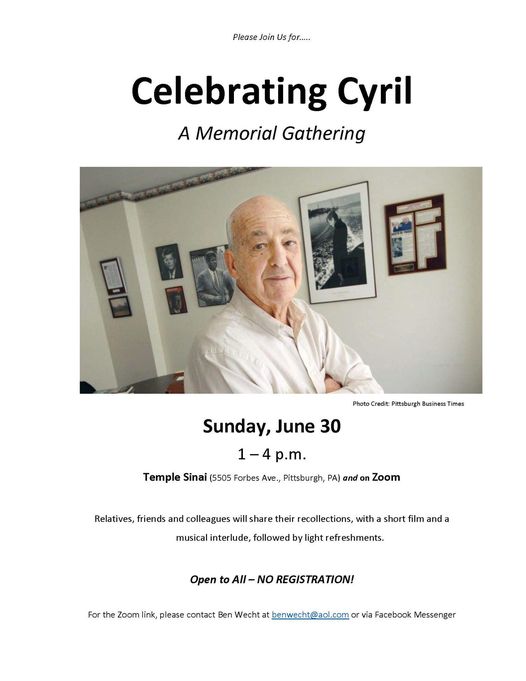
Dr. Cyril Wecht RIP - May 13, 2024 - Age 93
Thursday, March 28, 2024
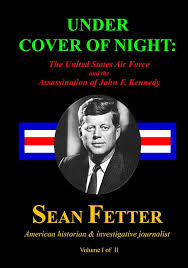
Undercover of Night: The USAF and the Assassination of JFK
Undercover of Night: The United States Air Force and the Assassination of President Kennedy – Two Volumes (Arlington, Wy, 2024), By Sean Fetter.
I probably
wouldn’t have been so disappointed in these books if Sean Fetter hadn’t promised
so much and delivered so little. After watching his promotional podcast in
which he claims to have interviewed dozens of Air Force personnel; about what
they did, saw and heard on November 22, 1963, I contacted Fetter about getting
a digital version to review, but he said there were no digital or review versions
available, and that I would have to purchase the books.
At
almost $100 with shipping, that was out of my book budget at the moment though
a West Coast associate ordered them for me (thank you PM) though it took a month to arrive.
For
starters I agree with Fetter that what occurred at Dealey Plaza was a coup d’etat, that the accused assassin Lee Harvey Oswald had little to do with, and
the Air Force angles are extremely important.
I didn’t
know Billy Lovelady was dismissed from the USAF for stealing and selling 38
revolvers, only used by military police and B-52 pilots – interesting in light
of the fact that the sling on the rifle found on the 6th floor was
from a B-52 pilot’s shoulder holster for a 38 revolver.
And like
Fetter, I also think its important to determine the whereabouts of Air Force
Chief of Staff Gen. LeMay at the time of the assassination, but disagree with
his conclusion.
And we
part ways when it comes to anointing LBJ as the mastermind of the plot, since
he didn’t have the intellectual capacity or knowledge of black propaganda and covert intelligence operations to organize the
Dealey Plaza operation. Nor do I believe that Sam Rayburn, who had died two
years before, had anything to do with the assassination. And I don’t believe, because LBJ
ordered the pilot of AF1 not to file a flight plan means LBJ was going to flee
to Mexico to avoid being arrested for complicity in the assassination when the
arrived in Washington.
Nor do I
believe Jackie Kennedy placed her wedding ring on the finger of the wrong body, that Secret Service Agent Roy
Kellerman mutilated the body of JFK with a fire ax when a scalpel would be necessary. The ax, says Fetter, was the one used
to remove the handle of the ornate casket in order to get it into the door of
Air Force One, the casket that didn’t contain the body of the slain president
but it did contain a body, but Fetter doesn’t say who it is.
It’s
true, as Fetter tells us, there were no such plane as Air Force Two, and Air
Force One was whatever plane the president was in. But then he goes on to call the
backup plane used by LBJ as Air Force 2, and continues to name other Special
Air Mission planes AF3-4-5, and lists the planes he suspects as being the one used to transport of JFK’s body back to Andrews and Bethesda, including the Cargo
plane, the Press plane, and a Silver Dollar Command and Control plane that he says was ordered to
pick up the body but didn’t.
Fetter
says that all of the Silver Dollar planes were based at Andrews, but Colonel
Lowrey, in Louisiana is identified as a Silver Dollar commander who gave former
USMC Thomas Blackmon, who was involved in the Big Easy Houma Bunker raid, a base pass.
But Fetter says chasing the New Orleans
aspects of the assassination is a waste of time.
In
discussing the tapes discovered among the effects of the President’s military aide US Army General
Chester Victor (“Ted”) Clifton Fetter says: "….following the cleaning and
enhancement by a private third party, routine messages involving Silver Dollar
Two, the airborne NEACAP backup plane ,
were now audible.”
Since my
name isn’t listed in the index at the end of Volume II, I thought I might have gotten away clean, but
when he mentions the General Clifton version of the AF1 radio recordings, he
mentions me in footnote #172:
“JFK
investigators (sic) Bill Kelly deserves universal thanks for making that
valuable project happen: audio expert and engineer Edward J. Primeau and his
colleague Brad Finegan (plus Ed Primeau’s son Michael) deserve enormous praise
for actually performing the technical task.”
Well
thank you Sean. But since I was responsible for getting it cleaned up and personally
transcribed it, I don’t recall any mention of Silver Dollar, a Command and
Control plane that we know was flying over Dallas at the time of the
assassination because they called in for a radio check as detailed in the
article by Larry Happanen - The
Call That Came In Out of the Blue.
Kennedy Assassination Chronicles, Volume 8, Issue 2
Fetter
says that the USAF pilots he talked to liked the Collins Radios on their
planes, and correctly credits Gen. LeMay for placing them on all SAC and SAM
planes, but fails to point out all of the other Collins Radio connections to
the assassination that reveal the extent of the covert network that was
responsible for the assassination.
[ JFKcountercoup: The Collins Radio Connections to the Assassination of JFK - Updated ]
Fetter is
full of himself and promotes his analytical ability, over and over, and calls
himself an American historian and investigative journalist, but he neglects to
utilize their basic practices, principles and procedures. He doesn’t like or trust documents and fails
to document what he says, or the AF personnel he claims to have interviewed.
Most of
his footnotes – hundreds of them simply read: “Author’s exclusive original discovery,” which isn’t a footnote at all, one that should give you a name, a
book, a document, RIF#, date, etc., so
they can be sourced and followed up.
At first
I went looking for the dozens of interviews he claimed to have conducted with
AF personnel, but there are only his reports of what they say, and even Fetter
admits that the significant things he attributes to them is something they
themselves didn’t recognize as important. And almost all of the interviews-
conversations with Air Force personnel took place in 1994- thirty years ago.
As Doug
Horne has noted in his review of this book (reposted in another thread): “The
claims by Sean Fetter’s admirers that he has justified every claim and provided
evidence for all of his findings are premature, to say the least. He has
provided many tantalizing and exciting claims that supposedly come from the
mouths of former members of Air Force flight crews that he has interviewed:
pilots, co-pilots, flight engineers, stewards, radio operators, and one
on-the-ground refueling technician. At first blush, and upon first reading,
many of the words and statements he has ascribed to them are quite exciting to
read. BUT…and this is a big “but”…unless his claims of what they have said to
him are properly established, they cannot be treated as fully credible. Where
are the audio tape recordings and/or video recordings, and the transcripts,
which support the recorded audio or video? His readers need to see and hear
those, before his claims about what they have said are worthy of belief.
Without that supporting documentation, unsupported “witness statements” in his
book are inherently suspect. The burden of proof for Fetter’s extraordinary
claims of what they have said is on HIM. Only when Sean Fetter proves that his
witnesses actually said these things that he ascribes to them, can we then
began to seriously ponder what their statements might mean.”
The fact
is Fetter did not record and transcribe any of his interviews. He takes one
sentence of what was said to him, and repeats it, over and over to make sure
you get it. Then he jumps to a wrong
conclusion based on simple facts.
My
former associate John Judge is listed 10 times in the index, but is actually
mentioned in only four of those.
While
Fetter hates his former mentor, the late David Lifton with a passion, repeatedly
mentioning his name and how he got things wrong, he likes John Judge, and
talked with him on the phone a number of times. John told him about reading a
news clip at the Archives II that falsely reported the death of Gen. LeMay in
a plane crash.
From
that Fetter concludes – “LeMay faked his own death.”
Well I
was with John Judge at the Archives that day, as we often went together, and
while I made photo copies of the Andrews Log Book for 11/22/63 that was fetched
from a trash bin by a janitor, Judge had requested the records they had on Gen.
LeMay. The archives staff wheeled out a cart with a dozen boxes of documents,
news clips and magazine articles that John waded through while I copied the
Andrews Log.
When I
was finished, I went over to John and he showed me the news clip that falsley
reported his death.
Instead
of doing what John Judge did – go to Archives II, request the LeMay papers and
read through them, he just asked Judge what was in them.
Fetter
began his quest into the Air Force connections to the assassination at Maxwell
AFB in Alabama, where the Air Force historical archives are kept, and that’s
where he learned about Special Air Mission SAM Fox, an association of retired SAM officers.
He
should have known that Maxwell was the site of a special two day conference of
all active duty Air Force Generals chaired by AF Chief of Staff General LeMay, a week before the assassination, the agenda and minutes of which I’d like to read.
After the conference LeMay took a hunting and fishing vacation. Picked up by TV and radio personality Arthur Godfrey, also an Air Force Reserve General and pilot, Godfrey flew LeMay to Detroit in his private plane, a gift from Eastern Airlines President Eddie Rickenbacker, David Ferrie’s former boss.
In Detroit, Godfrey
talked with a local journalist who reported that Godfrey and LeMay were headed
for a hunting and fishing resort in Michigan. Godfrey also said that the rumors
of his death were greatly exagerated, possibly the source of false report of
LeMay’s death, since they were both flying together.
After a few days at the resort Godfrey flew back East to resume his radio and TV shows while LeMay went to North Michigan to resume his vacation.
LeMay’s wife was
from Michigan, she attended the University of Michigan, and her family had a lake
house that LeMay occassionally used. LeMay also stayed at a lake cabin in
Michagan owned by Teamster Union boss Jimmy Hoffa that we know of because LeMay was on
their guests Christmas card list. Some suggest that LeMay was possibly at the spy school
known as Camp X.
The most
likely place LeMay was at the time of the assassination was a remote lodge
owned by Detroit auto industrialists, that could be reached by boat or small
plane, and while it didn’t have a telephone, it did have a HAM radio, LeMay’s
favorite means of communication.
From the
Andrews AF base log retrieved fron the trash by a janitor, we know immediately
after the assassination LeMay requested the Andrews SAM to send a plane to pick him up in
Toronto, then had the plane- a Jet Star C-140 executive – what Fetter calls AF-5,
redirected to Wiarton, Canada, apparently a close former military base near where he was.
Now Fetter places LeMay at the NORAD – North American Air Defense command HQ base at North Bay. According to Fetter, he was assigned to go there by LBJ with advance knowledge of the assassination, in order to prevent rabid SAC commander Gen. Powers from using the assassination as an excuse to spark WWIII in a Dr. Strangelovesque like Wing Attack Plan R.
But that
was already covered by removing the code books from B-52s and SAM planes, as
John Judge also discovered.
And the
NORAD HQ was 350 miles from Wiarton, so I discount Fetter’s theory on LeMay’s
whereabouts at the time of the assassination.
Fetter
is one of the few who does note that the Warren Commission Report text and
narrative was written by the official US
Air Force historican Alfred Goldberg, who I have interviewed and believe is still alive.
In the
end, I could find no significant nuggerts worth citing in either of these
volumes, and it is quite clear that the full story of the US Air Force and the
assassination has yet to be written.
Relevant
links:
https://jfkcountercoup.blogspot.com/2018/02/the-collins-radio-connections-to-dealey.html?m=1
https://jfkcountercoup.blogspot.com/2013/10/andrews-log-112263-salvaged-from-trash.html?m=1
https://jfkcountercoup.blogspot.com/2013/11/thursday-november-21-2013-rebroadcastof.html?m=1
https://jfkcountercoup.blogspot.com/2019/12/general-lemay-on-11-22-63.html?m=1
https://jfkcountercoup.blogspot.com/2022/05/seven-days-in-lemay-updated.html
https://jfkcountercoup.blogspot.com/2023/07/tales-of-af1-radio-tapes.html?m=1
Wednesday, March 20, 2024
Doug Horne on Fetter
Thank you Doug Horne for writing this and saving me a lot of trouble though I will be writing my own review to address other issues Fetter brings to the table.
DOUG HORNE'S REVIEW OF SEAN FETTER'S NEW BOOK "UNDER COVER OF NIGHT"
https://insidethearrb.livejournal.com/2024/01/02/
By
Douglas P. Horne, Former Chief Analyst for Military Records, ARRB; and author
of the five-volume work “Inside the Assassination Records Review Board.”
This review is primarily a “medical critique” of three major aspects of Sean
Fetter’s UNDER COVER OF NIGHT, as well as commentary about his historiography.
(1) Fetter has fully adopted and thoroughly advanced David Lifton’s hypothesis
from BEST EVIDENCE that the post mortem surgery to JFK’s head wounds (evidenced
in both Dr. Boswell’s autopsy sketch of the severe damage to the top of JFK’s
skull, and in the graphic autopsy photos showing the top of JFK’s cranium
removed---damage that no one saw at Parkland Hospital) occurred well before the
President’s body arrived at Bethesda Naval Hospital the night of the
assassination. In my many telephone conversations with Lifton from 1996-2000,
before we largely parted ways with each other, Lifton indicated to me many
times that he still believed this to be the case, in spite of the strong
evidence to the contrary that I presented to him on numerous occasions. Fetter
explicitly states his support for this old Lifton hypothesis when he states the
same conclusions, on pages 46 and 52; in summary, in Volume I of UNDER COVER OF
NIGHT, Sean Fetter concludes that JFK’s corpse was violently mutilated (namely,
that the top of the head was hacked open with a “crash axe,” and his throat
wound was torn open); his spinal cord was severed; and his brain was removed
from the cranium, all long before 6:35 PM when Kennedy’s body arrived at
Bethesda Naval Hospital. So, as much as Fetter decries Lifton’s analytical
abilities, and disparages him personally, he has endorsed THE major hypothesis
in Lifton’s BEST EVIDENCE.
And yet, strong dispositive evidence exists that post mortem
tampering with JFK’s wounds did NOT occur prior to the arrival of his body at
Bethesda Naval Hospital---and that JFK arrived at Bethesda with his head in the
same condition that was observed when his body left Parkland Hospital, in
Dallas: namely, with a localized, avulsed exit wound in the right rear quadrant
of his head, about the size of a baseball or small orange; with the top of the
head apparently intact; and with the brain still in the cranium.
Here is my evidence:
(a) Gawler’s Funeral Home mortician Tom Robinson drew a wound diagram for both
the HSCA on 1/12/1977, and for the ARRB on 6/21/1996, depicting a wound about
the size of a baseball in the back of JFK’s head. The top of the head was
intact in his diagrams. On the ARRB wound diagram, Robinson drew dotted lines
that were more or less horizontal, below and above the baseball-sized wound.
When we asked Robinson what the dotted lines were during his 1996 interview, he
said: “Those were saw cuts---that’s where the skull had to be sawed open to get
the brain out.” He told both the HSCA staff in 1977, and the ARRB staff in
1996, that he personally saw the brain removed at Bethesda Naval Hospital.
(b) Robinson also told the ARRB staff that the B&W autopsy photos showing the top of the head missing depict “what the doctors did, not what the bullet did.” By “the doctors,” he clearly meant the Bethesda pathologists, not the treatment physicians at Parkland Hospital.
(c) Navy x-ray technician Ed Reed testified under oath to the ARRB in 1997 that he saw Chief Pathologist CDR James J. Humes at Bethesda perform the first stages of post mortem surgery on the TOP of JFK’s skull, by using a scalpel and a circular bone saw to make long, horizontal cuts in JFK’s frontal bone just behind the hairline at the top of the President’s forehead. Significantly, he saw DR. JAMES J. HUMES perform this post mortem surgery---NOT Roy Kellerman! In contrast, Sean Fetter claimed in chapters 17 and 18 of UNDER COVER OF NIGHT that it was Secret Service Agent ROY KELLERMAN who mutilated JFK’s skull, using a “crash axe,” inside the forward luggage compartment of Air Force One, prior to takeoff from Love field in Dallas. (Fetter also appears to imply that this may have occurred between the swearing-in of LBJ at 2:39 PM, and takeoff, at 2:47 PM; very fast work, if true!) Fetter provided no single eyewitness to Kellerman performing this macabre deed, and did not even provide an eyewitness to Kellerman borrowing the AF1 “crash axe,” or even asking to use it!
(d) Significantly, Navy CAPT Robert CANADA (the Commanding Officer of the treatment hospital at Bethesda in 1963) told author Michael Kurtz on March 6, 1968 that he observed a “very large, 3 to 5 cm wound in the right rear of the President’s head, in the lower right occipital region,” and stated that it was “clearly an exit wound,” because the occipital bone was “avulsed,” or exploded outward. [See page 39 of Kurtz’s book THE JFK ASSASSINATION DEBATES. Canada requested that his description of what JFK looked like when he arrived at Bethesda be kept secret until 25 years after his death, and accordingly, Kurtz only published it in 2006.] Significantly, Canada did not describe any bone missing, or any wound, in the TOP of the head---only in the right rear. Like Robinson’s description, the head wound described by CAPT Canada was far too small for the brain to have been removed
(e) Finally, during his 1978 HSCA deposition, Dr. Ebersole, the autopsy radiologist, described an occipital wound (in the right rear of the skull) when he first saw JFK’s body before the autopsy began; he did not describe seeing any damage to the top of the skull at that time.
(f) The “outlier” here is the recollection of Navy corpsman Paul O’Connor, who
told the HSCA staff on August 29, 1977 that when he looked into the cranium
shortly after 8:00 PM the night of the autopsy at Bethesda, there was no brain
in the cranium, only “splattered brain matter.” I have believed for years that
O’Connor was exaggerating and misinterpreting the missing brain tissue in the
forebrain area (shown as a black void in the lateral skull x-rays) as the
“complete absence of a brain.” This was surely a subjective interpretation
error by Paul O’Connor. It was the first impression he was confronted with when
JFK’s head was unwrapped shortly after 8 PM in the morgue. But O’Connor could
NOT have been correct, because Dr. Humes removed JFK’s brain at the autopsy,
and Navy corpsman Jim Jenkins infused what was left of that brain shortly
thereafter, when it was placed in a bucket of formaldehyde. FBI agent Francis
O’Neill recalled seeing JFK’s brain removed at the autopsy during his 1997 ARRB
deposition, as well. O’Connor’s time marker of 8:00 PM is significant; he was
reporting on the results of post mortem surgery AT BETHESDA NAVAL HOSPITAL
in-between the time of 6:35 PM when JFK’s body arrived, and the commencement of
the formal autopsy shortly after 8:00 PM. (There WAS post mortem surgery
performed at Bethesda by Dr. Humes, to permit access to the brain so that
bullets, bullet fragments, and bullet tracks in the brain tissue could be
removed before the autopsy began. It was this state of affairs, shortly after
that clandestine surgery was performed, that O’Connor was reacting to when he
incorrectly inferred that there was “no brain in the cranium” during his HSCA
interview in 1977. The removal of JFK’s brain by Dr. Humes, witnessed by FBI
agent O’Neill, and the infusion of that brain by Jim Jenkins, prove that
O’Connor was merely exaggerating when he said that there was “no brain in the
cranium.”)
THUS, Sean Fetter’s conclusion that the post mortem tampering to JFK’s head
wounds occurred well before Bethesda, and that his brain was removed prior to
the arrival of JFK’s body at Bethesda, is firmly and conclusively contradicted. He
has not produced one direct witness to ROY KELLERMAN (the culprit he
identified) performing the vicious mutilation he ascribed to him in the forward
luggage compartment of AF1 while on the ground at Love Field; Tom Robinson and
CAPT Canada and Dr. Ebersole saw the same head wound on JFK at Bethesda that
was seen at Parkland Hospital; Tom Robinson and Frank O’Neill saw Dr. Humes
remove JFK’s brain at Bethesda; Jim Jenkins infused that brain after Dr. Humes
removed it; and Navy x-ray technician Ed Reed saw Dr. Humes perform the
illicit, clandestine post mortem cranial surgery AT BETHESDA, which means Sean
Fetter’s claim that S.S. agent Roy Kellerman performed it hours earlier, at
Love Field in the AF1 baggage hold, is manifestly incorrect.
(2) I also find Fetter’s treatment of the JFK skull x-rays unsatisfactory, for
the following reasons:
(a) In footnote 958 on page 366, Fetter states that the use of the “crash axe” on JFK’s skull in the forward luggage compartment of AF1 produced “HUNDREDS” of bone fragments, without producing any witnesses who saw hundreds of fragments; Fetter then goes on to expand “HUNDREDS” to “500 or 1,000” bone fragments---again, without any witnesses.
(b) Fetter concludes that since we only see about 6 large skull fragments in the JFK lateral skull x-rays, that “plainly, the existing official x-rays do NOT depict JFK’s actual skull,” and that therefore the extant x-rays are “falsified images.” But this conclusion of his is based on his personal estimate that there must have been “hundreds,” perhaps “500 or 1,000” small bone fragments after Roy Kellerman did his purported handwork on JFK’s skull with the “crash axe.” Sean Fetter has proven that he has quite an imagination; but imagining something does not make it a fact.
(c) In actuality, the true evidence that the extant JFK skull x-rays are altered copy films is not the imagination, or uninformed opinion, of Sean Fetter--- but rather, the optical densitometry analysis of Dr. David Mantik, MD, PhD, following his 9 visits to the National Archives to view the extant skull x-rays and examine them with an optical densitometer. Mantik’s conclusions about alteration are based on painstaking and repeated empirical scientific measurements, not the fevered imagination of a layman who never actually cited any witness to “500 or 1,000 bone fragments.” And Mantik has not concluded that “500 or 1,000” fragments were somehow covered up, but rather that a “white patch” (the result of light blasting of the original x-ray film in a darkroom) was created to hide the large occipital-parietal blowout seen in the right-rear of the head at Parkland Hospital. The missing tissue (brain and bone) from the exit wound in the right rear of JFK’s head is what was covered up by the optical “white patch,” according to Dr. Mantik. This has been rigorously explained in chapter 5 of my own book INSIDE THE ARRB, as well as in numerous other writings by Dr. Mantik himself.
(d) Sean Fetter’s anti-science approach to the skull x-rays is truly startling. In footnote 958 he wrote: “Thus all the well-meaning efforts by JFK researchers to ‘analyze’ the extant skull x-rays…have been a totally wasted effort. You do not and cannot uncover the truth by granting any credence or ‘legitimacy’ to criminally falsified imagery.” What Sean Fetter does not understand is that the only falsified part of the two lateral skull x-rays is the “white patch” that obscures the Parkland exit wound; and the only falsified part of the A-P skull x-ray is the “fake 6.5 mm bullet fragment” added to that image to implicate the accused assassin. The sinuses and the teeth in the JFK skull x-rays have been verified as JFK’s by an HSCA forensic radiologist. His attitude that nothing can be learned from studying the skull x-rays is unscientific in the extreme, and should be unacceptable to all readers of his book. The attitude he displays in this regard is that of a 19th century “know nothing,” someone who revels in his own ignorance.
(e) Qualified experts who have studied the extant skull x-rays have detected
the presence of a partial brain (that is, what was left of the brain after JFK
was hit by three headshots) in the cranium. I suspect that this is what is most
unacceptable to Sean Fetter about those who want to scientifically study the
skull x-rays, for this finding contradicts his theory that the brain was
removed from the cranium long before JFK’s body arrived at Bethesda. The
finding that some brain is present in the skull x-rays is shared by Dr. Mantik
and Dr. Chesser (both well-credentialed JFK researchers who had access to the
autopsy materials in the Archives), as well as by the ARRB’s radiological
consultant, Dr. Fitzpatrick, a forensic radiologist. Sean Fetter’s anti-science
attitude that these experts are not worth listening to is offensive, and does
not serve the American people well. This attitude on his part is very
detrimental to the legitimacy of his book.
(3) Sean Fetter also stated in UNDER COVER OF NIGHT that he believed all of the
shots that hit JFK came from the front alone, and that all of the “wounds”
supposedly on the back of JFK’s body [namely, an entry wound in the back, and
an entry wound in the back of the skull] were “false wounds,” i.e., were
man-made after his death. This is simply a repetition, and endorsement, of
David Lifton’s theory in chapter 14 of BEST EVIDENCE, titled “Trajectory
Reversal: Blueprint for Deception.” Fetter doesn’t acknowledge this overtly,
but it is true. I object to this “false wounding theory” not only because
Fetter did not produce any witnesses to such macabre activity, but also for the
reasons stated below:
(a) Back (Thorax) Entry Wound: the autopsy determined that there was an abrasion collar around the entrance wound in JFK's back, indicating it was made by a bullet; the bullet holes in JFK’s shirt and coat appear to align precisely; and furthermore, the FBI detected traces of copper (from a bullet’s metal jacket) around the entrance wound in JFK’s suit coat, proving it was caused by an entering bullet.
(b) Skull Rear Entry Wound: all three pathologists at JFK’s autopsy
provided convincing descriptions that the entry wound in the back of the skull
had the characteristics of a classic wound of entry in the cranium---namely,
internal beveling on the inside of the skull, opposite the smaller rear entry
site. Furthermore, traces of metal from this entering bullet (from behind) were
deposited on the Harper Fragment (of occipital bone) found Saturday, 11/23, in
Dealey Plaza---per one of the x-rays taken of the Harper Fragment by the FBI.
The claims by Sean Fetter’s admirers that he has justified every claim and
provided evidence for all of his findings are premature, to say the least. He
has provided many tantalizing and exciting claims that supposedly come from the
mouths of former members of Air Force flight crews that he has interviewed:
pilots, co-pilots, flight engineers, stewards, radio operators, and one
on-the-ground refueling technician. At first blush, and upon first reading,
many of the words and statements he has ascribed to them are quite exciting to
read. BUT…and this is a big “but”…unless his claims of what they have said to
him are properly established, they cannot be treated as fully credible. Where
are the audio tape recordings and/or video recordings, and the transcripts,
which support the recorded audio or video? His readers need to see and hear
those, before his claims about what they have said are worthy of belief.
Without that supporting documentation, unsupported “witness statements” in his
book are inherently suspect. The burden of proof for Fetter’s extraordinary
claims of what they have said is on HIM. Only when Sean Fetter proves that his
witnesses actually said these things that he ascribes to them, can we then
began to seriously ponder what their statements might mean.
My final criticism of UNDER COVER OF NIGHT pertains to an outrageous statement
made by its author on page 593 in Volume II, in which Fetter cavalierly
dismisses the serious historical work of numerous historians over decades of
painstaking work:
“…the JFK assassination plot did NOT occur because of fierce intra-governmental
disputes over Vietnam, or Communism in general, or nuclear war, or Cuba, or
Berlin, or civil rights, or the Federal Reserve, or the CIA---nor because of
President Kennedy’s words, policies, actions, or inaction on any subject.”
This was followed immediately by a very revealing footnote, which highlights
Sean Fetter’s remarkable hubris and disdain for the work of others, in which he
continued:
“Author’s exclusive original discovery. (Anyone who believes otherwise simply
hasn’t done their homework; lacks sufficient analytical skill; or has extremely
limited contact with reality. Some people, of course, plainly suffer from all
three maladies.)”
Summing up my cautionary review, Sean Fetter spends most of Volume II blaming
the entire assassination plot solely on his “Beelzebub,” the lone criminal
mastermind who (according to Fetter) initiated, engineered, and managed the
entire JFK assassination plot: Lyndon Baines Johnson. If you don’t agree with
him that LBJ was the mastermind and chief engineer and executor of the plot, he
views you as a lightweight lacking in analytical skill that hasn’t done his
homework, and who has limited contact with reality.
I am no lover of LBJ, not by any means, and furthermore, I do actually believe
that he probably DID have foreknowledge of JFK’s forthcoming assassination (and
indeed, welcomed it). But this simplistic view of history expressed by Sean
Fetter, which rejects the decades of serious work by accomplished scholars like
political scientist (and former Army intelligence officer) Dr. John
Newman---namely, Fetter’s attempt to divorce the events of November 22, 1963
from any historical causation other than the machinations of one evil man---is
so childish that it is a disservice to the American people, and disrespects the
work of scores of serious historians on this subject. We all stand on the
shoulders of those who came before us; even Isaac Newton (the world’s greatest
physicist) recognized that. Only Sean Fetter, among all of the JFK researchers
I know, doesn’t acknowledge this. This remarkable and stunning hubris---namely,
that no one else has properly understood the evidence in the JFK case, and that
only Sean Fetter has figured everything out properly---does not serve him well,
and makes his book very hard to stomach. END
Friday, March 8, 2024
Magic at Dealey Plaza
“I have
his brains in my hand. I love you Jack, I love you Jack,....the magic is
gone…Now, I think that I should have known that he was magic all along….” -
Jacqueline Kennedy Onassis
“The day
they blew the brains of the king
Thousands were watching, no one saw a thing. It happened so quickly, so quick, by surprise. Right there in front of everyone’s eyes. Greatest magic trick ever under the sun. Perfectly executed, skillfully done…..”
– Bob Dylan – “Murder Most Foul”
“President Kennedy’s assassination was the
work of magicians. It was a stage trick complete with actor’s accessories and
props. And when the curtain fell the actors and even the scenery, disappeared.
But the magicians were not illusionists, but professionals, artists in their
own right.- Fairwell America by
James Hepburn – aka French Intelligence officers Philippe de Vosjoli, M. Andre
Ducret
While
the assassination may have appeared to be magic to some, it was actually a
trick, a trick devised, practiced and conducted by men, and as President
Kennedy said, “problems created by men
can be solved by mem,” and the murderous trick can be deciphered and
understood.
I’d like
to rephrase the JFK assassination argument from whether it was a conspiracy or
not, to whether the president was murdered as the result of the spontaneous
actions of a deranged lone-nut without any discernable motive, or was he killed
by a well planned, practiced and successfully executed covert intelligence
operation that was designed to decieve.
As Gene
Wheaton – the Ultimate Whistleblower said of the assassination: “it was
convoluted, but not complicated,” and it was a well developed plan, not a plot.
Most of
those who propose the assassination was a conspiracy also portray a plot, as in
the movies Executive Action and JFK, men sit around drinking and smoking and
talking about how to wack JFK, when in reality, it was a well conceived,
practiced and executed plan – starting out as a contingency plan in case it
was needed. And when properly executed appears to be magic, or as Sun Tzu put
it – a Divine Skein, as God would have it.
While
the Great Wizzard appears to be almighty, when you pull back the curtains you
see there’s only a man there pulling the puppet strings, a fortune teller, the seller
of potions, a con artist and confidence man, and as John Kennedy himself said,
problems created by man can be solved by men, and this is one of them.
There
are a few basic principles to most magic tricks – and the key word is tricks
because the magic is only in appearance. Two of the basic principles are slight
of hand – and misdirection or deception.
The
assassination of a president in broad daylight in front of his wife, the Secret
Service and hundreds of witnesses is more than just a magic trick, it’s a Big
Con.
General
William Odom, the former Assistant Chief of Staff for Intelligence (ACSI) and
head of the National Security Agency (NSA) was once asked what makes a good
intelligence case officer, Odom thought for a second and replied “The Sting.”
The
movie with Paul Newman and Robert Redford?
“That’s
it!” said Odom, “the con!” Actually The Big Con.
[Thomas
Powers, Intelligence Wars – American
Secret History from Hitler to al-Qaeda]
And like
witch crafts, the crafts of intelligence can be read in books, but only
conveyed by a master, in a master-apprentice relationship – the tricks of the
trade.
When
Allen Dulles arrived at the first meeting of the Warren Commission he brought
along a copy of a book American Assassins by Robert Donovan, the same guy who
wrote PT-109. This book, as Dulles explained, makes the case that American
assassins, unlike their European counterparts, are lone nut cases rather than
connspirators, though it was pointed out that a half-dozen people were hung for
their participation in the assassination of President Lincoln.
Rather
than Donovan’s book, Dulles should have passed around copies of his own, then
recently published book, The Crafts of Intelligence, believe to have been ghost
written by E. Howard Hunt, that explains some of the tricks of the intelligence
trade.
When I
saw the movie “The Sting,” I immediately recognized that it was based on a book
I had picked up at a garage sale and read – David Maurer’s “The Big Con,” about
the unique slang and lingo of confidence men. Maurer was Kentucky linguist and
based his book on his study of their slang. Maurer’s assistant confirmed to me
that Maurer had the same reaction as I did when he saw the movie, and sued the
producers for not giving him credit. The screenwriters claimed they never even
read his book, but they had to admit they had when they couldn’t come up with
any other published source for the name of “Gondorf,” the character played by
Paul Newman which was based on a real confidence man mentioned only in Maurer's
book "The Big Con."
Odom’s
response clearly indicates he was once a student of Paul Linebarger at the
Center for International Studies at Johns Hopkins University, where Linebarger
taught psychological warfare and covert intelligence operational procedures.
Other
students of Linebargers included Ed Lansdale, David Atlee Phillips and E.
Howard Hunt, who Linebarger said, “had black minds.”
One
approach the English have adapted to certain crimes is the Modus Operandi – MO
– and in this case the MO of the assassination of President Kennedy must be
viewed as a covert intelligence operation.
As
former CIA Chief of Station in Moscow Rolf Larrson said at the CAPA conference
in Dallas November, 2021, only a few men were capable of pulling off such a
covert operation – and he named five – Allen Dulles, William Harvey, Desmond
FitzGerald, James Jesus Angleton and Jacob Easterline.
In his
book “Portrait of a Cold Warrior” Joseph
Smith writes about taking Linebarger’s classes.
Smith
relates how Linebarger not only used his own classic text
book “Psychological Warfare,” that delineates various levels of
propaganda from white to black, with black being clearly and falsely identified
as originating from the opposition.
Smith
wrote: “Black propaganda operations, by definition, are operations in
which the source of the propaganda is disguised or misrepresented in one way or
another so as not to be attributable to the people who really put it out. This
distinguishes black from white propaganda, such as news bulletins and similar statements…”
“Paul Linebarger’s was a seminar in black propaganda only,” writes Smith. “He
loved black propaganda operations probably because they involved the
wit-sharpening he loved to talk about. Also, he was so good at them that his
was one of the inventive minds that refined the entire black operations field
into shades of blackness. Linebarger and his disciples decided that propaganda
that was merely not attributable to the United States was not really black,
only gray…This left the term black propaganda for a very special kind of
propaganda activity. Black propaganda operations were operations done to look
like, and carefully labeled to be, acts of the Communist enemy….”
According to Smith, besides classes in propaganda, Linebarger also had his
students read David Maurer’s book “The Big Con,” also published
as “The American Confidence Man,” which gave good insight into how
case officers could run operatives and conduct successful covert operations.
David Maurer’s book, originally a linguistic text on the unique language and
slang of thieves, con artists and confidence men, led Maurer to uncover and
detail the inner workings of the Big Con, and that was the basis of the script
for the movie “The Sting,” as referenced by Odom.
As Smith
wrote: “I want you all to go out and get a copy of David Maurer’s classic
on the confidence man. It’s called ‘The Big Con,’ and its available
now in a paperback edition,” Paul continued. “That little book will teach you
more about the art of covert operations than anything else I know.”
Smith quotes Linebarger as saying, “Maurer’s book will give you a lot of ideas
on how to recruit agents, how to handle them and how to get rid of them
peacefully when they’re no use to you any longer. Believe me, that last one is
the toughest job of all.”
"We were all soon reading 'The Big Con,'” Smith wrote. “The tales it told
did, indeed, contain a lot of hints on how to do our jobs. For me one sentence
seemed to sum it all up beautifully, ‘The big-time confidence games,’ wrote
Maurer, ‘are in reality only carefully rehearsed plays in which every member of
the cast EXCEPT THE MARK knows his part perfectly.’”
“A
note of caution that Linebarger added to these discussions of black operations
sounds like a bell down the years,” wrote Smith, quoting Linebarger as saying,
“I hate to think what would ever happen,” he once said with a prophet’s voice,
“if any of you ever got out of this business and got involved in U.S.
politics. These kinds of dirty tricks must never be used in internal U.S.
politics. The whole system would come apart.”
Well
these kinds of dirty "magic" tricks were used before Watergate,
including what happened at Dealey Plaza, and the whole system did come apart.
Just as
linguist David Maurer learned the secrets of the Big Con through the study of
the unique language of the con artists, we can only learn the means and methods
of the covert operators by learning the terminology they use in crafting their
covert operations - the Lingo of Dealey Plaza.
Some key
words are mutually used by the Big Con con-artists as well as the covert
operators – such as Inside Man and Outside Man to distiguish those who work in
an office (such as JMWAVE), and those who go out on the street and
recruit agents and operators that the confidence men called “Ropers.” Then
there are “cut-outs” to keep operators apart, case officers to direct the
operators, team leaders to run crews, and the use of codes and ciphers to
prevent others from learning the process……..
MORE TO
COME
Related
Liks
https://jfkcountercoup.blogspot.com/2020/04/the-greatest-magic-trick-ever-under-sun.html
https://jfkcountercoup.blogspot.com/2015/04/the-sting-at-dealey-plaza.html
https://www.jfk-online.com/farewell.html
https://www.jfk-online.com/farewellhinckle.html
https://jfkcountercoup.blogspot.com/2023/03/the-great-game-act-of-man-god-or-magic.html?m=1
Monday, March 4, 2024
Admitted Assassin - Roscoe White and the Murder of President Kennedy
Admitted Assassin - Roscoe White and the Murder of President Kennedy - (Peniel Unlimited , LLC 2023) by Ricky White as told to J. Gary Shaw and Brian K. Edwards.
Roscoe White
Just when you thought the Roscoe White story was put to rest decades ago, well think again, as Gary Shaw and Brian Edwards have brought it back in light of what we now know today.
Gary Shaw is one of the longest running and most respected Dallas based researchers, while Edwards is an experienced police investigators who has taken a serious interest in the assassination.
I always thought that there was more to the Roscoe White story, especially after it was attacked so viciously by both lone nutters and conspiracy theorists alike. But there are a few undeniable and unchallenged facts that should make the story worth while pursing. - Roscoe White served in the US Marine Corps with Oswald in San Diego, traveled on the same ship to Japan, and served at the same bases as Oswald in the far east.
Roscoe White began work for the Dallas Police Department at the same time Oswald began work at the Texas School Book Depository and Roscoe's wife Geneva began to work as a hostess at Jack Ruby's Carousel Club.
They are firmly established facts that should make anyone take further interest in Roscoe White, and his son Ricky took that interest.
Years ago, Gary Shaw was partners with Larry Howard and Bud Fensterwald in the JFK Assassination Information Center, which was situated on the third floor of a retail mall in the West End district, directly behind Dealey Plaza. I visited there a few times, and got to know and like the principles.
Larry Howard gave me the three cassette tapes of the Air Force One radio transmissions that he said came from the LBJ Library, and I think I put them to good use.
They were the first to take interest in the Roscoe White story, as explained by Ricky White, and they assisted in the investigation of a number of leads that the late Roscoe White had left behind. He had been severely hurt in an explosion at work - some believe was not accidental, and on a death bed confession to his pastor admitted involvement in the murder of the president.
In the course of his investigation of his father's background, Ricky White found his father's footlocker, a diary-journal containing his acknowledgement of being a gunman behind the picket fence on the Grassy Knoll, a bank bag with two keys, a scrapbook of news clips and photos, and a waterproof container in which three orders were given to MANDARIN - Roscoe White's code name in the Office of Naval Intelligence - aka Naval Intelligence Service.
I am familiar with other ONI-NIS letters and orders and they are very similar to the MANDARIN teletype- no official letterhead.
As I have written extensively about the ONI-NIS connections to the assassination, as the authors acknowledge, I refer to the only "smoking" document from the files of the director of ONI, that reports he had two undercover informants in Jack Ruby's Carousel Club who maintained the microphones and sound equipment. They reported they saw Oswald there.
What I didn't know, and learned from this book, is that one of the informants worked with Roscoe White as part of the security of a major defense contractor.
Like all networks, spider webs or intelligence networks, or what Sun Tzu called a skein - fishing net, the connections come together at certain points.
In the course of assisting Ricky White in his investigation, Washington D. C. attorney Bernard Festerwald took interest, as did Congressional investigator Kevin Walsh. While Festerwald, who founded the Assassination Archives and Research Center (AARC), thought there was substance to the Roscoe White story, Walsh disagreed and returned to DC in disbelief. Fensterwald then died suddenly, and some say suspiciously.
Although they called a press conference to announce and release their findings, and received much publicity, the whole story seemed to just fade away and die, until now, as it is being renewed by Shaw and Edward.
While some say the evidence was created and planted, that too would be a crime and conspiracy.
As Shaw and Edwards acknowledge this when they write, "There remains a remote possibility this evidence may have been prepared and planted to further confuse or discredit independent research into the assassination. The authors do not believe this is so."
"The existing evidence strongly suggests that Roscoe White himself carefully preserved this self-incriminating evidence, believing it would someday be discovered and disclosed."
And Roscoe White was better suited and qualified than the assassin on a number of counts.
And besides the evidence collected, and Roscoe White's deathbed confession there are a number of other witnesses to him being behind the fence on the Grassy Knoll.
Motorcycle policeman Bobby Harges saw Roscoe White there, as did Beverly Oliver, who knew him as "Genevia's husband."
Then there's Mike Robinson, a 14 year old who watched the motorcade with his friend Glenn, whose father was 33 year veteran DPD Captain Frank Martin. After the shooting the boys visited Glen's father on the third floor of City Hall and were there when Oswald was brought in. There they witnessed officer Bobby Hargis slam his helmet into a wall. Hargis had seen Roscoe White on the Grassy Knoll.
After awhile Mike had to go to the bathroom, but because there was so much activity on the third floor Captain Martin took him down to the basement where the police officer's lockers were located. While the story was first brought out by Walt Brown, the authors put it this way:
"Mike was completely alone when he entered the restroom. He entered one of the stalls and sat down. Just then the silence was broken by three individuals in mid-conversation as they entered the restroom. Unsure whether he was supposed to be in the officer's facility, Mike lifted his feet ad 'hid' in stall."
"Initially, the men whispered, but eventually, one of the men raised his voice and used profanity. Mike recalled one of the men said, 'You knew you were supposed to kill Lee, then you stupid son of a bitch, you go and kill a cop.' Then another man entered the restroom and the first three immediately stopped talking. The newest man to enter, whom Mike saw through the small gap between the stall and the stall door, was wearing a blue police uniform. This man stood at the urinal, did his business and left."
"Mike heard one of the original three men state, 'Lee will have to be killed before they take him to Washington,'"
"Eventually, the three men left the restroom, but Mike stayed behind for several minutes before he exited the stall. As he passed through the police locker room, one officer, while changing out of his uniform, stared at Mike as if to say, 'Were you there when we were?"
Later Robinson was shown pictures of police officers and he selected the one of Roscoe White as the officer who stared at him in the locker room.
Now to me that story is believable and convincing, as is the rest of this book.
It is written short and sweet, Hemingwayish style, so it is easy to read, and touches on all the necessary details in a chronological way that isn't confusing.
But this story isn't over yet. The authors are asking readers to help identify some of the individuals in photos in the scrapbook, and the mysterious "C. Bowers," allegedly author of the three MANDRIN documents. New Orleans researcher John Gooch has already come up with Dr. Cecil Bowers, who does have a Navy background.
There are other key characters like Roscoe White that should be re-evaluated again in a similar fashion - Curtis Leverne Larry Crafard, Thomas Beckham, Jack Lawrence, Roy Truly, Jack Crichton, Dr./Col. Jose Rivera, Larry Meyers, Michael Paine and his mother Ruth Forbes Paine Young.
While the book is available over Amazon, its suggested you order direct from the publisher Michael Marcades - Rose Cheramie's son, at Peniel Unlimited, LLC, www.peielunlimited.com.
Bill Kelly
billkelly3@gmail.com
MORE TO COME - STAY TUNED
Wednesday, February 21, 2024
The Mafia at Dealey Plaza
The Mafia and the Mob are two different things. The Mafia is a very distinct, Italian organized criminal group, while the mob can be any group of organized criminals.
The Mafia came into the JFK assassination picture even before JFK was president. It was during the Eisenhower administration when the CIA's Richard Bissell had his agent James O'Connell visit Las Vegas in order to see if they could develop mutual plans to kill Cuban premier Fidel Castro.
O'Connell first checked in with former FBI agent Robert Maheu, who told O'Connell that the man to see was John Rosselli, the right hand man of Chicago mafia boss Sam Giancana, who controlled all the illegal rackets west of Chicago.
Rosselli and O'Coonnell agreed, though Rosselli explained he would have to run the idea past his boss Giancana, who said that since it was a Havana operation, it had to include Santo Traficante of Tampa and Havana. Traficante said he could arrange for Castro to be poisoned by a chef who ran a restaurant that Castro frequented. The CIA passed the poison and $10,000 in cash to the expected executioner, but nothing happened.
After considering other exotic methods of murder including exploding cigars and sea shells and a tainted wet suit that was to be given to Castro, it was decided to have snipers shoot Castro in the head when he drove by in an open jeep, as he often did. Castro did visit the former Xandau Dupont estate on the north shore east of Havana, and there was only one road to it that ran through the resort town of Veradero. The plan was called the Pathfinder Plan.
And it just so happened that Dr. Rolando Cubella (AMLASH) reportely had an apartment in Veradero that could be used as a staging area.
The Pathfinders were the most elite of the Bay of Pigs brigade, and especially trained to infiltrate Cuba before the invasion and lay the ground work among the local dissidents. When the invasion failed, some of the Pathfinders were rounded up, killed or imprisoned, but some escaped back to Florida where the reunited at the CIA's JMWAVE base at the University of Miami.
There they were given additional training by CIA trainers John Harper, an explosives and sniper expert, infiltration and exfiltration expert Carl Jenkins, and the Mafia's John Rosselli, who was dressed in a US Army officer uniform and went by the names of Colonel Rawliins.
Rosselli's CIA case officer, James O'Connell, was replaced by William Harvey, the head of the CIA's ZR/RIFLE assassination project, and he arranged for Rosselli to help train the anti-Castro Cubans including the Pathfinders.
Two US Army Ranger Captains, Bradely Ayers and Edward Roderick, were also cross posted to the CIA by USMC Gen. Brute Krulak, who was responsible for the Pentagon's assistance to the CIA for covert operations, especially those in Cuba and Vietnam.
They set up remote bases in the Florida everglade swamp to continue the training in small boat handling, and at Point Mary near Key Largo to train the snipers.
Even after William Harvey was fired as head of the Cuban desk by RFK, Harvey continued to act as Rosselli's case officer, and they last met in the spring of 1963 in Miami, with Harvey picking up the tabs for their hotel, meals and drinks, using the ZR/RIFLE account to pay those bills.
FitzGerald briefed the Joint Chiefs of Staff at the Pentagon on their covert operations in Cuba, and Gen. Krulak's aide Col. Higgins took notes, which reflected the fact that FitzGerald said the CIA had studied the German military's Jully 20 1944 Valkyrie plot to kill Hitler in detail, in order to develop
Harvey was replaced by Desmond FitzGerald, who also acted as the case officer for Cubella (AMLASH), who was meeting with CIA agents including FitzGerald himself to plan the assassination of Castro.
MORE TO COME ON THIS.
The Atlantic City Mob Museum
THE ATLANTIC CITY MOB MUSEUM
The mobsters walking down the Atlantic City boardwalk, including Meyer Lansky, Al Capone, Lucky Luciano and Nucky Johnson. Note; This is a composite photo put together by William Randolph Herst syndicate.
This story originally appeared in the Jersey Shore Local Newsmagazine
https://shorelocalnews.com/the-case-for-an-atlantic-city-mob-museum/
There
isn’t an Atlantic City Mob Museum, yet, but there should be one.
The Las
Vegas Mob Museum is now the most popular tourist attraction in Vegas outside of
the casinos, even though the history of the mob there pales in comparison to
Atlantic City.
While
mobsters didn’t arrive in Las Vegas until Bugsy Siegel built his Flamingo
Hotel-Casino in 1946, Atlantic City has a history of mobsters dating back to
the 1890s, and is infamous for the long reigns of such noteworthy city bosses
as Enoch “Nucky” Johnson and Hap Farley for most of the 20th century.
The
Vegas Mob Museum even celebrated the 1929 Atlantic City Conference of crime
bosses from around the country in an exhibit focusing on Al Capone’s attendance
at the proceedings. The conference was ostensibly held to celebrate Meyer
Lansky’s wedding, but the actual reason was to decide what to do with Capone:
the mob boss behind the infamous St. Valentine’s Day Massacre in Chicago which
killed seven and brought unwanted scrutiny on all of the mobsters.
Lansky
kept a low profile because he wasn’t Italian like most of the mobsters; he was
a Jewish accountant who handled the mob’s money. The organization, at least in
New York City, was run by old-timers they called “Mustache Petes,” who were at
war with one another. Lansky was childhood friends with Charles “Lucky” Luciano
and Bugsy Siegel, who were in the mafia and were preparing to take over the
rackets after the Mustache Petes killed each other off.
Luciano
called for the 1929 conference and arranged for it to be held in Atlantic City,
which was known as an “open” city where Nucky Johnson ran things. Luciano
invited all the big-city mob bosses from around the country to be there. The
new Convention Hall on the Boardwalk had just been completed, and the mobsters
mostly stayed at the President Hotel at the south end of the Boardwalk. They
met casually at bars and restaurants, and walked along the beach in small
groups so the sounds of the breaking waves drowned out their conversations.
The main
topic was what to do with Capone, who brought the heat down on all of them by
killing off Bugs Moran’s gang in the St. Valentine’s Day Massacre that same
year. While they discussed what to do with him, Capone reportedly hid out in
the men’s locker room of the Atlantic City Country Club in Northfield.
Another
topic on the agenda was a permanent solution to mob violence. Luciano advocated
Lansky’s proposal – to run their businesses like major corporations do, complete
with a board of directors. If there were a problem between different city mobs,
the board would negotiate a solution. They were called the National Syndicate
of Organized Crime or just the Syndicate, while the board was called the
Commission. Luciano was appointed the chairman, while big-city bosses would
have “sitdowns” together including bosses from Philadelphia, Boston, New
Orleans, Chicago, Tampa and Havana.
Most of
their profits at the time were generated by bootlegging. The end of prohibition
was coming which meant that they would have to get into other businesses.
Lansky proposed gambling: big-time casino gambling beginning in Florida and
Havana where Lansky had connections with the Cuban dictators, especially
Fulgencio Batista. Lansky arranged for legal Havana casinos to be located only
in large hotels, and the Syndicate bosses would own all those hotels, mainly
patronized by American tourists.
As for
Capone, he had to take the rap for the St. Valentine’s Day Massacre and do jail
time. So he took a train to Philadelphia where he was met by a friendly
policeman he knew, turned over his revolver, and was arrested for having the
weapon. Given a one-year sentence handed down by a bought-off judge, Capone was
incarcerated at Eastern State Penitentiary, now a popular Philadelphia museum,
where his cell is a prime tourist attraction. He was allowed to have rugs, a
lounge chair, a comfortable bed, a radio and had food catered to him until he
was released after nine months on good behavior.
Luciano
was also arrested and put in jail, but during World War II he made a deal to
help US Navy Intelligence protect American docks and shipping from Nazi
saboteurs, paving the way for the successful invasion of Sicily. He was
released from prison because of his patriotic assistance to the war, but he was
forced into exile, first going to Havana, then a popular tourist and gambling
destination for Americans, where they held another conference before Luciano
retired to Italy.
When the Mustache Petes faded away, Luciano took control of New York where there were five mafia families. Other areas with representatives on the board included Angelo Bruno of Philadelphia, Carlos Marcello of New Orleans, Russell Buffalino of Northeast Pennsylvania, Sam Giancana of Chicago, and Santo Trafficante of Tampa and Havana. Each one of these bosses was given a percentage of the casino profits – illegal casinos in Saratoga, N.Y., Florida, and legal casinos in Havana and Las Vegas.
When the
Flamingo, Bugsy Siegel’s hotel casino in Las Vegas, opened in 1946 and quickly
foundered, the mob bosses were tired of his excuses and bankrolling him. He
owed them $10 million, an unpayable amount, so on the orders of the Commission
he was killed – shot in the head by a sniper as he sat in the Hollywood
apartment of his girlfriend, Virginia Hill.
With
Luciano gone, the five New York mafia families fought among themselves and Sam
Giancana assumed a leadership role, obtaining control of all the mob rackets
west of Chicago including Detroit, California, and Las Vegas, where his
right-hand man, John Rosselli, was put in control.
Old man
Joe Kennedy owned many of the Canadian whiskey and Caribbean rum companies,
which were legal in those countries. Kennedy sold his liquor to American
bootleggers in the prohibition era, including Nucky Johnson and Sam Giancana,
and he owned a piece of the Cal-Neva Lodge casino hotel near Lake Tahoe.
He sold
his Tahoe interests to Giancana who had his friend, Frank Sinatra, front for
him as the owner. Sinatra brought in his trusted friend, Skinny D’Amato, to run
the casino.
D’Amato
owned the 500 Club in Atlantic City where Sinatra often performed. D’Amato’s
family ran the 500 Club while Skinny was in Nevada. Sinatra was also pals with
Joe’s son, Senator John Kennedy, future president of the United States. They
drank, smoked cigars and had romantic ties to the same women, including Judith
Campbell, who was also Giancana’s girlfriend.
JFK and Sinatra at the Inagural Ball
When JFK
ran for president, Sinatra provided his theme song, “High Hopes,” and D’Amato
helped JFK win the critical West Virginia primary to get him the nomination.
Giancana ensured that Illinois would go with Kennedy in the election. Sinatra
was put in charge of providing the entertainment for Kennedy’s inauguration and
helped arrange for Atlantic City to get the 1964 Democratic National Convention
when it was assumed Kennedy would be renominated. Events would play out
differently, however.
Skinny D'Amato advising Sen. JFK during campaign stop in New Jersey
Judith
Campbell served as a courier between JFK and Giancana, and even visited the
White House. But when FBI Director J. Edgar Hoover found out about the
relationship, he warned the president through Kennedy’s brother, Attorney
General Robert F. Kennedy, that the FBI was onto the relationship and that it
was unwise and dangerous. So Kennedy broke off his association with Campbell
and Giancana, as well as Sinatra. Giancana and Sinatra didn’t like having a
falling out with the president, whom they helped get elected, especially when
JFK’s brother began to prosecute the mobsters.
Then,
just like Bugsy Siegel, JFK was shot in the head by a sniper and killed. While
Lee Harvey Oswald was blamed for the crime, Giancana and Rosselli were
considered suspects, and Rosselli was murdered shortly after testifying in a
secret congressional session about the assassination. Giancana was killed
shortly before he was to testify. All of this is the subject of a major motion
picture, now in production, titled “2 Days, 1963.” Directed by David Mamet, it
stars Al Pacino, Sylvester Stallone, Shia LaBeouf and Courtney Love.
So when
the Super Bowl is played in Las Vegas this weekend, the most popular tourist
attraction besides casinos and football will be the Las Vegas Mob Museum where
you can learn all about the history of organized crime, the Syndicate and the
Commission and how it all began in Atlantic City.
The Mob
Museum, which opened in 2012, is a nonprofit corporation, but is very
successful, charging $25 admission and featuring photos, films and lectures.
Such a museum should be established in Atlantic City, with seed money from the
Atlantic City Casino Reinvestment Development Authority and a building
furnished from unused property owned by the city.
Right
now there is no Atlantic City Mob Museum, but there should be and can be, if
the powers that be deem it worthwhile.
NOTE
ABOUT SOURCES – Information about the 1929 conference of mob bosses in Atlantic
City can be found on the Las Vegas Mob Museum website. Background on Joe
Kennedy, Sam Giancana, Cal-Neva Lodge, Judith Campbell and JFK is from Seymour
Hersh’s “The Dark Side of Camelot.” The best source on Skinny D’Amato, Frank
Sinatra and the 500 Club is Jonathan Van Meter’s “The Last Good Time.”