Friday, August 26, 2022
Byrd, Alvensleben, Doolittle and Pawley
Monday, August 15, 2022
"The Wheaton Papers" Compilation of Records
For those who saw the CAPA presentation on Gene Wheaton and Carl Jenkins that I put together with Lee Shepard and Matt Whling last year, you should be interested in this compilation of interview transcripts and records that Matt has put together. It is a real research masterpiece, complete with index.
JFKcountercoup: Bill Kelly's 2021 CAPA Conference Presentation on Gene Wheaton and Carl Jenkinsairline, Wheaton got to know and live with Jenkins and met many of his close friends and CIA associates, including anti-Castro Cubans who participated in the Bay of P:igs as the Pathfinders, and later on Mongoose and JMWAVE infiltrations into Cuba as well as plans to kill Fidel Castro.
Wheaton confirms what former FBI agent William Turner said years ago - that the mechanism for assassination was already in place for the CIA to kill Castro, they just redirected their target to JFK in Dallas.
That is the lead that I have been following and continue to follow, and Gene Wheaton is a remarkable and trustworthy source, and we have to thank Matt Ehling for compiling this manuscript for researchers who are following the same path I am.
As Ehling puts it:
Documentary filmmaker Matt Ehling interviewed Iran-Contra whistle-blower Gene Wheaton six times between 1998 and 2002, and kept up a written correspondence with Wheaton for a decade. Ehling has compiled the transcripts of these interviews, along with correspondence and other original documents provided by Wheaton, into a 400-page book entitled
“The Wheaton Papers.”
The book
is intended to serve as a research compilation for journalists and researchers
interested in Wheaton, as well as American military and intelligence history
from the 1960s to the
present.
“The Wheaton Papers” is available in paper or PDF format from 1A
Publishing. Contact Matt Ehling at 651-556-1381 to obtain a copy.”
Sunday, August 7, 2022
Jim Braden and the Mob at Dealey Plaza
One day in the early 1970s I picked up a pulp paperback book off a rack at a local drug store - Peter Noyes' Legacy of Doubt.
Noyes' was a TV news producer in California for some major networks, ABC - CBS, and is still alive and a Facebook friend.
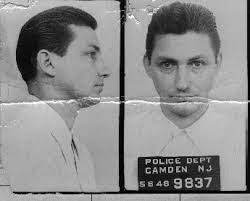
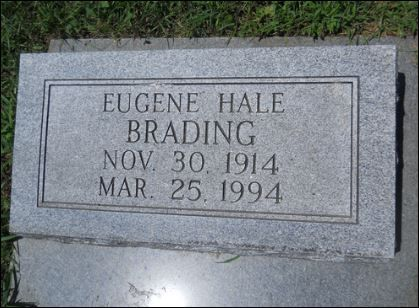
It's the story of Eugene Hale Brading, a California oil man, money courier, swindler and con artist who changed his name to Jim Braden a month before being taken into custody as a suspicious person at Dealey Plaza.
Braden was reported suspicious by the elevator operator at the Dal-Tex building as he didn't work there. Dallas deputy Loomie Lewis, escorted Braden to the Sheriff's office across the street where he dictated a statement to a stenographer and was released.
Braden claimed he visited the parole office and then went to Dealey Plaza, and after the assassination went into the Dal-Tex building where he was told there was a public phone on the second floor, where he phoned his mother in California to tell her about the assassination.
Some conspiracy theorists suggest Braden was a shooter from the second floor of the Dal-Tex building, but there is nothing to suggest he ever carried a weapon or engaged in any violence whatsoever.
Noyes' book ties Braden to the mob, not the Italian Mafia probably as a cash courrier for the Myer Lansky syndicate. He gambled, played golf as a hustler, and bilked rich widows, including the widow of a founder of Magnolia Oil Company, that figures into other aspects of the assassination story, as it was at a Magnolia Oil house party where Marina Oswald met Ruth Paine, and Oswald talked with Volkmar Schmidt.
In his book Noyes says Braden was arrested for gambling in 1948 in Camden, N.J., but the Camden police refused to respond for his records, Noyes' speculated because the Camden police are controlled by the mob.
Well, since my father William E. Kelly, Sr was a lieutenant in the Camden police department at the time, I showed him Noyes' book and referred to the 1948 Camden arrest. The very next day my dad handed me the original arrest report from 1948 and said the reason they didn't respond to Noyes' request was because the secretaries refused to go down in the dirty, dusty basement to get it.
I made photo copies of the mug shot and record, and distributed them to Noyes' and among interested researchers.
When I read in a Philadelphia newspaper that Richard Sprague, the then recently appointed chief counsel of the House Select Committee on Assassination ( HSCA) had required his staff to read Noyes' book. So I took a copy of Braden's 1948 Camden arrest report and personally delivered it to Sprague's Philadelphia law office, just across the river from where I lived in Camden.
I then watched, from a distance, the HSCA soap opera, how Sprague was fired, replaced by G. Robert Blakey, an organized crime specialist from Cornell, who redirected the committee's investigation from the CIA, to the mob.
Jim Braden testified before the HSCA in secret sessions for two days, then when the committee disbanded, Blakey declared the committee files to be Congressional records, not subject to Freedom of Information Act (FOIA) requests, as Congress exempted itself.
Then one day I received a phone call from Blakey who asked for a copy of Braden's 1948 Camden arrest report as he was writing a book blaming the mob for killing the president.
I told Blakey I gave a copy to Sprague, and Blakey said Sprague took his personal HSCA files with him. And I said I was glad he did since the HSCA records were locked away for 50 years.
So I sent Blakey a copy, and years later, after the passage of the JFK Act in 1992, I requested Sprague's HSCA records from the Archives.
They referred me to the records of Richard Sprague, the photo and computer consultant, and said they had no records whatsoever for Richard Sprague,Esq., the former chief counsel to the HSCA, though there were hundreds in Blakey's file.
When I told the NARA that Sprague was then still alive and working in Philadelphia, they sent a formal request to him for the HSCA records but received no reply.
The JFK Act did free up the HSCA records and the NARA sent me a transcript of Braden's secret and closed testimony, which named his attorney as a Mr. Twombly, of Washington DC, who told me he is not related to the Twombly who ran a North California bank and was affiliated with a university, and Chauncey Holt said did favors for the CIA.
Twombly also told me he no longer knew where Braden, was though he lived in Atlanta at the time.
In his testimony, Braden exclaimed his innocence and rallied against the conspiracy theorists who clam he was involved in the assassination
But he also acknowledged that he stayed at the Cabana Hotel, his associates visited Hunt, the Dallas oil man H. L. Hunt, and they all left for Houston immediately after the assassination, despite having registered for a few more days.
Dallas reporter and later editor Earl Golz obtained the Cabana Hotel records of Braden and his associates, that reflected the fact they had registered for a few days, but left suddenly after the assassination. Golz also obtained their credit card receipts that indicated they had a meal and drinks at the Cabana's Bon Vivant Room, where Ruby and Meyers were at the same time.
Since Meyers sold sporting goods equipment Ruby demonstrated an exercise device he was promoting, much to the amusement of Meyers and his family.
Since Meyers was married, his companion Jean Aase went shopping with one of Ruby's girls, Joyce McDonald.
Braden says after being released he flew to New Orleans, where he had previously lived during the summer of 1963, and worked out of the offices of oil man Vernon Main, on the 17th floor of the Pierre Marquette office building, just down the hall from Carlos Marchello's lawyer G. Ray Gill.
As a former law school associate of DA Jim Harrison, Gill gave Garrison a list of phone records that he believed were made by David Ferrie when he worked on the Marchello case at the time of the assassination.
Among those records, Garrison noted, was one Chicago phone number that is also listed among the Warren Commission records as a phone number also called by Jack Ruby associate Lawrence Meyers.
Meyers made the call to a women, Jean Aase, aka West, who lived and worked at a downtown Chicago hotel owned by White Russians and operated by a friend and business associate of Myers.
Meyers asked Aase, who he described in his WC testimony as a "dumb but accommodating broad," to accompany him to Dallas over the assassination weekend. They registered at the Cabana Hotel, where Jim Braden and his pals also stayed.
Dallas reporter and editor Earl Golz supplied me with the Cabana Hotel receipts for Braden and his associates that confirmed they were there at the time, and included credit card records that reflect their drinking and dining costs at the Cabana's Bon Vivant room.
At the same time Braden and his pals were there, Jack Ruby met his Chicago friend Larry Meyers, who Ruby tried to get Meyers, a sporting goods salesman, interested in a "Twist" device.
Ruby was with a young girl 17 year old Beverly Oliver, a singer at a competing club down the street.
Meyers was with his brother, a New York Coca Cola bottling company owner who was in town for a convention. His son Ralph was a former NSA technician at a U2 base in Turkey, who they had visited in Mexico City, where Ralph was working as a journalist after a sheep dipped stint as a bus driver in Chicago.
Oliver says she accompanied Ruby and Myers to The Egyptian Lounge for steak dinner, a club owned by Ruby's friends the Campisi brothers. They said Ruby was accompanied by his business partner Ralph Paul, but I believe it was Larry Myers.
I wrote about that evening in an article some years ago, Thursday night at the Cabana Lounge, and the odd events that occured.
[. JFKcountercoup: Thursday Night at the Cabana Lounge ]
Now an intrepid writer Mark Valante has compiled everything he could on Jim Braden, and is writing a book and possible film about him.
JFKCountercoup2: Mark Valenti on Jim Braden
While I don't believe Braden was directly involved in the assassination operation, he was caught up in the dragnet and is certainly a suspicious person. I did everything I could to locate him and try to get him to talk but couldn't.
Now we will have to see what Mark Valenti has on him. In the meantime Mark sent me a short synopsis of what he's learned that I will post at http://JFKCountercoup2.blogspot.com.
Joel Gruhn writes:
Bill, In case you don't know where Jim B wound up, he is interred at the Oak Hill Cemetery, in Atchison, Kansas, his birthplace. His last address was in Lee, FL a town of some 300+ residents. There is also a record matching the dates in the Florida index of deaths.
There is
a fairly extensive tree for the Braden Family at Ancestry and also a timeline
that shows life details and possibly living descendants who could shed some
light as to his later years.
Thursday, July 28, 2022
JFK and Giancana
JFK and GIANCANA
When I first learned that they were making a major motion picture about Sam Giancana's role in the assassination of President Kennedy I wrote a quick piece on the essence of the CIA-Mafia plots to kill Castro, that include Giancana as a primary player and are intimately entwined in what occured at Dealey Plaza.
[ Posted at http://JFKCountercoup2.blogspot.com / JFKCountercoup2: Sam Giancana ]
Now I realize that the Giancana-JFK story is much more convoluted and deserves deeper background to fully appreciate.
Giancana enters the story in my book in Atlantic City, New Jersey in May, 1929, when he served as a minor delegate of the Chicago contingent at the conference of organized crime mobsters from around the country.
The ostensible occasion was to celebrate the marriage of Meyer Lansky, the accountant of the Lucky Luciano-Bugsy Siegel gang out of New York, who grew up together as youngsters.They were among the Young Turks who were waiting in the wings for the old school Mustache Petes to fight it out among themselves.
But the St. Valentine's Day Massacre had called attention to the mob wars and brought heat down on all the mobsters.
The meeting was called for by Luciano, and Atlantic City was chosen because it was tightly controlled by Enoch "Nucky" Johnson, who had the law in his pocket and ensured the mobsters they wouldn't be hassled.
Racket bosses from every major city in the country were there, and while they didn't meet together in the then new Boardwalk Convention Hall, they did meet privately, took rides on the wicker walkers and walked on the beach where their conversations were drowned out by the breaking waves.
The main topics were Capone, and how to end the mob warfare.
Capone was there, but after the press learned that, he went into hiding, leaving his hotel and holding out in the locker room bar at the Atlantic City Country Club on the mainland, where there is still a locker with Capone's name on it.
It was decided that Capone had to do some time in prison, or they all would, and so he agreed to take a train to Philadelphia where he was met at the station by a friendly policeman he knew, turned over his pistol and arrested on a minor weapons charge. Sentenced in court he was sent to Holmesberg prison, where he was afforded the luxury of a radio, cigars, booze and food delivered from local restaurants. Holmesberg is now a tourist museum.
As for the inter-mob warfare, they decided to form a board of directors who would settle disputes among the mobsters, mainly over territory and booze. Luciano was named chairman of the board, and besides the heads of the five New York families, Philadelphia, Chicago, New Orleans, Tampa, and Havana would be included. Chicago would represent everything west of the Mississippi.
Foreseeing the eventual end of prohibition, it was decided, at Lansky's suggestion, to get into gambling in a big way. Lansky bribed the sheriff of some counties in Florida and opened some casinos there, but also made a deal with Cuban dictator F. Batista, to open casinos in major hotels in Havana.
While some say Giancana met old man Joe Kennedy, Sr. during their bootlegging days of prohibition, Kennedy wasn't a bootlegger. He owned the liquor companies, primarily Canadian whiskeys and Caribbean rum, and sold them to Giancana, the bootlegger.
They also could have met each other when Kennedy had a part ownership of the Cal-Neva Lodge, a large bar, restaurant, hotel and casino built on the California border with the casino on the Nevada side and situated in Northern Nevada near Lake Tahoe.
Giancana and Frank Sinatra later took control of the Cal-Neva Lodge and at Sinatra's suggestion, brought in Paul "Skinny" D'Amato to run the casino.
D'Amato owned the popular 500 Club in Atlantic City where he brought in top flight Vegas acts to perform, including Sinatra, who, as a close, personal friend, didn't charge Skinny.
By the 1950s, Giancana not only ran Chicago, but took over Luciano's place as chairman of the board of the Syndicate, as it came to be called. It also included Angelo Bruno of Philadelphia, Russell Bufalano of Northeast Pa., (As portrayed in Scorsese's The Irishman), Carlos Marchello of New Orleans and Santo Traficante of Tampa and Havana.
All of the Syndicate board members had pieces of the casino action in Florida, Havana, and Las Vegas, where Bugsy Siegel made his name and paid for it with his life.
Havana was the big money maker, until Fidel Castro threatened the casinos and mobsters by ousting Batista, who fled Cuba on New Years eve 1959.
Lansky saw it coming however, and sold his interests in one casino a few months earlier to one of JFK's golfing buddies Mike McLaney and Carrol Rosenbloom.
Around the same time Senator John F. Kennedy was running for president and was supported by his good friend Frank Sinatra, who was also pals and Cal-Neva business partner with Giancana.
While Mayor Daley and Giancana are credited with delivering Illinois to JFK in the general election, Giancana played a more pivotal role in the key West Virginia primary, that gave the Democratic nomination to JFK.
Kennedy had to win the predominantly Protestant state, and Giancana and D'Amato helped him do it. The West Virginia Sheriff's Association held their annual convention in Atlantic City and patronized D'Amato's 500 Club, so Skinny knew them well enough to deliver suitcases full of cash for them to spread around and grease the election for Kennedy.
At the Democratic National Convention that year, besides nominating JFK and putting LBJ on the ballot as VP, it was also decided to hold the 1964 Convention in Atlantic City.
Sinatra put the entertainment together for JFKs inaugural ball, and was looking forward to doing the same at the 1964 Convention in Atlantic City when JFK was expected to be renominated.
In the meantime however, Sinatra introduced Giancana and JFK to the vivacious Judyth Campbell who had amorous affairs with both men, at the same time. She visited the White House on occasion, and met JFK at his New York City hotel suite. She delivered packages and messages between the two men.
That is until the FBI director J. Edgar Hoover decided to blow the whistle on the menage a tois, informing Attorney General Bobby Kennedy of the arrangement, and suddenly Campbell and Sinatra stopped getting their White House invitations.
On a side bar, as the FBI stakeout squad kept an eye on Judy Campbell's Vegas apartment, they watched two men break in to it when she wasn't there. They were identified as the Hale twins, sons of a high level FBI official I.B. Hale, so nothing was done.
The Hale twins attended Arlington Heights high school in Ft. Worth, Tx, with fellow student Lee Harvey Oswald, at least for one semester until Oswald was of legal age to drop out of school and enlist in the US Marines.
With JFK dead, and LBJ president, the 1964 Democratic National Convention in Atlantic City was a bland affair. As LBJ was paranoid that RFK was tapping his hotel phone, he moved into the Margate beach side home of Carroll Rosenbloom, the owner of the Baltimore Colts and former Havana casino owner, who later died suspiciously.
LBJ was afraid RFK's name would be placed in nomination and he would steal the nomination, so RFK's speech in tribute to JFK was placed last of the agenda. He received a rousing long applause and gave a stirring speech.
And Sinatra performed at "the Five," as the locals called the 500 Club, for the last time.
When Skinny D'Amato died Sinatra served as a pall bearer at his funeral.
( More to come - photos and links to be added - stay tuned.)
Thursday, July 14, 2022
Preview of John Newman's Uncovering Popov's Mole
JOHN NEWMAN’S UNCOVERING POPOV’S MOLE
John Newman’s new book Uncovering Popov’s Mole is in the can, at the publisher, and should be available on Amazon by late August or early September.
Volume IV, Uncovering Popov’s Mole, is one of a multi-series of books on the assassination of President Kennedy and follows Where Angels Tread Lightly, Countdown to Darkness, and Into the Storm. All are chockfull of new information, documents and convincing evidence that once again reinforces the fact that Dr.- Professor Newman is the best independent researcher working full time on this case today. I define researcher as someone who has read all of the books, read all of the documentary records, and takes what we know further.
Newman learned how to read and decode government documents from his role as a military intelligence officer and analyst, who worked closely with General William Odom, former director of the National Security Agency (NSA) and the military’s Assistant Chief of Staff for Intelligence (ACSI), the ubiquitous agency that’s all over Dealey Plaza.
[ https://jfkcountercoup.blogspot.com/2008/01/big-con-at-dealey-plaza.html ]
THE CIA HUNT FOR POPOV’S MOLE AND LEE HARVEY OSWALD’S
DEFECTION
Newman writes: “The purpose of this
folder, [ https://jfkjmn.com/new-page-5/
]
is to give some examples of how records on Lee Harvey Oswald arriving at CIA
from other U.S. government agencies were handled in the weeks and months
immediately following his defection to the USSR in October 1959. This
effort is made difficult due to the extreme sensitivity of where these records
were originally placed and where they were NOT placed, and by the fact that
some important documents concerning this problem which were originally in the
NARA JFK collection have now gone missing.”
“I first explored this subject in
my Oswald and the CIA (1995,
2008), and have updated this study in considerably more detail on Countdown to Darkness, Volume II.The
strategy was to 1) subvert the normal distribution of incoming Oswald documents
to the CIA by not allowing them to go to the Soviet Russia Division (SRD) and
instead buttonhole them in the Office of Security, Security Research Staff
(OS/SRS); 2) at the same time dangling Oswald as U-2 flypaper in
front of the KGB in the USSR; 3) hoping that this would prompt the KGB to
contact their mole in SRD; and 4) surfacing the mole by leading the mole to
initiate a request for information on Oswald.”
As he
explains in a Facebook post, when he started out on this project Newman
didn’t expect to write this book, it sort of grew out of the research and took
on a life of its own. , Volume IV, "Uncovering Popov's Mole" was delivered to the publisher.
This is not a book that I saw coming. It hit like a comet. The effects of its
impact never let up. We were dealing with new breakthroughs as recently as two
days ago. Like the end of Volume III (Into
the Storm), the curtain had to come down at some point. The decision was
made today to reveal the bulk of what has been uncovered thus far. The
publisher estimates approximately five weeks of work (give or take a week) will
be needed before it can be sent to Amazon. While we wait for that to happen,
all of the chapters of Volume V--Armageddon--
(which is about two thirds completed) will be reassessed, and we will choose
the right platform for a zoom conference soon after publication.”
Pyotr
Semyonovich Popov, a high ranking Soviet military intelligence officer, came in
out of the blue in the 1950s, but instead of defecting, he was convinced to
remain in place as a more significant native double agent.
We first learned the details of Popov’s role in the 1980s when William Hood published his book Mole. Hood was one of the CIA agents involved in the Popov case and after Popov was caught, tried and executed, convinced his superiors to allow the story to be told.
While some of the reviews of Mole say that William Hood is a nom de plume, it is his real name, the name we find attached as being CC’d on some of Oswald’s pre-assassination documents that were closely held by James Jesus Angleton’s CIA Security Office. It’s also the name he was buried under –
[ https://www.easthamptonstar.com/archive/william-j-hood-92-novelist-cia-officer ]
Among the items Popov passed on to the CIA was the fact that there was a deeply entrenched mole within the CIA, whose identity became an obsession with Angleton, who himself was suspected to be the mole by some of his associates. This was so because Angleton learned all about Counter-intelligence and the spy game during World War II when he served in the OSS under General Bill Donovan. His primary mentor was none other than Kim Philby – probably the most famous KGB-MI5-6 Double Agent of all time.
William Harvey, who comes into this story on many levels, was one of the first to uncover Philby, and his Trinity College Cambridge school mate, the obnoxious, gay, drunkard Guy Burgess, who Philby harbored in Washington D.C. when Philby served as the representative of MI6. Most of the Cambridge Soviet spy cell were recruited by a Catholic priest, and were members of the exclusive private club known as the Apostles.
But Burgess was a member of the Pitt Club, as was James Bond, the American ornithologist and author of The Birds of the West Indies, from whom Ian Fleming appropriated the name for his secret agent 007. Bond comes into the story through CIA bursar Cummins Catherwood, whose ostensibly philantropic foundation was used by the CIA to distribute funds for covert operations. Bond himself just happened to be birdwatching at the Bahia de cochinos, Cuba – the Bay of Pigs, shortly before the invasion.
[ https://jfkcountercoup.blogspot.com/2008/01/catherwood-fund.html ]
Popov, Angleton and Oswald come together with Oswald’s
pre-assassination file, held by Angleton’s security office, and as speculated
by professor Peter Dale Scott, was used as a “barium meal” or “marked card,”
used as a trap to try to catch Popov’s mole.
As Scott writes in the introduction
to this book, “An unexpected consequence of the John F. Kennedy assassination
and cover-up has been an unprecedented exposure of previously secret CIA and
FBI records. In the resulting new field of serious scholarly research, John
Newman, with an intelligence background of his own, has emerged as a preeminent
master. For his latest volume, Uncovering
Popov's Mole, Newman has perused thousands of conflicting documents, and
distilled them into a coherent answer to a problem that CIA professionals were
unable to resolve: who was the Soviet mole in the CIA. Newman’s arguments will,
I am sure, dominate all future discussions of this surprisingly important
political question.”
The idea
was that the KGB, after Oswald’s defection, would want to know if Oswald was a
real or fake defector, and have their mole check out Oswald’s CIA file.
Was there a mole? Did he bite Angleton’s trap? And if so, who was he?
Newman says he identified Popov’s mole, and we will learn his identity when the book is published. We know Popov was highly regarded in the CIA, we know he was eventually caught and executed, and we know Hood speculates on how his cover was blown, possibly by the mole, but more likely by slack FBI stakeout and surveillance techniques.
One of the things Popov passed on to the CIA was that a well trained man and wife duo were being sent to New York City to be entrenched, possibly for years, as the Cambridge spy ring was, and then activated when they were in a position to do serious damage. The CIA had to pass the information on to the FBI, legally responsible for Counter-Intelligence, and despite the requests of the CIA to back off, they put a full court press on the couple from their arrival at the airport.
The FBI stakeout and surveillance teams followed the couple around New York City, into department stores, in and out of elevators and taxies, and the KGB were quickly aware of the FBI’s presence, but it later turned out that the KGB were following the FBI surveillance teams radio communications.
Some of the counter-surveillance techniques Hood describes in his book can be seen in action shortly after the assassination, as Oswald uses them three times in the hour after the assassination. At first he walks eight blocks east on Elm then gets in a bus heading back in the opposite direction. Then getting into a cab he has it drive six blocks past his rooming house and walks back to ensure he wasn’t being followed. Then, according to Dale Meyers, when he saw Tippit’s patrol car he quickly turned around, a furtive move that could have caught Tippit’s attention and the reason whey he was stopped.
Among those who interrogated Oswald after his arrest some of them said they believed that Oswald was trained in counter-interrogation techniques. So he practiced counter-surveillance techniques and was trained in counter-interrogation techniques, what Allen Dulles called the Crafts of Intelligence. And it clearly indicates that Oswald was not just some schmuck, but was a small pawn in a much bigger game of power politics.
While we await Newman’s book, I will be reading Jeff Morley’s Scorpion’s Dance, and will post a review as soon as I am done.
Tuesday, July 5, 2022
WATERGATE @ 50 Years After
WATERGATE @ 50 YEARS AFTER
On June 18, 1972 I was sitting in the University of Dayton, Ohio cafeteria in the JFK Student Union, having coffee with my friend John Judge and reading the Dayton Daily News paper. As most of the students had left for the summer, it was pretty much deserted, and I had stayed behind to take a required class on linguistics.
While reading the paper, buried on an inner page, was a one column eight inch wire service report from Washington about the Watergate burglary, that I read to Judge after saying, “Get a load of this.” He grabbed the paper to read it for himself, and said, “These are the same motherfuckers who killed JFK!”
We then went over to the law school library and in a Whose Who in Government, found profiles of E. Howard Hunt, G. Gordon Liddy and James McCord.
Now, 50 years later we are still feeling the reverberations from that incident, a covert intelligence black bag operation that would have remained a clandestine secret had not the suit and tie burglars been caught red handed.
Jim Hougan’s Secret Agenda remains one of the best books on the subject.
Amazon.com: Secret Agenda: Watergate, Deep Throat, and the CIA: 9781504075282: Hougan, Jim: Books
And we now have a new book, Jeff Morley’s Scorpion’s Dance: The President, the Spymaster and Watergate ( St. Martin’s Press, 2022)
While I have ordered Morley’s book I haven’t read it yet, but was impressed with his interviews with Carl Jenkins, one of the Bay of Pigs and JMWAVE trainers and case officers who acknowledges their attempts to kill Castro.
Morley and Jenkins: https://jfkcountercoup.blogspot.com/2022/06/jeff-morley-with-carl-jenkins.html
S. T. Patrick also devoted an entire issue of Garrison Magazine to Watergate,
While he has previously asked me to contribute to his publication, this time he
didn’t. If he had, I would have write about one of the Cuban Watergate
burglars – Eugenio Martinez, but not for his role in the burglary, but his role
as a Maritime boat captain in the CIA’s JMWAVE fleet out of Florida.
https://www.nytimes.com/2021/02/02/us/politics/eugenio-martinez-dead.html
In an interview with Taylor Branch Martinez relates how he deposited CIA trained anti-Castro Cuban commandos on infiltration missions to Cuba, left arms and weapons and picked up commandos after their missions were over. “I dropped off assassins with high powered rifles and scopes,” Martinez said, “that weren’t going to be used hunting rabbits.”
On November 1, 1963 the New York Times reported on a mission by the CIA mother ship Rex, that deposited a team of assassins with high powered rifles and scopes, that were captured and paraded on Cuban TV.
In his book Red Friday, Carlos Bringuier lists the names of these men, that I would like to get if you have the book.
In his Congressional testimony and to Jack Anderson, Mafia boss John Roselli, the last of the Mafia players to remain in the CIA-Mafia plots to kill Castro, related how a team of Cuban Commandos he helped train at Point Mary off Key Largo, were inserted into Cuba and captured. Roselli claimed that he believed Castro turned them and sent them back to kill JFK in Dallas.
While I don’t believe that Castro turned them and sent them back, I do believe that one of the teams that the CIA trained to kill Castro with a high powered rifle as he rode by in an open jeep (The Pathfinder Plan), that was “disapproved by higher authority,” was turned around on the higher authority in Dallas.
Those CIA agents who trained the Cuban commandos out of JMWAVE were Rip Robertson, Carl Jenkins, John I.F. Harper, and two US Army Rangers Captains Ed Roderick and Bradley Ayers, who were cross posted to the CIA by General Brute Krulak, who was responsible for military support of CIA covert operations.
Ayers wrote about his experiences in two books, The Zenith Secret and The War that Never Was, the latter of which was published by an Indiana book company whose attorney was William Harvey, the retired CIA officer who ran the Cuban Task Force W, until he was fired by RFK for sending unauthorized commando teams into Cuba during the Cuban Missile Crisis.
Those JMWAVE commandos were major players, not only at the Bay of Pigs, Mongoose, JMWAVE and Watergate, but in the Dealey Plaza operation that we are still trying to piece together today.
Friday, July 1, 2022
David Taylor on Rip Robertson
From what I understand BBC reporter David Taylor is working on a story - possibly for a documentary film, about the legendary CIA Agent Rip Robertson.
Robertson was the epitome of the agency's so-called "Cowboys," as portrayed by Doonsbury as "Havoc," who ran havoc where ever he went.
Robertson helped train the Cubans for the Bay of Pigs invasion, and won their hearts by being one of two Americans to go ashore with them.
Skpartacus on Rip Robertson
William Robertson also went on the Operation Tilt mission with William Pawley, John Martino and Richard Billings.
I don't buy anyone's identification of people in photographs.
He is also mentioned, along with Carl Jenkins, in the Dino Brugoni NPIC memo from during the Church Committee hearings in 1975. When eight NPIC technicians learned that the Church Committee was investigating CIA and Mafai plots to kill Fidel Castro, they came forward and said that they worked on a number of plans to kill Castro, in particular the Pathfinder Plan to kill Castro as he drove by in an open jeep on the way to the duPont estate at Veradero, which he frequently did. The NPIC employees said
In addition, they mentioned that Rip Robertson once led a maritime raid on Cuba in a speed boat with machine guns, driving close to shore and shooting up a house that allegedly belonged to Castro's brother.
This raid was not approved, and indicated Robertson's willingness to ignore the chain of command and act as a rogue agent.
While I am glad Taylor is focusing on such an interesting character who is at the right place at the right time - JMAVE - early 1960s, I notice that Taylor has received awards and commendations from the CIA, much like Max Holland and Priscilla Johnson McMillan, so I don't trust he will venture into the areas I am most interested in. But I hope to be proven wrong.