Thursday, October 13, 2022

THE CUBAN MISSILE CRISIS AND THE ASSASSINATION - 60 YEARS ON

THE CUBAN MISSILE CRISIS AND THE ASSASSINATION – 60 YEARS ON

By William Kelly billkelly3@gmail.com

Because of Russian dictator Vladamer Putin’s nuclear saber rattling, according to President Biden and former CIA Moscow Station Chief Rolff Larssen, we are closer to nuclear catastrophe now than we have been since the Cuban Missile Crisis of October 1962.

Most people today weren’t even alive at the time but those who were remember the anxiety potential nuclear annihilation caused, and as I was only ten years old at the time, I remember it well, and it’s a subject worth revisiting.

After the Bay of Pigs fiasco in April, 1961, the Cuban Missile Crisis was second most significant event that put the young president at odds with his military commanders.

There were a number of reports from inside Cuba of missiles being moved around, but those reports were used by the president’s opposition and enemies such as Senator Keating and Clare Booth Luce, who wrote about i the Soviet missiles in Cuba in Life Magazine. JFK wanted more accurate and irrefutable evidence of the Soviet missiles in Cuba, and he got it from Art Lundahl, an important but little known character in a number of aspects of the assassination story.

Lundahl was the head of the US Navy Photo Interpretation Lab, but after his analysis of films of UFOs, the CIA had him moved over to their camp, and he was given rooms above a car dealership in a bad section of Washington D.C., which became known as the National Photo Interpretation Center or NPIC

After U2 planes overflew Cuba, the film was flown to the top secret Hawkeye Works run by Kodak in upstate New York, where it was processed before being sent to the NPIC labs in DC, where Lundal and his staff of technicians determined that there were indeed medium range Soviet Intercontinental Ballistic Missiles (ICBMS) in Cuba.

Some of these photos were then sent to the Army Map Service client in Dallas, Texas, the Jaggers/Chiles/Stoval graphic arts firm, where Lee Harvey Oswald was working at the time. While the head of J/C/S testified that Oswald did not have access to the top secret work they did for the Army Map Service, another employee Dennis Offstein, said that he and Oswald worked on the U2 photos from the USSR, and Oswald mentioned that he was familiar with some of those places because he had lived in Russia. Offstein had also served in the military and attended the Defense Language Institute in Monterey, California, where a Warren Commission attorney said Oswald was once affiliated, though those records have disappeared. 

In addition, on the page of Oswald's notebook where he writes down the name "Chaggers/Chiles/Stoval," he also writes the word "microdot," an espionage technique that takes a photo of a document and reduces it to the size of a period, a photo usually taken with a Minox spy camera made especially for that purpose, a camera that Oswald, Michael Paine and Jack Ruby possessed. 

It has also been alleged that it was while working at Jaggers/Chiles/Stoval that Oswald produced the fake Hidel ID card, and he was working there when the rifle and pistol, ordered under the Hidel name, arrived at the Post Office though Hidel was not a name that was approved to receive mail or packages at that Post Office box. No one who worked at the Post Office recalled handing Oswald the rifle and pistol over the counter, and Oswald's daily time sheet shows that on the day they were picked up, though there's no receipt, Oswald worked from before the Post Office opened until after it closed, and one of the clients whose job he worked on was the Sam Bloom Advertising agency, who handled the logistics and promotion of the Dallas motorcade and later for Jack Ruby's trial. 

So if Oswald and Offstein worked on the U2 photos of the USSR, they also most likely worked on the U2 photos from Cuba that the J/C/S technicians blew up into poster size and placed arrows and captions on them to portray the missiles.

Lundahl then took these posters prepared at Chaggers/Chiles/Stoval to the White House where he briefed the President, saying that he was as positive as a photo analysist can be that they were medium range Soviet missiles. Lundahl became known as “The Briefer,” and Kennedy sent him and the posters overseas to brief French President Charles deGaulle and former OSS Colonel David Bruce, Kennedy’s ambassador to the Court of St. James in England, to brief them as well and garner support for whatever he decided to do.

UN Ambassador Adlai Stevenson was then given the U2 photo posters and he presented them to the General Assembly after the Soviet ambassador denied the missiles were there.

When the US military men, led by the Joint Chiefs of Staff learned of the missile in Cuba, they unanimously advised the president to bomb the missiles and Cuba and then invade the island to ensure they eliminated the threat. As accurately portrayed in the White House tapes and transcripts of the day and the film 13 Days, staring Kevin Costner as JFK’s aide, the military, led by Air Force Chief of Staff General Curtis LeMay, were adamant about a military solution, but JFK held out for a negotiated one.  

Although only the president has the authority to declare war, a regional military commander on his own, raised the DEFCON level to 2, one step away from war, and when the president learned of this he admonished that commander saying that he sent a message to the Soviets, a message he didn't want sent. 

Another significant event that took place behind the scenes during the Cuban Missile Crisis was when William Harvey, head of the CIA's Task Force W Cuban desk, ordered the JMWAVE station to send in a number of commando teams to infiltrate Cuba. When Attorney General RFK learned of this, he immediately had those teams recalled, and fired Harvey, who was reposted to the CIA desk in Rome, Italy, though he maintained his role as case officer for John Rosselli. 

Oval Office tapes recorded General LeMay remarking to JFK that “you are in pretty bad fix, Mr. President,” to which JFK responded, “If you haven’t noticed, you are in it with me!”

LeMay also said that a negotiated solution would be “Munich all over again,” referring to the support JFK’s father US Ambassador to England gave Nevell Chamberlain who succumbed to Hitler in Munich allowing the Nazi invasion of Poland and the start of World War II. Chamberlain’s use of the umbrella also sparked the Umbrella Man at Dealey Plaza to protest JFK’s appeasement to communists, the last thing he probably saw before having his brains blown out.

When JFK left the Oval Office he kept the recording tape running that captured LeMay saying, “We’re going to have to do something about those God damned Kennedys,” while JFK said to his brother “And we call ourselves human beings.”

The military were caught with their pants down because they had all of their radars facing north, to detect launches of ballistic missiles, since they knew the Soviets would shoot them over the North Pole. Such missiles, even long range ones could hit Washington D.C., New York, Chicago and San Francisco, but not the southern states, so that’s why the major defense contractors – Bell Helicopter, General Dynamics, Collins Radio, et al., were told to set up their factories in Texas.

Now however, they were threatened by the missiles in Cuba that if launched, could only be detected by one radar, in Mt. Laurel, New Jersey, that many people remember as a giant golf ball off the Turnpike. So the military sent a mobile radar unit to Louisiana aimed at Cuba to warn of any missile launches. These two radars operated under the code name Falling Leaves.

During the heat of the crisis, JFK met with his national security advisors, but one morning, before the meeting could begin, Caroline Kennedy approached her father. At the urging of her mother she had memorized one of JFK's favorite poems, Rendezvous With Death, and as recalled by James Douglas in his book, "Why JFK Was Killed and Why it Matters," she recited it to the president and the men who were going to decide the fate of humanity. It's author, Alan Seeger, who met his date with death at the Battle of Somme during World War I, was a nephew of peace activist and folk singer Pete Seeger. 

Unfortunately, the title of the poem was hijacked by Gus Russo and a German film maker who produced a certified black propaganda movie that blames the assassination on Fidel Castro, a still active disinformation campaign. 

During one such meeting RFK asked Secretary of Defense McNamara what alternatives there were to bombing and invasion, he meekly responded that when they war gamed that scenario, a blockade worked, so JFK ordered a blockade of Cuba so Russian ships taking Soviet missiles could no longer deliver them.

At the same time RFK began a backchannel talk with a Russian journalist he knew who had personal ties to Soviet Premier Khrushchev. They effectively ended the two week long crisis by assuring the Soviets that if they withdrew their missiles the US would never invade Cuba and would remove their ICBMs from Turkey.

When JFK permitted Seven Days in May film director John Frankenheimer to shoot scenes at the White House while he was away, JFK went sailing with his former PT109 shipmate and assistant Secretary of Navy Paul Fay. While sailing Fay asked JFK if he thought a military takeover of the government as portrayed in the movie was possible.  JFK responded that yes, it was possible if three requirements were met – one, there was an incident like the Bay of Pigs, two, if there was a similar incident, like the Cuban Missile Crisis, and three, if there was a third such incident, it could happen.

And there was, - the back channel negotiations JFK was conducting with Fidel Castro at the United Nations. These talks were made through TV reporter Lisa Howard, JFK’s former Choate Academy roommate William Attwood – who introduced JFK to Mary Pinchot (Meyer), and Cuban ambassador  Carlos LeChuga. When LaChuga wasCuban ambassador to Mexico he had an affair with Oswald’s contact at the Cuban embassy Silvia Duran.

Those supposedly secret negotiations, ongoing a the time of the assassination, became known to the Cubans through JFK’s Republican ambassador to Vietnam Henry Cabot Lodge, and that was enough to motivate them to kill the President. The anti-Castro Cuban snipers trained by the CIA at JMWAVE bases in Florida, had the mechanism to kill Castro, the motive and the opportunity was presented in a number motorcades in Philadelphia, Chicago, Tampa, Houston, Fort Worth and Dallas. 

After the successful settlement of the Cuban Missile Crisis, when things calmed down, JFK and RFK visited Art Lundal at his NPIC office and labs above the car dealership, and JFK arranged for NPIC to move into a vacant building on the grounds of the Navy Yard in Capitol Hill. 

That's where the Zapruder Film was taken on two occasions over the weekend of the assassination to make briefing boards. On one occasion it was said the film was brought in from Hawkeye Works, the top secret Kodak lab where U2 and satellite photos were processed. When this fact was related to the Assassinations Records Review Board (ARRB), the CIA censored it as even the name Hawkeye Works was still classified at the time. 

The second occasion the Zapruder film was taken to NPIC was supervised by Dino Brugioni, who wrote two books, one on Photo Fakery and another on NPIC's role in the Cuban Missile Crisis, "Eyeball to Eyeball." Brugioni also wrote the CIA memo relating that eight NPIC technicians participated in an operation called Pathfinder to kill Fidel Castro by shooting him in the head as he rode by in an open jeep on the way to the Dupont estate in Veradero, which he often did. 

Brugioni said that the briefing boards he made were used by Lundal to brief CIA director John McCone on the NPIC's analysis of the Zapruder film. Afterwards Lundal thanked the group who made the boards and said the briefing went okay, though there is no official record of it. Shortly thereafter however, Arthur Schlesinger wrote in his journal that when he asked RFK about the assassination, RFK replied that the CIA thought there were two gunman, probably based on Lundal's briefing. 

On the 20th anniversary of the Cuban Missile Crisis in 1982 a conference held in Cuba where it was revealed that there were four short range tactical nuclear missiles in Cuba. Had Cuba been bombed and invaded they would most certainly have been used and would have provoked World War III, with the bombs killing hundreds of millions of people.

Around the same time as that anniversary, the NPIC posters that had the arrows and captions on them, that Lundal used to brief the President, were placed on public display at the Washington National Airport. 

That November, as John Judge and I were waiting for a plane to take us to Dallas, we looked closely at the posters, and in the bottom corner, where an artist would sign his name to a painting, was the citation:  JAGGER/CHILES/STOVAL-Dallas

Links:

https://www.poetryfoundation.org/poems/45077/i-have-a-rendezvous-with-death

https://jfkcountercoup.blogspot.com/2017/04/jfks-rendezvous-with-death-on-prayer.html?m=0

Rendezvous At Dealey Plaza II | JFKCountercoup

https://jfkcountercoup.blogspot.com/2009/12/u2-photos-of-cuba-oct-62.html

https://jfkfacts.org/jan-7-1963-under-u-s-government-eyes-oswald-goes-to-work/

https://www.cbsnews.com/news/putin-nuclear-war-threat-intelligence-matters/

https://www.nytimes.com/2014/12/18/upshot/when-jfk-secretly-reached-out-to-castro.html

TESTIMONY OF DENNIS HYMAN OFSTEIN

https://educationforum.ipbhost.com/topic/10719-jaggars-chiles-stovall/

Tuesday, September 20, 2022

Gorbachev and Khrushchev at Dealey Plaza

 Gorbachev and Khrushchev at Dealey Plaza

The recent death of Gorbachev made me think of when I missed crossing paths with him when he visited Dallas, Dealey Plaza, the Grassy Knoll and the Sixth Floor Museum some time ago.

Its notable that Russian dictator Vladimir Putin snubbed Gorbachev’s funeral, as he was singlehandedly responsible for dismantling the Soviet Union that Putin is now trying to forcibly reconstruct.

I was in Chicago when the Illinois national guard were called out during the 1968 Democratic National Convention, at the very same time Soviet tanks rolled into Prague to put down a Czechoslovakian revolt.

But when the East and West Germans wanted the Berlin Wall to go, and reunite Germany, Gorbachev refused to use his iron hand and let it happen.

In 1990, while the Wall was being dismantled and there was still an East Berlin, though people could travel both ways freely, I met a Russian media women who escorted me and a friend to the East Berlin television tower, where there is a rotating restaurant on the top floor that gives you an everchanging view of the city, like the Seattle Needle and Dealey Plaza's Reunion Tower.

Over lunch she explained that the revolt that led to the opening of the Wall didn't begin in Berlin, but the city of Lipzig, where the authorities had been cracking down on a band of street musicians who performed for donations. They sought refuge and were given sanctuary in a Catholic church were the parish priest began a daily prayer vigil for the reunion of the two Germanies and the end of the reactionary crackdown on citizens.

There were only a few at first but the prayer crowd grew daily until the church was filled and people lined the streets. That protest, sparked by itinerant street musicians and a Catholic priest, resulted in the reunion of Germany and eventually the dissolution of the Soviet Union.

That Gorbachev's inaction allowed this to happen is a testament to his character, and listening to what JFK and Reagan had to say, then acting on it by not reacting.

So one November day in 1998 I was flying into Dallas from Philadelphia and recognized Bob Groden's son in a seat in front of me. As we were disembarking I introduced myself and he said his dad was picking him up and would probably give me a ride to my hotel.

Bob said no problem, and excitedly said Gorbachev had visited the Grassy Knoll and Sixth Floor a few hours ago, and he gave him one of his books.

He would give me a ride to my hotel, but first we had to stop for a Texas barbecue dinner at a friend's joint. It was good food and Bob got a free meal for bringing us in - there were about six of us a dog in the van.

The dog, a little yapper, belonged to one of Ruby's dancers, who I was sitting near, and was a descendant of Ruby's dog Sheba. When we got to my hotel, little Sheba ran in and proceeded to piss all over the lobby, so I pretended not to be associated with it.

Later, when I visited Gary Mack, he related how Gorbachev had visited and wrote a little note in the guest book that I thought profound:

“He looked far ahead and he wanted to change a great deal. Perhaps it is this that is the key to the mystery of the death of President John F. Kennedy.”

– written by Soviet leader Mikhail Gorbachev in a Sixth Floor Museum memory book in 1998, according to archivist Gary Mack in the Kennedy Assassination Chronicles.

Another Soviet Premier had a big roll in the assassination story - Nikita Khrushchev, JFK's primary rival , along with Castro, who was the subject of an FBI report released under the JFK Act, that I found fascinating and included it among my Top Ten Records Released Under the JFK Act.

https://jfkcountercoup.blogspot.com/2018/11/top-ten-jfk-assassination-records.html

Drew Pearson was a renown investigative reporter in his day, author of the Washington Merry-go-round syndicated column, and a mentor to his associate Jack Anderson.

But he failed to inform his readers that he met with Khrushchev but instead dutifully informed the FBI what Khrushchev had said to him about the assassination.

And it was Khrushchev who took us to the brink of nuclear war nearly sixty years ago in October 1962 but backed off.

Drew Pearson dinner with Khrushchev - 104-10003-10064 

http://documents.theblackvault.com/documents/jfk/NARA-July2017/JFK-July_2017_Release-Formerly_released_in_part/DOCID-32105956.PDF

Soviet Primer Khrushchev told Pierson  that he disbelieved the Warren Report and criticized and suspected American intelligence agencies of involvement in the assassination.

Rather than write a “Washington Merry-Go-Round” Column on this incredible scoop Pearson reported it to the FBI, who noted:  "Pearson repeated that the reaction of Chairman Khrushchev…was one of flat disbelief and archtypical of the universal European belief that there was some kind of American conspiracy behind the assassination of President Kennedy and the murder of Oswald....(He) could not believe that the affair had happened as it apparently did and Mr. Pearson made no headway whatsoever in trying to change their belief that something was not on the level. Chairman Khruschev greeted Mr. Pearson's efforts with a tolerant smile..."   

Of course not only the Soviets, but the French, German, Isralie, Cuban and other nationl intelligence agencies performed their own independent investigations, only the US government agencies and commissions concluded one man alone was responsible for killing the president in order to cover-up their own invlvemnt.

So it was quite fitting for Kruschev to belittle and ridicule Pearson for not pursuing the truth, merely accept the government's handouts.and not to recognize JFK was the victim of his own security agencies.

Pearson's protege Jack Anderson, at least tried to find out what he could when he interviewed Johnny Rosselli, but he too only took what Rosselli handed him and didn't follow up and take it to another level, that we are trying to do now. 

Thursday, September 8, 2022

Foreknowledge and the Assassination

 FOREKNOWLEDGE AND JFK ASSASSINATION

Sun Tzu said: “Now the reason the enlightened Prince and the wise general conquer the enemy whenever they move and their achievements surpass those of ordinary men is foreknowledge.”

“What is called foreknowledge cannot be elicited from spirits nor from gods. Nor by analogy with past events, nor from calculations. It must be obtained from men who know the enemy situation.” – The Art of War – Chapter XII – Employment of Secret Agents.

One of the hallmarks and “fingerprints of intelligence” that makes the assassination of President Kennedy a covert intelligence operation is the foreknowledge certain people had of the event, and expressing it to others before it occurred.

– Bray – See: Bray v. Bendix trial transcripts re: JEFCOTT.

https://jfkcountercoup.blogspot.com/2019/05/oni-and-assassination-of-president.html

– Cambridge, England – Telephone call. See: Bowen, Howard.

https://www.bbc.com/news/uk-england-cambridgeshire-41773716

https://www.theguardian.com/us-news/2017/oct/27/jfk-files-british-paper-got-anonymous-call-just-before-assassination

– Cheramie, Rose – Jack Ruby associate. See: Louisiana State Police (HSCA)

https://spartacus-educational.com/JFKcheramie.htm

https://www.amazon.com/Rose-Many-Other-Names-Assassination/dp/1937584631

– Dinkin, Eugene B. – American soldier in Germany, claims to have picked up on the assassination plot from Army Security Agency monitor of OAS, the Algerian French Generals, went AOL and tried to inform American ambassador. See : Russell, Dick, TMWKTM.

https://www.maryferrell.org/pages/Allegations_of_PFC_Eugene_Dinkin.html

– Grace, William – “Shortly before the assassination an executive of the Grace Lines was found unconscious in the street. Taken to a hospital, he mumbled that the president was to be shot. He had an appointment with Army Intelligence agents before he was found.” – (Paris Flamonde, The Kennedy Conspiracy). Also : “An executive of the Grace Lines suffered a concussion after coming into contact with an Army Intelligence agent. While in a delirium he said, ‘The President is in danger!…”. [Also NoteLHO wrote to mother/brother he “made reservations on a Grace liner.” ]

– Martinez, Jorge Soto – On Nov. 1, told Lillian Springler at Parrot Jungle in Miami JFK to be killed by “Lee, been to Russia, Mexico.” JSM lived in apartment above Mike McLaney’s garage, former Cuban Customs, worked at Fountainblu Hotel.

http://jfkcountercoup2.blogspot.com/2013/08/parrot-jungle-incident-jorge-soto.html

– Martino, John – To his wife, on the morning of the assassination (See: Summers, Vanity Fair, SWHT), also Larry Hancock’s “Someone Would Have Talked.”

https://spartacus-educational.com/JFKmartino.htm

https://www.maryferrell.org/pages/John_Martinos_Confessions.html

https://www.degruyter.com/document/doi/10.4159/9780674039285-017/pdf

– Milteer, Joseph – (RIP Feb. 28, 1974) Alias Samuel Steven Story. See: William Agusta Somerset – Agent 88 – undercover convers ations. NO, April 63

https://www.jfk-assassination.net/milteer.htm.

https://www.maryferrell.org/pages/Predictions_of_Joseph_Milteer.html

– Odio, Syliva – See: Fonzi, Gaeton (HSCA; The Last Investigation)/ Russell, Dick (TMWKTM).

https://www.maryferrell.org/pages/The_Odio_Incident.html

https://spartacus-educational.com/JFKodioS.htm

– Oxnard, Californiatelephone call – See: Peter Noyes, Legacy of Doubt.

https://archive.vcstar.com/news/mystery-oxnard-area-caller-whispers-about-jfks-death-minutes-before-shooting-ep-292158144-351553551.html/

https://www.staradvertiser.com/2013/11/22/breaking-news/california-caller-whispered-of-jfks-death-minutes-before-shooting/

– Paine, Michael – Was talking about political assassination in the Bell Helicopter cafateria as JFK was being killed.

https://spartacus-educational.com/JFKpaineM.htm

– Philbrick, Herbert, who wrote “I Was A Communist for the FBI,” Oswald’s favorite author and TV show, as a kid  – According to  Jean Hill. Philbrick expressed foreknowledge of the assassination while addressing a meeting of lawyers.

https://educationforum.ipbhost.com/topic/3663-papers-of-herbert-philbrick/

– Rivera, Jose, Dr. (Col. USAR) – See: Adele Edisen (ARRB). Rivera not only expressed foreknowledge of JFK’s assassination, but also of his son Patrick’s premature death and that LHO would move into the apartment on Magazine Street, New Orleans before LHO knew.

http://www.namebase.net:82/edisen.html

https://spartacus-educational.com/JFKrivera.htm

– Underhill, G. Garrett – See: Turner, William, Ramparts.

https://www.archives.gov/files/research/jfk/releases/104-10170-10145.pdf

https://spartacus-educational.com/JFKunderhillG.htm

The ABCs of Dizinformation and the Assassination of JFK


The ABCs of Dizinformation and the Assassination of JFK 

ABC TV - A Walt Disney company, has a job opening for a Miss-Disinformation Reporter, with ten years experience. Well I certainly qualify for that. 

 JFKCountercoup2: ABC Opening for Disinformation - Misinformation Reporter - Ha

My study of the JFK assassination has given me a master's degree in miss-and disinformation. 

From what I can gather, the term dizinformation came into popular use after the publication of John Barron's book KGB- The Secret Work of Soviet Secret Agents first published in 1974, and details the work of the KGB's Department of Dizinformation. 

The American term for the same thing is Propaganda, which takes its name from the Vatican's Department for the Propagation of the Faith. 

As far as Dizinformation and Propaganda goes in the JFK assassination story, Max Holland, like Barron, is only interested in the Soviet variety and not the local domestic versions. 

Holland asserts, in an official CIA publication, that an article in an Italian publication about the shadowy organization known as PERMINDEX, that included Clay Shaw among its listed directors, was dizinformation because the publication was funded in part by the KGB, and it was that article that led Jim Garrison on his crusade to prosecute Clay Shaw for a role in the assassination of President Kennedy. 

While the publication may have received money from the KGB, the article was correct in most respects, and according to former FBI agent Bill Turner, who worked closely with Garrison, his investigation began not because of the article in the Italian publication, but because of the accused assassin's association with Shaw, David Ferrie, Guy Banisner and the Cubans in New Orleans in the summer of 1963. 

The American and CIA's version of Dizinformation - Propaganda - begins with a very interesting and relatively unknown fellow - Paul Linebarger - who while serving as a US Army officer during the Korean War, wrote the classic textbook  called "Propaganda." 

Linebarger also taught propaganda, especially black propaganda and covert operational techniques at the John Hopkins Center for International Studies in Washington D.C. 

Among his students you will recognize E. Howard Hunt and Edward Lansdale, who Linebarger said had "black minds," along with David A. Phillips, William Odom, and Joseph Smith, who detailed Linebarger's class notes in his book "Portrait of a Cold Warrior." 

Linebarger broke down propaganda into five types - from white to black - and according to Smith, focused primarily on black propaganda. 

Joseph B. Smith Portrait of a Cold Warrior – Second Thoughts of a Top CIA Agent (G. P. Putnam’s Sons, 1976) P. 59.

When Smith was being prepared for training his recruiter told him: 

..“As far as psychological warfare is concerned, it’s a brand new field. We are all learning. You remember it was one of Hitler’s strongest weapons. The Communists depend on it a lot to. We figure that if we analyze what they’re doing and study the countries in our area closely, we can beat them at their own game.”

“Oh yes, another thing,” she added, “We won’t be able to spare you for any clandestine tradecraft training. That would take another three months. We need you now. You’ll have to learn the business on the job. I’m afraid.”

“Well,” she added as an afterthought, “we will be able to help you with psychwar. Paul Linebarger, our consultant, is one of the few real experts and he gives evening seminars for us. We’ll try to get you into one of them after you’ve settled in.”

ASSASSINATION AS A CONTINGENCY 

.......One important contingency to consider in case a situation worsened rapidly and a take over by the Communist guerrilla armies appeared imminent was the operational effectiveness of assassination of the leaders of these groups.

For example, in Indochina, would the Viet Minh fall apart if Ho Chi Minh were assassinated? He appeared to be the soul of the movement. The evidence indicated that he was the one man nearly all Vietnamese respected and his efforts had provided the decisive cohesion that held the Communist cause together. If he were removed, wouldn’t this one death perhaps save the lives of many?

This was the key point on which discussions of assassination turned, the same kind of reasoning that led to the dropping of the first atomic bomb. An assassination meant the death of one person. If the situation is one of armed combat, killing is an accepted activity. Maximum accomplishment via minimum violence became a primary consideration.

Thus assassination was always a contingency action to be included in the plans, though approval would have to come from the National Security Council before any assassination was attempted. Another practical problem was where to find the assassins. The reading of case studies of the successful assassinations by Soviet secret service counterparts, such as the killing of Trotsky, wasn’t much help because the Soviets service exercised a control over its agents we could not impose, certainly not on Asians. That left only criminals and cranks to be considered for recruitment to perform this service...P. 75...

LINEBARGER'S CLASS 

All this was far in the future and far less important to me in the early winter of 1952 than the fact that I got the chance to attend Paul Linebarger’s seminar in psychological warfare. Linebarger had served as an Army psychological warfare officer in Chungking during the war. He had written a textbook on the subject in 1948

In 1951 he was serving as the Far East Division’s chief consultant. He also served as the Defense Department in the same capacity, giving advice on U.S. psychwar operations in Korea, and he was professor of Asian politics at the School for Advanced International Studies of the John Hopkins University. His book by this time had gone through three American editions, two Argentine editions and a Japanese edition.

He was far from a textbook warrior, however. He best described himself when he wrote the introduction to his book, “Psychological warfare involves exciting wit sharpening work. It tends to attract quick-minded people – men full of ideas.” His wits scarcely needed sharpening, and he was never at a loss for an idea.

The seminars were held in eight weeks, every Friday night at his home. Going to Paul Linebarger’s house on Friday evenings was not only an educational experience for those who attended the seminar, it was also an exercise in clandestinity. Learning covert operational conduct was considered part of the course. 

Each seminar was limited to no more than eight students. They were told to pose as students from the School of Advanced International Studies, to go to Paul’s via different routes, and to say they were attending a seminar on Asian politics. Senator McCarthy had alerted everyone to the possibility that Communist operators might be expected to turn up at almost any place in Washington. The School of Advanced International Studies had its campus in Washington, but over in Baltimore at the main campus of John Hopkins University, Owen Lattimore, the expert on Asian geography, held sway. McCarthy had called Lattimore the principal agent of Communist China in the United States.

Although no one called Paul Linebarger the principle agent of Chiang Kai-shek, his father had been Sun Yat Sen’s legal advisor and Paul never hid his full devotion to the Chinat cause. The feeling of the clash of mysterious powers was abroad in the cold winter nights around Paul’s house. It could just be possible that some Communist surveillant might follow one of the students up Rock Creek Park to 29th Street. They might even be operating from the Shoreham hotel, a few blocks away. We had been thoroughly indoctrinated in the fear of Communist subversion....It would be difficult to say whether it was the political atmosphere in general, the office routine of the day just closed, or the drawn drapes in Linebarger’s living room, but students at the seminar met in an appropriately conspiratorial mood tht raised the level of their appreciation of their subject.

The mood was fitting if not essential to an understanding of the material. The first point that Linebarger made was that the purpose of all psychological warfare is the manipulation of people so that they are not able to detect they are being manipulated. Wartime psychwar had been a matter of undermining the enemy civilian and military will to continue the fight. The audience, in brief, was very clearly defined. Determining just who it was they wanted to manipulate and for what ends was also pretty clear to the OPC personnel. Their targets were the Communists and their allies. Having this firmly in mind, any methods of manipulation could be used, especially “black propaganda.”

Black propaganda operations, by definition, are operations in which the source of the propaganda is disguised or misrepresented in one way or another so as not be attributable to the people who really put it out. This distinguishes black from white propaganda, such as news bulletins and similar statements issued by one side in a conflict extolling its successes, of course, or other material just as clearly designed to serve the purposes of its identifiable authors.

During World War II black propaganda operators had a field day. German black operations against the French consisted of such enterprises as sending French soldiers letters from their hometowns telling them their wives were committing adultery, or were infected with venereal diseases, giving away mourning dresses to women who would wear them on the streets of Paris, or intercepting telephone communications in the field and giving confusing or contradictory orders.

Paul Linebarger’s was a seminar in black propaganda only. One reason for this was that the United States already had an overt propaganda agency as part of the cold war apparatus. In those days this was run directly by the State Department, but in 1953 it would become formalized into the United States Information Agency and become an independent government agency responsible for worldwide United States propaganda operations. Furthermore, the view of the state of affairs in the world was that was the fundamental assumption of all OPC activities was that the United States was faced everywhere with an enemy that was using an untold array of black psychwar operations to undermine the nations of the world in order to present us with a fait accompli one fine morning when we would wake up to find all these countries under Communist control. Hence, it was vital to understand all about such operations from a defensive standpoint if nothing else. There was, however, something else. This was an attitude produced by the mixture of ancient wisdom that a good offense is the best defense, and the spirit of the times that made the existence of conspiracy seem so real. It was good to feel that we were learning how to beat the Communists at their own game.

Paul Linebarger loved black propaganda operations probably because they involved the wit-sharpening he liked to talk about. Also, he was so god at them that his was one of the inventive minds that refined the entire black operations field into shades of blackness. Linebarger and his disciples decided that propaganda that was merely not attributed to the United States was not really black, only gray. To be called black it had to be something more. Furthermore, they divided gray propaganda into shades of gray. So-called light gray was defined as propaganda that was not attributed to the United States government, but instead, for example, to a group that was known to be a friendly source. Medium gray or “gray gray” was the term LInebarger used for propaganda that was attributed to a neutral source or, in any case, to one that was not suspected to be about to say anything friendly concerning the United States or its national or international policies. Dark gray was the term for propaganda attributed to a source usually hostile to the United States. This left the term black propaganda for a very special kind of propaganda activity. Black propaganda operations were operations done to look like, and carefully labeled to be, acts of the (Communist) enemy.

Not only was the attribution given the source of the propaganda activity used as a criterion for defining what kind of propaganda it was, but equally important was the kind of message used. Gray activity involved statements or actions that supported U.S. policies. Black propaganda operations, being attributed to the enemy, naturally did not. In fact, black propaganda, to be believable, supported the enemy’s positions and openly opposed those of the United States.

Gray propaganda was considered to be useful because it added strength to our side by putting praise of the United States or, at least a reasonably stated understanding of U.S. positions, in the mouths of those whom the world at large would not identify as U.S. spokesmen giving out the official line. In one sense, gray propaganda is a close cousin of the endorsement in a commercial advertising campaign. Where the Clandestine Services came in was in the role of sponsor – but a sponsor that was not supposed to be known to anyone who heard or read the endorsement of the U.S. government’s policy product...

Mostly however, we followed our mentor through a series of actions that were to be attributed to various of our Communist enemies……Saying that the Communists were evil was merely talk. Doing something evil, disguised as Communists, would have real credibility.

Linebarger was always careful to point out that to have a chance of success, these black operations must be based on good solid information about how the Communists Party we proposed to imitate actually conducted its business...

 [Communists Huks in the Phillipines used as an example BK Notes that Ed Lansdale had Linebarger flown to the Phillipines in order to train Napoleon Villanuve, who later helped Lansdale train the anti-Castro Cubans for the Bay of Pigs].

It may seem curious, but it did not bother anyone at the seminar to be blithely engaged in planning a forgery, although no one there had ever been arrested for any serious crime. Otherwise they would not have been there. They would not have been granted the necessary security clearance to have gained employment by the Clandestine Services. The finer points about forgery, however, were actually the most fascinating to this group: how to obtain authentic paper, how to be sure to use the same kind of typewriter that Huk orders were usually written on, and of course, how to be certain to use the proper language that would make our work indistinguishable from the real thing. These were the topics examined with the most minute care.

Linebarger undertook a kind of group therapy approach to try to show us that tricking someone into believing that black is white comes naturally to everybody and is something that is practiced from childhood.

“Look,” he began, “can’t you remember how you fooled your brothers and sisters and your father and mother? Try to remember how old you were when you first tricked them.”

This got the class confessional under way. Soon people began recalling how they had stolen their brother’s and sister’s favorite toys…..As the stories progressed from grade school to high school and college capers, the tales of manipulation of parents and peers grew darker, if not black to the point of Linebarger’s definition of black operations. Everyone had either forged the time of return from when coming back to a dormitory after hours or forged parents’ signatures to bad report cards, or used false credentials to buy a drink when under age.

We found these exchanges so interesting that we decided to open each evening’s session with twenty minutes of confessions. They undoubtedly helped us to study the art of falsifying Communist documents with the high enthusiasm we all developed.

After listening to these recitals for a couple of weeks, Linebarger asked, “Haven’t any of you done anything more exciting than figure out ways to have your drinking and sexual adventures? I know none of you as in a psychwar outfit during the war, but has anyone done anything more nearly operational?

To everyone’s surprise Boston Blackie, our group anti-hero and skeptic was the one who replied....“...there was a referendum in Massachusetts on the question of birth control information...Then one of the priests got an idea. He suggested that we explain to the parishioners that if the voters approved the change in the law and permitted birth control information to be legally disseminated, this would mean that they would have to get a written permit from the government if they wanted to have a baby...

Linebarger thought this was an excellent story. He beamed, “I wish we had access to Church records for the past thousand years, we’d have so many case histories that we would be sure to find something to fit all our needs in Asia right now. The Catholic Church didn’t last this long as an unalternable institution without giving God’s will some assistance.

DAVID MAURER AND THE BIG CON 

“I want you all to go out and get a copy of David Maurer’s classic on the confidence man. It’s called The Big Con, and it’s available now in a paperback edition,” Paul continued. “That little book will teach you more about the art of covert operations than anything else I know.”

“Your job and the confidence man’s are almost identical. The point of our little confessionals has been to show you what I mean by that statement. I’m happy to say I think you’ve been getting it...”

“Of course, your motives and those of the confidence men are different. He wants to fleece his mark out of his money. You want to convince a Chinese, a Filipino, and Indonesian, a Malay, a Burmese, a Thai, that what you want him to believe or do for the good of the U.S. government is what he thinks he himself really believes and wants to do.”

“Maurer’s book will give you a lot of ideas on how to recruit agents, how to handle them and how to get rid of them peacefully when they’re no use to you any longer. Believe me, that last one is the toughest job of all.”

We were all soon avidly reading The Big Con. The tales it told did, indeed, contain a lot of hints on how to do our jobs. For me one sentence seemed to sum it all up beautifully, “The big-time confidence games,” wrote Maurer, “are in reality only carefully rehearsed plays in which every member of the cast except the mark knows his part perfectly.” 

* [ David W. Maurer, The Big Con (New York: Pocket Books, 1949), p. 102.]

Besides this course reading, exchanges of experiences, development of model situations, study of Communist propaganda, especially its style and content with an eye to copying them, Paul taught by the oldest method, precept. His injunction was to follow the example of proven successful practitioners.

He had two leading operational heroes whose activities formed the basis for lessons he wanted us to learn and whose examples he thought we should follow. One was Lt. Col. Edward G. Lansdale, the OPC station chief in Manila, and the other was E. Howard Hunt, the OPC station chief in Mexico City. Both of them had what he called “black minds,” and the daring to defy bureaucratic restraints in thinking up and executing operations. He had a number of stories to tell about the exploits of both. He was particularly fond of Lansdale, whom he claimed had “invented” the Philippine Secretary of Defense, Ramon Magsaysay, around whom he built a plan of action that was slowly but surely bringing the Huk uprising to an end. His esteem for Hunt lay in his admiration for what he considered Hunt’s great ability to invent a clever way to thwart the Communists in their efforts to achieve success in the everyday affairs of life. He had a favorite Lansdale story and a favorite Hunt story to illustrate what he admired in each, and to demonstrate two widely different kinds of black operations. Lansdale’s was somewhat complex and required the support of a number of people and pieces of equipment. Hunt’s was disarmingly simple.

Lansdale ordered a careful study of the superstitions of the Filipino peasants, their lore their witch doctors, their taboos and myths. He then got hold of a small aircraft and some air-to-ground communications gear. He would fly the aircraft over areas where Huks were known to be hiding and broadcast in the Tugalog language mysterious curses on any villagers who designed to give the Huks food and shelter...

Linebarger’s Howard Hunt story was much less heavy. It also fitted better Linebarger’s definition of a black operation. No one had quite the heart to ask him whether the Filipino spirits to whom the curses were attributed were Communists, as his definition of black propaganda would require, and, if so, were they cursing their own team, the Huks.

Linebarger liked to stress that his Hunt story was a good example of how to cause the Communists a lot of grief on a low budget. Hunt learned that a Communist front in Mexico was planning a reception to honor some Soviet visitors. Drinks, refreshments, and a lunch were planned for the event. Hunt got hold of an invitation. He then went to work with a friendly printer and printed up three thousand extra invitations, which he had widely distributed.

On the day of the reception, Hunt got the desired results. Before the reception was a quarter underway, the Communists had run out of food and drink…..The cause of the Soviet-Mexican friendship was definitely damaged, at least for a while.

A note of caution that Linebarger added to these discussions of black operations sounds like a bell down the years. He would explain, after someone had come up with an especially clever plan for getting the Communists completely incriminated in an exceedingly offensive act, that there should be limits to black activities.

“I hate to think what would ever happen,” he once said with a prophet’s voice, “if any of you ever got out of this business and got involved in U.S. politics. These kinds of dirty tricks must never be used in internal U.S. politics. The whole system would come apart.”

I remember there was a nodding of heads when Linebarger delivered this admonition. I do not recall that anyone agreed in a loud, firm voice. Perhaps his remark was thought to be really rather irrelevant. We had more serious business to attend to.

We would say goodnight to Paul in the vestibule of his house, and slip, one by one, out into the night to our cars parked a discreetly different distances from his home. We had just completed another session in the act of confounding our enemies. We were inspired to go back to work the following week and look for fresh opportunities to devise new operations against the Communists.... (P. 86)

THE PROOF IN THE PROPAGANDA – Black Prop Ops and the Assassination of JFK

            Actually there were two conspiracies associated with the assassination of President Kennedy – the first was the arrangement of his murder, the second concerns the cover-up and thwarting of justice. The second conspiracy continues today.

            The evidence in both cases is in the form of fingerprints – the fingerprints of distinct intelligence techniques at work. Evidence of the first conspiracy comes in the form of foreknowledge, individuals who had knowledge of the assassination before it occurred and expressed this knowledge to others. 

Foreknowledge & JFK Assassination | JFKCountercoup

            Fifth century Chinese philosopher and author of the classic manual “The Art of War” said that foreknowledge cannot be elicited by spirits or obtained by magic but rather can only be acquired from an operational network of spies. “Foreknowledge,” he said, “is the reason the enlightened prince and the wise general conquer the enemy whenever they move.”

            Proof of the second conspiracy stems from the fact that black propaganda operations were utilized before the assassination, and continue to operate today to maintain security and protect those responsible for the first conspiracy.

            That people had foreknowledge of the assassination before it occurred and black propaganda operations were conducted in concert with the murder indicates that the assassination was carried out by trained covert intelligence operatives and not by a lone, deranged nut case or the Mafia. This does not preclude however, members of organized crime or crazy people from being involved in the operation.

            That Fidel Castro and Cuba were behind the assassination is disinformation and the deception plan behind the black propaganda operation conducted in concert with the President’s murder. Over a dozen incidents, most if not all of which can be traced back to the same source, attempt to portray the assassination as the work of Castro or his G2. [See: List – B]

            Tracing the deceptive disinformation back to its source should also give us the source of the operation that resulted in what happened at Dealey Plaza.

            Since disinformation, propaganda and psychological warfare operations utilize explicit techniques, they can be identified, isolated and studied as to their content, intention and source, and thus provide a window into the nest of the responsible party.

            According to Ladislas Farago such, “Black Propaganda is a fundamental intelligence operation,…because it never identifies its real source and pretends to originate within or close to the enemy.”

            Paul Linebarger, a professor at the School for Advanced International Studies at John Hopkins University, also taught the black arts of propaganda and psychological warfare operations at his Washington D.C. home. Every Friday evening student spys would take round-a-bout means to unobtrusively get to his house where they learned the secret techniques of propaganda and deception.

            One of his students, Joseph Burkholder Smith (“Portrait of a Cold Warrior” G. Putnam/s Sons, N.Y., 1976), relates how Linebarger explained that Black Propaganda is “carefully labeled to be acts of the enemy.”

            Not a subject found in the curriculum of most colleges, the textbook is rare, Linebarger’s “Psychological Warfare – International Propaganda and Communications” (Arno Press, 1948, 1952, 1972, Duell, Sloan and Pearce, N.Y.) is a still used by today’s psychological warriors.

            According to Linebarger, “Psychological warfare, in the broad sense, consists of the application of parts of the science called psychology to the conduct of war; psychological warfare comprises the use of propaganda against the enemy, together with such military operational measures as may supplement the propaganda. Propaganda may be described in turn, as organized persuasion by non-violent means. War itself may be considered to be, among other things, a violent form of persuasion. War is waged against the minds, not the bodies of the enemy.”

            Specifically defined, propaganda consists of the planned use of any form of public or mass produced communication designed to affect the minds and emotions of a given group for a specific public purpose, whether military, economic or political. Military propaganda consists of the planned use of any form of communications designed to affect the minds and emotions of a given enemy, neutral or friendly foreign group for a specific strategic or tactical purpose. 

            Note that if the communication is not planned, it cannot be called propaganda, and that if does not originate from an intelligence agency or service, it is not disinformation.

            Linebarger developed the STASM formula for spot analysis, in which propaganda can be distinguished by the consideration of five elements – 1) Source, 2) Time, 3) Audience, 4) Subject, 5) Mission. According to Linebarger, this formula works best in the treatment of monitored materials of which the source is known. First point to note is the character of the source – the true source (who really got it out?), the ostensible source (whose name is signed to it?); also the first use source (who used it the first time?) and the second source (who claims merely to be using it as a quotation?).

            It is soon evident that the mere attribution of source is a job of high magnitude. A systematic breakdown of the STASM formula produces the following analysis outline: applicable to any single propaganda item, civil or military, in war or peace, spoken, visual or printed. There are five kinds of propaganda: Defense – maintains an accepted form of social action; Offensive – interrupts social action not desired; Conversionary – change allegiance; Divisive – split apart enemy compoents; Consolidation – insure compliance of occupied civilians; Counterpropaganda – refutes.

            Security is designed to deep useful information from reaching the enemy, while propaganda operations are designed to get information to him.

     “Propaganda is directed to the subtle niceties of thought by which people maintain their personal orientation in an unstable interpersonal world,” wrote Linebarger. “Propaganda must use the language of the mother, the schoolteacher, the lover, the bully, the policeman, the actor, the ecclesiastic, the buddy, the newspaperman, all of them in turn. And propaganda analysis, in weighing and evaluating propaganda, must be even more discriminating whether the propaganda is apt to hit its mark or not.”

Black Propaganda Operations affiliated with the Assassination of JFK:

1)      A leaflet was distributed to the Florida Cuban community in November, 1963 that warned of an “Act of God” that would put a “Texan in the White House.”

2)      Lee Harvey Oswald’s Fair Play for Cuba Committee activities in New Orleans in the summer of 1963.

3)      Oswald’s visit to the Cuban and Russian embassies in Mexico City in Sept., 1963.

4)      The photographs of Oswald brandishing a rifle and pistol and copies of two leftest but contradictory magazines in his back yard.

5)      The last two issues President Kennedy dealt with before leaving the White House for Texas concerned his backchannel negotiations with Fidel Castro at the UN and the discovery of a cache of weapons in Venezuela that appeared to have come from Cuba. The weapons story was later discovered to be over a year old and planted by the CIA to falsely implicate Cuba.

6)      Julio Fernandez, one of three anti-Castro Cubans whose boat was financially supported by Clair Booth Luce, called Luce, wife of the publisher of Time-Life on the evening of the assassination to report information on Oswald’s activities in New Orleans.  Fernandez, a former Cuban publisher, was married to an attorney who worked for Catholic Welfare Services in Miami.

7)      In Miami, shortly after the assassination, Dr. Jose Ignorzio, the chief of clinical psychology for the Catholic Welfare Services, contacted the White House to inform the new administration that Oswald had met directly with Cuban ambassador Armas in Mexico.

8)      In Mexico City, David Atlee Philips of the CIA debriefed a Nicaraguan intelligence officer, code named “D,” who claimed to have seen Oswald take money from a Cuban at the Cuban embassy.

9)       In New Zealand, U.S.A.F. Col. Fletcher Prouty read complete biographies of Oswald in the local papers hours after the assassination, indicating to him that a bio of Oswald was pre-prepared.

10)  Brothers Jerry and James Buchanan, CIA propaganda assets, began promoting the Castro-did-it theme immediately. According to Donald Freed and Jeff Cohen (in Liberation Magazine), the source of the Buchanan’s tales was the leader of the CIA supported International Anti-Communist Brigade (IAB). “Back in Miami,” they wrote, “a high powered propaganda machine was cranking out stories that Oswald was a Cuban agent…” Sturgis is quoted in the Pampara Beach Sun-Sentinel as saying that Oswald had talked with Cuban G-2 agents and fracassed with IAB members in Miami in 1962.

11)  Jack Anderson used Sturgis and mobster John Rosselli to keep the Castro plot propaganda story going well into the 1970s.

12)   The same “propaganda machine” was still pumping out the same lines in 1976 when Gaeton Fonzi interviewed Sturgis, who said that he had recently ran into a friend who worked for the “company” who reminded him of an incident he had completely forgotten about. Sturgis suddenly recalled, “that he had heard about a meeting in Havana about two months before the Kennedy assassination. At the meeting there were a number of high-ranking men, including Castro, hs brother Raul, Ramiro Valdez, the chief of Cuban intelligence, Che Guevara and his secretary Tanya, another Cuban officer, an American known as ‘El Mexicano,’ and,…oh, yea; Jack Ruby. And the meeting dealt with plotting the assassination of President Kennedy.”

13)   Seith Kantor, a Scripps-Howard News Service Reporter in Dallas during the assassination, couldn’t understand why his telephone call records from Parkland Hospital were being withheld because “disclosure would reveal confidential source of information.” When Kantor checked his own records he discovered his editor had told him to call another reporter in Florida or some deep background on Oswald. The reporter in Florida had everything on Oswald, FPFCC, Russian defection, New Orleans radio debate, etc., but instead of using it himself, fed it to Kantor. The reporter was Hal “the Spook” Hendrix, who won the Pulitzer Prize for his coverage of the Cuban Missile Crisis and earned his nickname when he “reported” on the Dominican Republic Coup on September 24, 1963, the day before it happened. His CIA affiliations became better known when he went to work for ITT in Chile and was found guilty of withholding information from a Congressional committee concerning his role in the Chilean coup.

14)   While other major news organizations have been exposed as CIA media assets, such as CBS News, Life Magazine, the North American Newspaper Alliance and the Copley Newspaper chain, the Scripps-Howard News Service (SHNS) stands out not only because of the Kantor-Hendrix connection, but because of the March 12 news report out of Washington. An obvious black propaganda operation that stems from NSA intercepts (note that the NSA does not issue press releases), and continues to implicate Castro in not only the assassination of President Kennedy, but in the planning of an assassination on President Reagan. This story is remarkably similar to the one that Sturgis tells [in #12] and includes many of the same conspirators. [See: SHNS Story]. Also please note that two weeks after this obvious piece of black propaganda disinformation was published, President Reagan was shot in front of the Washington Hilton by John Hinkley.

A Clear Example of Black Prop Op and JFK Assassination.

[BK ASKS: Why weren’t the records of this incident released by the NSA under the JFK Act? And please note that President Reagan was shot by John Hinkley a few weeks after this report was "leaked" by the NSA.]

Scripps-Howard News Service – By R. H. Boyce. Thursday, March 12, 1981

Washington – The National Security Agency has alerted the CIA, the White House and State Department to a Latin American newspaper report saying Cuban President Fidel Castro is plotting the assassination of President Reagan, Scripps-Howard News Service has learned.

            The NSA, which monitors published and broadcast information around the globe, does not makes such “alert” messages available to the press. But SHNS obtained a copy, which was marked “for official use only.” It included the text of the newspaper report as well as a garbled message about the news story directed to the head of Castro’s controlled news agency, Presna Latina.

            Without revealing its sources, the news report, published yesterday in the Caracas, Venezuela, newspaper El Mundo, asserted the assassination plot called for the slaying to be carried out by Illich Ramirez Sancho, an international terrorists known as Carlos the Jackal. Carlos is said to have organized the massacre of Israeli athletes at the 1972 Olympic Games in Munich, West Germany, and has been involved in dozens of terrorists acts.

            U.S. officials said the NSA’s action in alerting the U.S. intelligence community “suggests that while they are not necessarily ready to believe the report of an assassination plot, nevertheless they (NSA) find it at least worthy of looking into.”

            The Caracas newspaper story said the assassination plan, “was discussed in a meeting of the International Trust of Crime in Cojimar, an exclusive beach club east of Havana, with the participants of Montonero and Tupamaro thugs, Illich Ramirez, Ramiro Valdez, Cuban Police Minister Carlos Rafael Rodriguez and Fidel Castro. 

            No identification was found of Ramiro Valdez. Montonero “thugs” are terrorists operating primarily in Argentina while Tupumaros thugs operate in Uruguay. The article said Palestine Liberation Organization chief Yasir Arafat also participated in the plan.

            Presna Latina (Latin Press) often has been used by Castro for political ends. The Pressa Latina correspondent in Caracas, at 9:47 a.m. EST yesterday, began transmitting the El Mundo article by cable to Prensa Latina headquarters in Havana. NSA monitored it. At the close of the text, Prensa Latina Caracas began adding what appears to be commentary on the El Mundo report. It reads:

            “Everything seems to indicate that Fidel Castro is planning the assassination of U.S. President Ronald Reagan in the same way that he previously ordered the assassination of John F. Kennedy and whose participation the high-ranking U.S. government circles hid…”

            There the Prensa Latina cable transmission stopped. Had it been ordered broken off by the Venezuela government, say U.S. officials, NSA would have added the words: “transmission interrupted,” to show Venezuela’s action. There was no such NSA notation. Officials provided no explanation of why the transmission ended in mid-sentence.

Friday, August 26, 2022

Byrd, Alvensleben, Doolittle and Pawley

Byrd – Alvensleben, Doolittle and Pawley 


D. H. Byrd, General Doolittle and a dead cat 

No its not a law firm. Anyone who has studied the Dealey Plaza incident should be familiar with the names. At the time of the assassination, Texas oil man David Howard “Dry Hole” Byrd was the owner of the Texas School Book Depository building at the time of the assassination, from where a sniper allegedly took shots at the president. 

On November 22, 1963 Byrd was on a big game hunting safari in Africa with a German, Werner von Alvenenslaben, who ran the safari camp. They used an Italian Manlicher rifle, a better model than the Carcano found on the sixth floor. 

 According to an OSS report, Alvenenslaben's father was an assassination expert, and Alvenenslaben wrote an article in support of the July 20,1944 German military assassination and coup attempt against Hitler. 

 After the assassination Byrd invited Alvenenslaben to Dallas where Byrd took a window from the sixth floor of the TSBD and put it in his trophy room along with the heads of the big game animals he killed in Africa.

Another friend and big game African hunting partner of Byrd was Air Force General James Doolittle. 

While he is most famous for his daring bomber raid over Tokyo, more significantly he was appointed by President Eisenhower in 1954 to lead the Doolittle Commission to study CIA operations. William Pawley, also served on the four member Doolittle Commission, that recommended to Eisenhower that CIA covert operations be increased to counter the Soviet and Communist threat. 


 This conclusion went against the basic tenant that President Truman says was the reason he established the CIA – to collect intelligence information and make recommendations to the President, not running covert operations. Truman must have recognized the assassination of President Kennedy as a covert operation when he wrote an op-ed piece for the New York Times a month later that clearly expressed his feelings. 


William Pawley, a former ambassador, industralist and owner of the Havana bus system, supported one of three JMWAVE boat teams that ran commando raids to Cuba. The other teams were supported by Clare Booth Luce and Johnny Rosselli.

Pawley used his own yacht to run Operation Tilt, aka the Bayo-Pawley mission, that had the full support of the CIA's JMWAVE boss Ted Shackley. 

It included a number of significant players in the JFK assassination affair, including John Martino, a Rosselli pal who expressed foreknowledge of the assassination and the late Richard Billings, Life Magazine editor who before he died, told a BBC reporter that he believed CIA JMWAVE cowboy Rip Robertson can be seen as a spectator in photos of the crowd at Dealey Plaza. 

Now there is an active court case brought on by the Assassination Archives and Research Center (AARC), its director Jim Lesar and lead attorney Dan Alcorn, Esq. They had earlier filed a Freedom of Information Act (FOIA) request to the CIA for their records on Byrd, Alvenenslaben and Doolittle, but didn't receive a response, so now they have a court case.

Monday, August 15, 2022

"The Wheaton Papers" Compilation of Records

THE WHEATON PAPERS By Matt Ehling 


Gene Wheaton 

For those who saw the CAPA presentation on Gene Wheaton and Carl Jenkins that I put together with Lee Shepard and Matt Whling last year, you should be interested in this compilation of interview transcripts and records that Matt has put together. It is a real research masterpiece, complete with index. 

JFKcountercoup: Bill Kelly's 2021 CAPA Conference Presentation on Gene Wheaton and Carl Jenkins

airline, Wheaton got to know and live with Jenkins and met many of his close friends and CIA associates, including anti-Castro Cubans who participated in the Bay of P:igs as the Pathfinders, and later on Mongoose and JMWAVE infiltrations into Cuba as well as plans to kill Fidel Castro. 

Wheaton confirms what former FBI agent William Turner said years ago - that the mechanism for assassination was already in place for the CIA to kill Castro, they just redirected their target to JFK in Dallas. 

That is the lead that I have been following and continue to follow, and Gene Wheaton is a remarkable and trustworthy source, and we have to thank Matt Ehling for compiling this manuscript for researchers who are following the same path I am. 

As Ehling puts it: 

Documentary filmmaker Matt Ehling interviewed Iran-Contra whistle-blower Gene Wheaton six times between 1998 and 2002, and kept up a written correspondence with Wheaton for a decade.  Ehling has compiled the transcripts of these interviews, along with correspondence and other original documents provided by Wheaton, into a 400-page book entitled

“The Wheaton Papers.” 

The book is intended to serve as a research compilation for journalists and researchers interested in Wheaton, as well as American military and intelligence history from the 1960s to the
present.

“The Wheaton Papers” is available in paper or PDF format from 1A
Publishing.  Contact Matt Ehling at 651-556-1381 to obtain a copy.”

Sunday, August 7, 2022

Jim Braden and the Mob at Dealey Plaza

 Jim Braden and the Mob at Dealey Plaza


One day in the early 1970s I picked up a pulp paperback book off a rack at a local drug store - Peter Noyes' Legacy of Doubt.

Noyes' was a TV news producer in California for some major networks, ABC - CBS, and is still alive and a Facebook friend. 

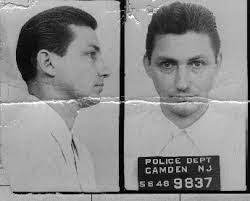
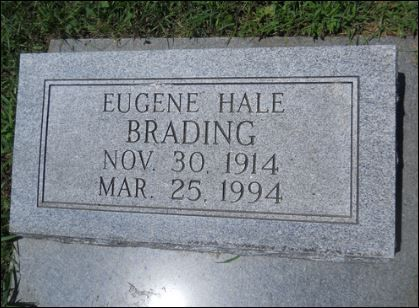
It's the story of Eugene Hale Brading, a California oil man, money courier, swindler and con artist who changed his name to Jim Braden a month before being taken into custody as a suspicious person at Dealey Plaza. 

Braden was reported suspicious by the elevator operator at the Dal-Tex building as he didn't work there. Dallas deputy Loomie Lewis, escorted Braden to the Sheriff's office across the street where he dictated a statement to a stenographer and was released. 

Braden claimed he visited the parole office and then went to Dealey Plaza, and after the assassination went into the Dal-Tex building where he was told there was a public phone on the second floor, where he phoned his mother in California to tell her about the assassination. 

Some conspiracy theorists suggest Braden was a shooter from the second floor of the Dal-Tex building, but there is nothing to suggest he ever carried a weapon or engaged in any violence whatsoever. 

Noyes' book ties Braden to the mob, not the Italian Mafia probably as a cash courrier for the Myer Lansky syndicate. He gambled, played golf as a hustler, and bilked rich widows, including the widow of a founder of Magnolia Oil Company, that figures into other aspects of the assassination story, as it was at a Magnolia Oil house party where Marina Oswald met Ruth Paine, and Oswald talked with Volkmar Schmidt. 

In his book Noyes says Braden was arrested for gambling in 1948 in Camden, N.J., but the Camden police refused to respond for his records, Noyes' speculated because the Camden police are controlled by the mob.

Well, since my father William E. Kelly, Sr was a lieutenant in the Camden police department at the time, I showed him Noyes' book and referred to the 1948 Camden arrest.  The very next day my dad handed me the original arrest report from 1948 and said the reason they didn't respond to Noyes' request was because the secretaries refused to go down in the dirty, dusty basement to get it.

I made photo copies of the mug shot and record, and distributed them to Noyes' and among interested researchers.

When I read in a Philadelphia newspaper that Richard Sprague, the then recently appointed chief counsel of the House Select Committee on Assassination ( HSCA) had required his staff to read Noyes' book. So I took a copy of Braden's 1948 Camden arrest report and personally delivered it to Sprague's Philadelphia law office, just across the river from where I lived in Camden. 

I then watched, from a distance, the HSCA soap opera, how Sprague was fired, replaced by G. Robert Blakey, an organized crime specialist from Cornell, who redirected the committee's investigation from the CIA, to the mob. 

Jim Braden testified before the HSCA in secret sessions for two days, then when the committee disbanded, Blakey declared the committee files to be Congressional records, not subject to Freedom of Information Act (FOIA) requests, as Congress exempted itself.

Then one day I received a phone call from Blakey who asked for a copy of Braden's 1948 Camden arrest report as he was writing a book blaming the mob for killing the president. 

I told Blakey I gave a copy to Sprague, and Blakey said Sprague took his personal HSCA files with him. And I said I was glad he did since the HSCA records were locked away for 50 years.

So I sent Blakey a copy, and years later, after the passage of the JFK Act in 1992, I requested Sprague's HSCA records from the Archives.

They referred me to the records of Richard Sprague, the photo and computer consultant, and said they had no records whatsoever for Richard Sprague,Esq., the former chief counsel to the HSCA, though there were hundreds in Blakey's file.

When I told the NARA that Sprague was then still alive and working in Philadelphia, they sent a formal request to him for the HSCA records but received no reply.

The JFK Act did free up the HSCA records and the NARA sent me a transcript of Braden's secret and closed testimony, which named his attorney as a Mr. Twombly, of Washington DC, who told me he is not related to the Twombly who ran a North California bank and was affiliated with a university, and Chauncey Holt said did favors for the CIA.

Twombly also told me he no longer knew where Braden, was though he lived in Atlanta at the time. 

In his testimony, Braden exclaimed his innocence and rallied against the conspiracy theorists who clam he was involved in the assassination

But he also acknowledged that he stayed at the Cabana Hotel, his associates visited Hunt, the Dallas oil man H. L. Hunt, and they all left for Houston immediately after the assassination, despite having registered for a few more days. 

Dallas reporter and later editor Earl Golz obtained the Cabana Hotel records of Braden and his associates, that reflected the fact they had registered for a few days, but left suddenly after the assassination. Golz also obtained their credit card receipts that indicated they had a meal and drinks at the Cabana's Bon Vivant Room, where Ruby and Meyers were at the same time. 

Since Meyers sold sporting goods equipment Ruby demonstrated an exercise device he was promoting, much to the amusement of Meyers and his family.

Since Meyers was married, his companion Jean Aase went shopping with one of Ruby's girls, Joyce McDonald.

Braden says after being released he flew to New Orleans, where he had previously lived during the summer of 1963, and worked out of the offices of oil man Vernon Main, on the 17th floor of the Pierre Marquette office building, just down the hall from Carlos Marchello's lawyer G. Ray Gill.

As a former law school associate of DA Jim Harrison, Gill gave Garrison a list of phone records that he believed were made by David Ferrie when he worked on the Marchello case at the time of the assassination.

Among those records, Garrison noted, was one Chicago phone number that is also listed among the Warren Commission records as a phone number also called by Jack Ruby associate Lawrence Meyers.

Meyers made the call to a women, Jean Aase, aka West, who lived and worked at a downtown Chicago hotel owned by White Russians and operated by a friend and business associate of Myers. 

Meyers asked Aase, who he described in his WC testimony as a "dumb but accommodating broad," to accompany him to Dallas over the assassination weekend. They registered at the Cabana Hotel, where Jim Braden and his pals also stayed. 

Dallas reporter and editor Earl Golz supplied me with the Cabana Hotel receipts for Braden and his associates that confirmed they were there at the time, and included credit card records that reflect their drinking and dining costs at the Cabana's Bon Vivant room. 

At the same time Braden and his pals were there, Jack Ruby met his Chicago friend Larry Meyers, who Ruby tried to get Meyers, a sporting goods salesman, interested in a "Twist" device. 

Ruby was with a young girl 17 year old Beverly Oliver, a singer at a competing club down the street. 

Meyers was with his brother, a New York Coca Cola bottling company owner who was in town for a convention. His son Ralph was a former NSA technician at a U2 base in Turkey, who they had visited in Mexico City, where Ralph was working as a journalist after a sheep dipped stint as a bus driver in Chicago. 

Oliver says she accompanied Ruby and Myers to The Egyptian Lounge for steak dinner, a club owned by Ruby's friends the Campisi brothers. They said Ruby was accompanied by his business partner Ralph Paul, but I believe it was Larry Myers. 

I wrote about that evening in an article some years ago, Thursday night at the Cabana Lounge, and the odd events that occured.

[. JFKcountercoup: Thursday Night at the Cabana Lounge    ]

Now an intrepid writer Mark Valante has compiled everything he could on Jim Braden, and is writing a book and possible film about him. 

JFKCountercoup2: Mark Valenti on Jim Braden


While I don't believe Braden was directly involved in the assassination operation, he was caught up in the dragnet and is certainly a suspicious person. I did everything I could to locate him and try to get him to talk but couldn't.

Now we will have to see what Mark Valenti has on him. In the meantime Mark sent me a short synopsis of what he's learned that I will post at http://JFKCountercoup2.blogspot.com.


Joel Gruhn writes: 

Bill, In case you don't know where Jim B wound up, he is interred at the Oak Hill Cemetery, in Atchison, Kansas, his birthplace. His last address was in Lee, FL a town of some 300+ residents. There is also a record matching the dates in the Florida index of deaths.

There is a fairly extensive tree for the Braden Family at Ancestry and also a timeline that shows life details and possibly living descendants who could shed some light as to his later years.