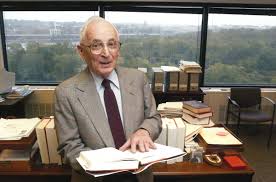
The Great Non-Debate - Jefferson Morley vs. Mark Zaid
[ Bill Kelly Notes: Morley and
Zaid are old friends, so this is not so much a debate as it is a polite
conversation, but one that does touch on a number of important issues related
to the assassination, some of which I too will be comenting on. The important
thing is they talk about the assassination in the context of intelligence,
espionage and spying, as it should be.]
https://thecyberwire.com/podcasts/spycast/646/notes
Jefferson
Morley and Mark Zaid join Andrew in a debate over the assassination of
President John F. Kennedy. Mark and Jeff are longtime friends and colleagues
with very different viewpoints of what truly happened on November 22nd,
1963.
What
You’ll Learn
Intelligence
The lasting questions surrounding the Kennedy assassination
Lee Harvey Oswald’s intelligence connections
The Warren Commission and the JFK Assassination Records
The strangest theories Mark and Jeff have heard, and the most plausible explanations of who killed President Kennedy
Reflections
Public distrust and the search for truth
Reactions and responses to tragedy
And much, much more …
Episode
Notes
This
week’s episode features a friendly debate on the Kennedy Assassination – What
really happened that November day in Dallas, who was truly responsible, and how
the secrecy surrounding the official documents has led to a deep mistrust and
skepticism concerning the assassination. In this episode, Andrew moderated a
conversation between intelligence author and investigative journalist Jefferson
Morley and veteran SpyCast guest and national security attorney Mark
Zaid.
They’ve
both got an incredible wealth of knowledge on the assassination, but differing
views on what actually went down on November 22nd, 1963. They discuss the
intelligence connections within the assassination, Oswald’s interesting history
with spy agencies and interest in Soviet politics, and the historical context
in which these debates live.
To be
clear: SpyCast does not promote or support any particular theory or viewpoint
on the Kennedy assassination. We encourage critical discussion and thought of
the complex impact of intelligence and espionage within our world.
And…
The site
of the Kennedy assignation, the Texas School Book Depository building in Dealy
Plaza, has since been transformed into a museum. Their exhibits highlight the social and political
events of the 1960s, exploring the lasting impact of Kennedy’s presidency and
untimely death in 1963. Check it out if you’re in Dallas!
Quotes
of the Week
”That's
why I think they probably have something to hide. Because it doesn't make sense
otherwise … If they had access to that kind of straightforward story, we would
get that.” – Jefferson Morley.
https://www.youtube.com/watch?v=Jta7EGOJ2qY
https://www.youtube.com/watch?v=vwqqaM39ffw
https://thecyberwire.com/podcasts/spycast/646/transcript
Transcript
Erin
Dietrick: Welcome to "SpyCast", the official podcast of the
International Spy Museum. I'm Erin Dietrick and your host is Dr. Andrew
Hammond, the museum's historian and curator. Every week we explore some aspect
of the past, present, or future of intelligence and espionage. If you enjoy the
show, please consider leaving us a five-star review. Coming up next on
"SpyCast".
Jefferson
Morley: That's why I think they probably have something to hide. Because
it doesn't make sense otherwise. Because I think if they had -- if they had a
true story, like you're saying, like, Yeah, we watched him, but, you know, we
made a mistake. If they had access to that kind of, you know, straightforward
story, we would get that. [ Music ]
Erin
Dietrick: This week's episode is a friendly debate on the Kennedy
assassination. Andrew moderated a conversation between intelligence author and
investigative journalist Jefferson Morley, and veteran "SpyCast"
guest and national security attorney Mark Zaid. They've both got an incredible
wealth of knowledge on the assassination, but differing views on what actually
went down on November 22nd, 1963. In this episode, the trio discuss the lasting
questions surrounding the Kennedy assassination, Lee Harvey Oswald's
intelligence connections, the Warren Commission and the JFK assassination
records, and the strangest theories they've heard, and the most plausible
explanations of the assassination. The original podcast on intelligence since
2006, we are "SpyCast". Now, sit back, relax, and enjoy the show. [
Sound effects ]
Dr.
Andrew Hammond: So, thanks ever so much for joining me to speak about JFK.
The idea for this actually came because I've been listening to this Rob Reiner
podcast on JFK, which I'm sure that you may have came across. And I just want
to open this up.
Mark
Zaid: Okay.
Dr.
Andrew Hammond: As it's been called the mother of all conspiracy theories.
Mark
Zaid: Yeah.
Dr.
Andrew Hammond: So let's dig into it.
Mark
Zaid: Okay.
Dr.
Andrew Hammond: So I think a good place to start is how did you first get
into this? How did you first become interested in this particular topic? So
maybe we can start with you, Jeff.
Jefferson
Morley: Well, so my knowledge starts when I was in kindergarten in St.
Louis and this big event happened, which I didn't have any understanding of.
And a lot of people at my house watching TV. That's all I remember, and I don't
remember anything else about it. I majored in American history. I didn't think
anything particularly about the Kennedy assassination at that time. In the 1980s,
when I went into journalism, I began to read some books, and I was never very
impressed with any of them. I didn't know what to think. It seemed like it was
way in the past. So, really I only started to pay attention in 1992 when
Congress passed the JFK Records Act, which mandated all these records from the
various investigations be made public. And when that happened, I realized there
was going to be a whole lot of information that would be genuinely new. And it
wasn't about -- for me, it wasn't about solving the assassination or pursuing a
theory. It was like, there's all this stuff out there and there's going to be
good stories. I'd been covering the CIA mostly in the context of CIA in Central
America, CIA in the Iran-Contra affair. Those were stories I covered in the
'80s. So I knew a lot about the CIA by 1992 when this law passed, and I
realized there was going to be lots of information. So that's really when I
began to dig into it professionally and look for stories that hadn't been told
before.
Dr. Andrew
Hammond: And Mark?
Mark
Zaid: So I am younger by a few years than Jeff, so I was born after the
assassination, but my involvement actually predated Jeff, because I do recall
being in the mid-1970s as probably like an 8 or 10 year old, going to the library
and reading books about the Kennedy assassination. And I remember looking
through the Warren Commission hearings, and I specifically remember Tink
Thompson's book, "Six Seconds in Dallas", which was written in 1967
when I was born. And I remember calling a man named David Lipton, who
unfortunately passed away recently, who wrote a book in 1981 called "Best
Evidence", which is one of the theories that somewhat out there as far as
body snatching. But actually I've always liked David over the years and was
very friendly with him. And I called him when I was in high school to talk to
him about the Kennedy assassination. I think back and I'm sure I asked, like,
really dumb, naive questions as, like, a 16, 17 year old. But my honors thesis
in college was on the Kennedy assassination. And then as a law student, I had
spent more time on the case than I did in my legal studies, which actually was
a very pivotal time in my life to decide I didn't want to do that any longer.
But I got to know a lot of the authors of Kennedy assassination books as well
as government -- former government investigators and lawyers, and people who
were tied to the case which we can certainly talk about. And I started as a
lawyer, young lawyer representing a number of them. That's how I met Jeff.
We've known each other for 30 years. I've represented Jeff, we should say.
We're going to disagree on a whole bunch of stuff, but we've been friends for
decades and worked together.
Jefferson
Morley: No, and so, you know, I got interested after 1992, after the JFK
Records Act, and right away, by early 1993, new records were already appearing
in the National Archives. So you could go and get your hands on these things
very quickly. And while I was doing that, I knew Mark, and he came to me one day
and he said, Jeff, I got a client, and it's a great story, maybe you want to
write about it. And that was Michael Scott, the son of Win Scott, the CIA
station chief in Mexico City. I wrote an article for the Post, but I became
friends with Michael and Mark, and realized this was just a great story. It was
much more than a, you know, one-shot article in The Washington Post. That Win
Scott was a charismatic spy. He was a very powerful, you know, kind of
pro-consul almost in Mexico for a decade. Very important figure in the history
of the CIA, not well known at all. And so that led to my first book, "Our
Man in Mexico". So this is when we got going and, you know, Mark really
helped me with that, you know. That entree was key. You know, Michael was a
great friend. They had already accumulated an incredible collection of, you
know, memoirs, photos, documents, letters, you know, the stuff that's really
gold when you're writing a book.
Dr.
Andrew Hammond: I was just thinking there, how very quaint and old fashion
to disagree and still be friends [laughter]. It's so out of fashion these days,
right?
Mark
Zaid: And there are times, this community -- and we could tell some war
stories for sure. I mean, I remember, I've been yelled at by people there. You
can see the writing on the wall. People are really Invested in this. And it's
not just this conspiracy theory. We can talk a lot of different conspiracy
theories where the unfortunate is some people get so invested in it, they won't
budge off of their theory no matter what information comes out. And that has
been a problem. And I remember when I was in law school and I was far more
conspiratorial at that time, and doing a lot of writing and researching and
reading and public speaking. And then I did -- I was on a panel in Dallas for
the 30th anniversary in 1993. And one of the panels was on the intelligence
connections to Lee Harvey Oswald. And I went through 20 pieces of evidence that
people had held out to be -- to show he was intel. And I gave what I would say
is reasonable explanations to show that it didn't mean anything. Didn't mean
that he wasn't intel. I wasn't disproving it. I was just addressing specific
theories. And I remember a guy who I had been very close friends with.
Literally, if you remember "Invasion of the Body Snatchers", either
movie, the '56 or the '79 version, where when they had been taken over by the
Peapods, and they know you're not a Peapod, right, they would point their
finger at -- their arm-extended finger, and scream. And this guy who had been
my friend was screaming at me over by the overpass where some people think
shots were fired from and stuff like that. Screaming at me that I was CIA
because I dared challenge some of the theories.
Jefferson
Morley: Yeah, so the whole discourse around the Kennedy assassination has
become very distorted. I mean, first this kind of, you know, tribalism that
you're talking about, that if you disagree with me, you're the enemy. People do
become very invested. It becomes linked to other conspiratorial scenarios which
I try to resist. You know, I try and take each story separately as it develops.
And it's, you know, it's really unfortunate. To me, what's happened is, you
know, the debate is kind of ending. You know, I posted a couple of news stories
this year. One of them got picked up by The New York Times about the guy who
was reading Oswald's mail before the assassination. But, you know, people,
they've decided what they're going to think and new facts don't make that much
of a difference. So getting all of the records I think is very important.
Another thing that the Archives is working on and is in their new budget is the
complete digitization of the JFK collection in the National Archives, which
would be a huge step forward. And I think they have put that in their next
budget.
Mark
Zaid: I mean, that's -- that would be fantastic. I remember when I was
helping in the last few years to get the Trump and Biden administrations to
release the remaining documents that were releasable, there's still some and we
can talk about it as far as what's still out there that's being withheld. But I
came across one document that it wasn't about the assassination per se, but it
was created I think in the mid '60s, and it listed all the CIA station chiefs
in Moscow, from basically Oswald's tenure in Moscow. He was there from '59 in
Russia, in Soviet Union, '59 to '62, and I think it went from, like, '59 to
'65.
Jefferson
Morley: Right.
Mark
Zaid: And, you know, that's -- it doesn't say anything about the
assassination, but it's very helpful and interesting for us to know who were
the top CIA officials in the Soviet Union during the time when Oswald defected
and lived there, and it will become very relevant as we talk, and especially if
Jeff talks about some of his work that he's done on the CIA. So there was one
name redacted, someone who was there from, like, '62 to '63. And the others
were all, it was about five or six of them. And I was thinking, Wow, this is
really interesting. Why, why would -- I looked up all the others. I mean, I
knew some of their names. They were all dead, so there's one reason why to
release their names, they're all deceased, no privacy interests. Could this one
guy, I mean, assuming to be a man, there weren't female station chiefs at that
time, could this one guy still be alive? Or regardless, would he have been in a
position perhaps later on where he was still covert, where his affiliation with
the CIA still can't be revealed, depending on what work he did. And I thought
that was a fascinating research question, so I posted it into I think a smaller
part of this group. And lo and behold, I think within hours, someone came up
with a different version of the same document.
Jefferson
Morley: That wasn't redacted.
Mark
Zaid: It wasn't redacted.
Jefferson
Morley: This happens all the time.
Mark
Zaid: All the time. And when I looked him up, the guy died almost 20 years
ago, in, like, 2004. He was totally publicly open. Someone screwed up in the
redactions. That's all it was. It wasn't a massive secret or conspiracy in that
sense. Somebody screwed up.
Jefferson
Morley: You know, but I doubt that sometimes because I think that they
keep the names secret because they don't want people like us talking to the
descendants and getting the story. And so for example, one of the stories that
came out in the past year that I thought was highly significant. The CIA
conducted its own investigation of Kennedy's murder in the Miami station. And a
memo surfaced declassified in its entirety for the first time in December 2022,
which identified the officer who said, Yeah, after Kennedy was killed, my
bosses called me and said talk to your Cuban contacts and ask them these
questions. And lots of officers in the station were asked that. Well, we got
that memo in 2022. The guy had died in 2017. You know, if his name had been
released, we could have gone to him and said what was going on here. So right
now, we know there was an investigation. Donald Heath wrote about it in detail
in his memo, and I checked with people on this list. A couple people forward --
came forward and said, Oh, look at this document, somebody else talked about
that investigation. This guy talked about that investigation. So we know the
CIA investigated the Kennedy assassination in the Miami station. We know they
didn't believe the lone gunman scenario, not for a second. They weren't
investigating Oswald. They weren't investigating communists. Their prime
suspects were anti-Castro Cubans in South Florida. And here's the thing. We got
the document. We know there was an investigation. The CIA never shared the
results with anybody, so we don't know what they concluded, but I conclude they
couldn't corroborate the lone gunman theory, and so they just buried the whole
thing. So, you know, what's going on with the withholding of these records? I
agree with Mark. Most of it's trivial. Most of it's, you know, it's things like
this. It's like somebody made a mistake, it could have been released a long
time ago. But if you look at the pattern of deception over the years and
especially what we've learned, I just think you can't assume an innocent
explanation. They don't -- the CIA doesn't deserve the benefit of the doubt
anymore because they've made so many false statements.
Mark
Zaid: But let's kind of give an overview of some of what we need to talk
about as -- from a 30,000-foot view in this session One is what if any -- what
is the role or connection of the CIA to the assassination?
Jefferson
Morley: Right.
Mark
Zaid: Now, that could be obviously for some who believe the CIA killed
President Kennedy, and that is something we can talk about. But I'm talking
more big picture of the CIA has its fingerprints all throughout the
assassination. Not in the sense of perpetrating it, again, a theory, but
connections to Lee Harvey Oswald. He was a defector to the Soviet Union. There
were people he was connected to who have CIA connections. For all who watched
the movie "JFK" by Oliver Stone, Jim Garrison in prosecuting Clay
Shaw, Clay Shaw had connections to the CIA. I mean, there's all sorts of --
Jeff talks about anti-Castro Cubans. Well, obviously the Bay of Pigs, the CIA
trying to kill Castro and President Kennedy trying to accomplish that. So what,
if anything, does the CIA's role in connecting to the assassination and the
players associated with the assassination, what does that all mean? Has the CIA
covered something up? Did they -- what investigation did they do? What were
their conclusions? So there's all these big, sort of like the topic for today
is, What is the intelligence connections to the assassination of President
Kennedy, if any.
Dr.
Andrew Hammond: So there's a whole variety of things that I would like to
follow up on, including what do we mean by conspiracy and you spoke about
intent. You know, the mistake, sometimes people are seeing intent when none
exists and other times they don't see it when it does exist. So there's a whole
variety of things that we can pull on. But I feel like at the minute, let's
just get our cards on the table. Let's not bury the lede any longer. So
November 22nd, 1963, what's both of your takes on what happened that day? Let's
just put the cards on the table and then we'll kind of unpack it after that. So
let's start with you, Jeff. What happened that day?
Jefferson
Morley: I think the president was ambushed by his enemies in Dallas, who
had the ability to make the crime look like something else. And I think that's
the fundamental takeaway that I have now. Who was it? I don't know. There's
some people who are plausible suspects, but, you know, nothing that rise. I
mean, I would even hesitate to, you know, mention their names in a story in
terms of saying, you know, That person, you know, conspired to kill the
president. The evidence is -- it's not -- the evidence doesn't support that
kind of claim, but I think the evidence does support that big picture of what
happened.
Dr.
Andrew Hammond: And if you were shooting the breeze down the pub with your
friends, who would you point the finger at? Well, so pretend we're not coming
up with the evidence you would need for a Washington Post story or for Mark to
go to court. You're just shooting the breeze.
Mark
Zaid: Just make sure they're dead so they don't sue you.
Dr.
Andrew Hammond: You've got a lawyer here.
Jefferson
Morley: Senior people in the CIA and Pentagon are the type of people who
had the ability and the desire to mount this kind of operation. People who
feared Kennedy's policies, thought that they were unconstitutional and a menace
to national security, who felt that they would be defending the country by
eliminating Kennedy's policies. But, you know, beyond that, you know, who's the
intellectual author? Whose idea was it? You know, if my premise is correct,
we're talking about a CIA intelligence operation that was, you know, designed
with plausibility -- plausible deniability built into it. That's what a CIA
operation is. So of course there's always going to be a plausibly -- plausible
way to deny it. You know, this is part of the problem of sorting out the
evidence. And so you are left to speculate a little bit or like, you know, like
I'm being. You just have to be vague, because we don't have that kind of
granular detail.
Dr.
Andrew Hammond: Okay, Mark. What happened on November 22, 1963?
Mark
Zaid: Yes, so President Kennedy was assassinated.
Jefferson
Morley: That's for sure.
Mark
Zaid: We know that. That we can at least hopefully agree on. He's not
living on a beach with Elvis somewhere, though I have Weekly World News
articles that say that actually, from back in the early '90s as I recall.
Jefferson
Morley: Yeah.
Mark
Zaid: So look, I go by evidence. I do believe, and I'm an Occam's razor
type of guy, you know, the simplest explanation is usually the best. I do
believe that the evidence shows that Lee Harvey Oswald shot and killed the
president. I do not see I will say viable or persuasive evidence that there
were others involved. That doesn't mean I don't have questions. I'd like to
know who one of the Dallas police officers encountered behind the grassy knoll
fence who claimed they were Secret Service. I've represented Secret Service
agents who were in the motorcade, two of them who were in the follow-up car
behind the president. There were no Secret Service agents who were on -- not in
the motorcade. Now, there are viable explanations I think to explain it, but
we've never had anybody come forward and say, I was the person back there. So
there are definitely questions. The problem of course with this type of case is
there are a lot of other peripheral issues. Allen Dulles, who was a former CIA
director fired by Kennedy, sits as a member of the Warren Commission, withholds
valuable information from the other commission members about the plots to kill
Castro. And you can look at it from two different ways. Is that a conspiracy
because the CIA was involved with the assassination of the President of the
United States? Or was that Allen Dulles protecting the CIA from making sure the
other members didn't know about the plots at the time? You know, can you tie
those two together? Is there any connection between any of that? I look at, I,
again, to get into perplexion discussions with my girlfriend all the time
because it annoys me in television and movie shows where all of a sudden, like,
someone's driving along and it's daytime and then the next scene, it's
nighttime. And I'm like, Where did all those hours go, right? Because they just
moved from one point to the next because nothing important happened in that
time period. Well, to me, that's what I see a lot in the Kennedy assassination,
where people too often are filling in those few hours between daytime and
nighttime and coming up with whatever they think their evidence might be. [
Music ]
Erin
Dietrick: In this episode, we speak a lot about the unknowns and
unanswered questions that surround the assassination of John F. Kennedy. In
this interlude, I want to remind listeners of the facts of what we know to be,
without a doubt, absolutely true. So, here's the bare bones timeline of
November 22, 1963. By the fall of 1963, Kennedy and his team were planning to
prepare for a re-election campaign in 1964. President Kennedy, the First Lady,
and Vice President Johnson, among others, embarked on a two-day, five-city tour
of Texas, a critical state to win in 1964. On Friday morning, November 22,
thousands of Texans gathered outside Kennedy's hotel in Fort Worth as he
emerged and gave some brief words. He returned back inside and spoke at a
breakfast of the Fort Worth Chamber of Commerce. They left the hotel for
Carswell Air Force Base, where they would board for a 13-minute plane ride to
Dallas. They arrived in Dallas at Love Field, where they were again greeted by
an excited crowd of Texans. Jackie was gifted a bouquet of red roses, and the
Kennedys were seated in the back seat of an open convertible, directly behind
Texas Governor John Connally and his wife. Headed for the President's next
engagement, the motorcade then departed on a 10-mile route through Dallas. It's
estimated that over 200,000 crowded the streets of Dallas to see the parade.
Around 12:30 p.m., the motorcade turned off Main Street at Dealey Plaza. As
they took a left onto Elm Street and passed the Texas School Book Depository,
shots were heard across the plaza. President Kennedy was struck in the neck and
head, and the governor was hit in the back. The car raced to the close-by
Parkland Hospital, where President Kennedy would be pronounced dead at 1 p.m.
Shortly after, police arrested Lee Harvey Oswald, an employee of the Texas
School Book Depository. Lyndon B. Johnson took the oath of office at 12:38
p.m., just before Air Force One took off from Love Field carrying the
president's body. Those are the bones. Now let's get back to filling in that
story. [ Music ]
Dr.
Andrew Hammond: And the most recent figures that I came across were an
estimated 320,000 documents relating to the assassination have been released,
with just over 4,600 remaining classified. So that's, like, 1.5-ish percent
that haven't been declassified. So is that, that could be key potentially? Or
what you're saying, Mark, is that you don't think there's anything there that's
going to fundamentally change anything, but your point, Jeff, is that there may
well be
Jefferson
Morley: Yeah, yeah, I would say, yeah. And I should say one other thing to
make clear to people. You know, I think that the correct figure now, after June
there was another release. I think the correct figure now is about 3,600
documents in the collection of 320,000 documents still contain redactions. That
might mean we might have most of the document except for a sentence, a word, a
name. In other cases, you know, several pages or, you know, I don't think
there's any document that's withheld in its entirety. But, you know, it's still
a lot of records. The bulk of those are CIA records. A lot you can tell from
the context, like Mark says, stuff about surveillance techniques, covert
arrangements with foreign governments. They're very -- they guard those very
closely. That's one of the things that they're still keeping. But, you know,
why is this necessary? I mean, again, to step back, you know, the JFK Records
Act, all this stuff was supposed to be made public in 2017. Judge Tunheim, the
head of the review board, I asked him, I said, What did you expect after 25
years? How many records would have to be -- remain secret? And he said, Out of
the stuff that I saw, you know, maybe 100 documents. Not, you know, and when in
2017 the CIA and FBI came to Trump and said, We have 14,000 documents that have
redactions that we couldn't possibly remove. So it's like, why is the
presumption around a Presidential assassination that we're going to keep -- you
know, keep these secrets for good? I mean, these agencies must understand that
people are incredibly suspicious about that. And this idea, Oh, it's all, you
know, cut and dried, one man alone killed the president, please go away. I
mean, it's just a majority of people don't buy that. And so the agencies have
to have a different position or, you know, they invite suspicion. And I think
that's justified.
Mark
Zaid: But I do think it's important to note a couple points on that. I
mean, one, this is going to be a very small number of documents, and I think
hopefully Jeff would agree with this. When Oswald goes to the Cuban and Soviet
embassies in Mexico City, we have assets in one or both of those embassies,
human assets --
Jefferson
Morley: Both.
Mark
Zaid: Right? And a good chance that some of those people are still alive
because they were only in their 20s. I mean, it was sixty years ago, that
sounds like so long ago and it is for us because that was our lifetime. But
they were in their twenties, now they're in their mid-to-80s -- if they're
alive, they're in their mid-80s or 90s. They still need to be protected, so at
least for their identities and maybe surrounding information. Again, small
number of information. Interesting with the Trump release, right? All the
records were supposed to be released twenty five years after the act, so that
was, as Jeff said, 2017. You would have thought Trump would have really pushed
for the release. Roger Stone, one of his closest advisers, has written a book
about the conspiracy to kill President Kennedy. He's a huge conspiracy
advocate. Trump of course accused Ted Crude -- Ted Cruz's father of
assassinating President Kennedy. And actually I was told by a source that
Pompeo, who was the CIA director at the time, went to Trump on, like, the eve
roughly of the release and told him not to release it And he did not. Why, we
don't know, and he didn't release the documents, a good number of them that
were supposed to be. He continued them and then Biden did release some over the
course of the next four years.
Dr.
Andrew Hammond: So I'm just thinking, you know, so even though it may just
be over 1% now, you know, that's not to discount that it couldn't be, like,
crucial information, right? If it's, like, a will, you know, and it's -- I
bequeath all of my money and assets to redacted, I mean, that's, like,
important information, right? So it's not to say that just because it's 1% it doesn't
mean that it may not be crucial to our understanding of the debate.
Mark
Zaid: No, absolutely.
Dr.
Andrew Hammond: And then I think also I'm wondering to some extent, so
MI6, the rationale that they give for never releasing hardly anything ever is
that in some countries, historical memory works differently where if your
father or grandfather was a quote-unquote snitch or asset or agent of the
British or the Americans, then that could stay with the family. It's not --
Mark
Zaid: That's why I make the comment about the Cubans.
Dr.
Andrew Hammond: Yeah. Yeah.
Mark
Zaid: 60 years in Cuba Fidel Castro was gone but I would be quite
concerned for the family or the person who was a spy for the US government as
an asset in 1963.
Dr.
Andrew Hammond: So just briefly before we move on to Oswald, because I
think Oswald is crucial, discussing him and who he was. I'm just trying to
understand the CIA's rationale, and some of this of course is conjecture, so if
the effect of keeping this information for 60 years has a gradual public
erosion of trust in not just the CIA but the very institutions of government, I
mean, it seems like a pyrrhic victory to say, you know, rather than just say,
Listen, Oswald was part of an operation. We realize how it looks. We were just
keeping the information back because it really doesn't affect the
interpretation of the Warren Commission, but we thought that it could
potentially complicate it. So we sat on the information, but at some point, you
know, we want to release it. Like, it just seems like they're undercutting
themselves by sitting on the information if they don't have anything to hide.
Jefferson
Morley: I agree. And -- but that's why I think they probably have
something to hide because it doesn't make sense otherwise. Because I think if
they had -- if they had a true story, like you're saying, like, Yeah, we
watched him, but, you know, we made a mistake. If they had access to that kind
of, you know, straightforward story, we would get that. But they haven't done
that. And to me, that's significant, you know? That the reason -- so I think
the reason for the secrecy is to hide something that's very embarrassing or
damaging, not something that's exculpatory.
Dr.
Andrew Hammond: And I'm just wondering as well, and help me understand
this question. Like, a CIA director, they have access theoretically, or a
President has access theoretically to what's happened in the past. Like surely,
you know, people like Stansfield Turner, Bill Casey, these are all -- William
Webster, these are all patriotic, upstanding Americans. I mean, surely one of
these guys would come along and say, Oh no, no, no, no, you're not -- we're not
-- we're not doing this any longer. Like, this has to come out, even if it
means that the agency has to be reformed or changed or whatever. I mean, we're
talking about a multi-generational conspiracy. Is that what we're talking
about?
Mark
Zaid: Well, when Bill Clinton came into office, and for those who -- Bill
Clinton as a high school student met President Kennedy. There's a famous photo
of him I think at the White House or wherever the heck they were in Arkansas, I
forget, of, like, shaking his hand or smiling. And it was reported that Bill
Clinton had two primary questions he wanted answers as soon as he became President.
Are there UFOs, and who killed President Kennedy. And I don't know if he ever
got those answers. Somebody could ask -- should ask him now. Obviously he's
still alive. But we never got any new information in the time that he was
president other than obviously the JFK Records Act, which he signed as
president, you know -
Jefferson
Morley: No, no, Bush signed it.
Mark
Zaid: Bush signed it, sorry.
Jefferson
Morley: It was the last one that he did. Yeah, he implemented it.
Mark
Zaid: He implemented it, he appointed the board, and it took, like, two
years. It took longer than it should have to get the law and the board
constituted. No, but there's a lot of that. Clearly there are people in the US
government who know more than they're saying, and then the question is why are
they withholding the information? Now, I mean, Jeff raises certainly a good
point but this is -- the interpretation of it is where the divergence can be.
And it's the motivation of withholding information. Let's say that the CIA
surveilled Oswald more than it's ever acknowledged.
Jefferson
Morley: Right.
Mark
Zaid: But, you know, not that it was running Oswald as an agent, which we
can talk about because I find that ludicrous personally, and I can say why
based on my experience. But let's say they were monitoring him much more so
than ever before acknowledged. Why would they withhold that? Especially if,
well, look, what's the big deal? It had nothing to do with the assassination.
What I have seen in the 30 years, right, I've been representing CIA case
officers and senior officials inside the intelligence community, and I'm suing
them all the time, right? I'm not an ally to these agencies. I might have
respect for them, I enjoy doing the work, but I'm in their face. They do not
look at me as a friend, other than I may be friends with individuals. But a lot
of times what they did in that case is what they did in other cases. And it's
the other cases that they don't want people to know about. So they -- I'm going
to make this up. They illegally intercepted Oswald's mail. I mean, we know they
intercepted Oswald's mail, but let's say they did something, they illegally
wiretapped him, or they had an asset that was gaining information and they
don't want it known because maybe that asset was involved with other operations
that they wouldn't known. I'm making all of this up just to say I see stuff
like that happen all the time. That the cover up, the perceived cover up, is
not for the incident or issue that they're concerned about. It's for other things
that sort of like if you take the thread out of your sweater and that one
little piece you thought you were going to pull out just unravels too much of
the sweater and ruins it.
Jefferson
Morley: Yeah.
Dr.
Andrew Hammond: So let's go on to discuss Oswald. So we know, again, this
could be an entire podcast just looking at Lee Harvey Oswald, a very, you know,
fascinating and tragic figure. But let's just stick to his role in the
assassination. Who was Lee Harvey Oswald with regards to the assassination? Was
he a lone gunman? Was he part of a conspiracy? What did he mean when he said
patsy? The Rob Reiner podcast on JFK that we discussed before we went on air,
there's an implication in there if I remember correctly that he was some kind
of Manchurian candidate.
Jefferson
Morley: Well, that he was -- a guy from the CIA called me after he read
"Our Man in Mexico" actually, and he said, Let me tell you who Oswald
was based on your account. And this was not based on any information he had
from CIA file. Just from being an operations officer. And I checked him out. He
was who -- he had left the clandestine service but he was who he said he was.
And he said, Oswald was an agent of influence. So he's not an agent who's out
to obtain positive intelligence, a specific piece of information, who bought
arms, who's the spy, who's having an affair, that kind of thing. He wasn't that
kind of guy. But he was somebody who they could he said you could rely on to do
something for you. And he said based on what he saw in "Our Man in
Mexico", which is not a book about the Kennedy assassination or about a
conspiracy, that that was his sense of who Oswald was and that's what I have
come to believe very strongly, that Oswald was what he said he was. He said he
was a patsy, meaning the fall guy for other peoples who actually committed the
crime. Now like I said, I don't know who the other people were but I think that
that is what happened on that day and that's why I give my description of what
I think happened on that day. So, you know, the idea that Oswald was a leftist
who, you know, killed Kennedy out of revolutionary fervor. Well, if that were
true, why would he deny the crime? Wouldn't he say, you know, proclaim his
tremendous success? I mean, I think that you prima facie, you have to take very
seriously when somebody says, "I'm a patsy" and then they're killed
the next day in police custody. Like, that would sort of tend to confirm what
they were saying, no? So you can't just rule out that possibility. That's like,
that's the main -- to me, the main and most likely possibility and then you
have to situate and organize the other evidence around that. So that's what I
would say about him on that day.
Dr.
Andrew Hammond: And what -- why did Oswald believe that he was a patsy?
Was it just because I never done what they're telling me that I done, so it
must -- there must be some other explanation?
Jefferson
Morley: Yeah, I think he knew more and I think that's why he was killed,
because people didn't want him in court talking about what else he knew. And I,
you know, he knew something. He wasn't an innocent party, you know? When he
said he was a patsy, he had guilty knowledge. He knew something was going on.
You know, he goes to work, the President's shot and killed. He goes home and gets
a pistol. Well, he didn't need the pistol when Kennedy was alive. Why does he
need the pistol when Kennedy's dead? Maybe because he fears for his life. Well,
he should have been fearing for his life because he was killed less than 48
hours later. So he's acting like a guilty party who knows something. [ Music ]
Erin
Dietrick: In the last interlude, I give you the facts of what we know to
be absolutely true of the events of November 22, 1963. Now I'll do the same for
Lee Harvey Oswald, a complicated figure at the center of this story. Oswald was
born in 1939 in New Orleans, Louisiana. He was what some would call a troubled
child. He attended 12 different schools growing up and spent some time in
juvenile detention. He quit school at the age of 17 and joined the Marines,
where he spent only around three years. During that time, he was
court-martialed twice, once for possession of an illegal weapon and once for
violent behavior. After his military service, Oswald defected to the Soviet
Union in 1959. He married a Russian woman and had one child, a daughter. They
weren't loving life in Minsk, as he wrote, "Not enough nightclubs or
bowling alleys". Fair. And they moved back to the United States in 1962,
settling in the Dallas area. In March of 1963, Oswald used an alias to purchase
a rifle and a revolver handgun by mail. In September of 1963, Oswald took a
trip to Mexico City, where he attempted to gain passage to both Cuba and the
Soviet Union, but was denied both. In October, Oswald was hired by the Texas
School Book Depository, and his second daughter was born. He spent the weekends
at home with his family in a Dallas suburb, and lived downtown in a boarding
house during the week. On Thursday, November 21st, in an unusual request,
Oswald asked his coworker for a ride back to the suburbs to pick up some
curtain rods. The next day, Oswald was arrested by Texas police for the murder
of President John F. Kennedy. He repeatedly denied responsibility for the
assassination. Two days later, on November 24th, as he was being escorted to
the county jail, Oswald was fatally shot on live television by Jack Ruby, a
local club owner. Just like the President, Oswald was taken to Parkland
Hospital for treatment, but succumbed to his wounds around 1 p.m. [ Music ]
Mark
Zaid: So, you know, no one has ever been able to ascribe a motive to him.
The Warren Commission struggled with that, couldn't come up with it. There is
no -- actually the only evidence that we really know of about his relationship
to President Kennedy or view of was positive. Marina Oswald, his widow,
testified she thought that Lee liked President Kennedy, or that she remembered
positive comments that he had made. So we don't know, and that's obviously a
huge gap in the case. Sometimes you just don't know motives. You know, it
reminds me as I'm sitting here in the case sometimes you just don't know
motives. You know, it reminds me as I'm sitting here the mass murderer in Las
Vegas at the rock and roll concert, he killed, like, 60 people. What the hell
is that about? And he killed himself, and there's no known public motive as to
why would he do that, what would make you all the sudden go and do that. Oswald
amazingly was only 24 years old. You look at him, he looks a lot older from
that timeframe. He wasn't an idiot. I -- and I'm not disagreeing with Jeff
about that he doesn't have the intellectual capability to do what some people
think he did. But he wasn't the idiot that the Warren Commission sort of
portrayed him to be. I would tell people just go on and google "Oswald"
and "radio interview". And he did some radio interviews and he comes
across as a -- as kind of a, you know, pretty articulate guy to talk about
certain things. But he wasn't very well educated. I do not believe, especially
after all the interactions I've had with intelligence officers, I don't think
he had that capability of being an intelligence officer for the US government.
He would be a horrible choice for the US government to rely on. Everything
known about him in his lifetime, as a child, in the Marines, as an adult in New
Orleans and Dallas, Texas, I wouldn't trust him at all. He was totally
unpredictable. I wouldn't want to, you know, have him to be part of a
conspiracy as an intelligence officer, wittingly or unwittingly.
Jefferson
Morley: Yeah, but if you're trying to make him a patsy, you know, the goal
wasn't to hire him as an intelligence officer for the CIA. Oswald thought that
he was spying on right-wing groups. And for a left-wing guy, he spent most of
his time in 1963 especially, not with liberals or communists, but with
anti-Castro Cubans and very conservative militant-type people. So, he was a bit
of a schemer and he was insinuating himself into this world. So, you know, Oh,
the CIA would never, you know, be interested in a guy like Oswald.
Mark
Zaid: Well, Jim Angleton, the Chief of Counterintelligence, maintained a
file on him constantly for four years. There's no trace in that file anywhere
where anyone says, This guy's not worth paying attention to. Nobody said that
in four years before Kennedy was killed. To the contrary, one of the things
that we've obtained under the JFK Records Act is the routing slips on
information about Oswald that came into the CIA in 1960, 1961, 1962. You look
at these documents. Oswald went to the Soviet embassy and he asked for his
passport back. That document goes to the State Department, they send it to the
CIA, it goes to the CIA, we have the routing slip. Seven different offices
signed for that. So Oswald was not somebody who wasn't of interest to the CIA.
Multiple CIA officers signed for multiple documents about him. Everywhere
Oswald went between 1959 and 1963. The CIA had his current address. In real
time. I mean, he did so many things that came on the CIA's radar. I'm sure that
they had a huge interest. They should have. In fact, the one thing that I'm --
and I'm sure you would agree with me on this, that there's no evidence of, and
I don't understand how this cannot be, of any debriefing and not a spy
debriefing. Interviewing Oswald when he came back from the Soviet Union by the
US government.
Jefferson
Morley: Yeah, I mean, t0here's no indication they did that.
Mark
Zaid: How do you not do that as the US government?
Jefferson
Morley: That's a perfect indication of how Oswald has this unusual status.
And you can tell, if you're familiar with the document, yeah, he's gone to the
Soviet Union, he's defected out of loyalty to communism. He's offered in
defecting, he says, "I will share military secrets with you." And
that's written right on the State Department documents. CIA understood that
full well. He comes back and they don't interview him at all. Another guy named
Robert Webster, also a military guy, defected in 1959, same time as Oswald, got
-- lived in the Soviet Union, became disaffected, returned at the exact same
time. When Webster came back, they took him up to his house in Massachusetts,
they interviewed him for a week, and we now have this record.
Dr.
Andrew Hammond: Just -- there's a few things that I want to dig into. So
one of them is Cuba, so I just want to return to this issue. So, where is
Oswald on Cuba? So he's ostensibly communist, but then as you say, Jeff, he's
hanging around with lots of hardcore anti-Castro people. So I'm also just --
I'm still a little bit confused about -- or maybe some of our listeners are a
little bit confused about Kennedy and Cuba. They may know from listening to
this podcast of you know the exploding cigars, the -- Bobby Kennedy's obsessed
by Castro, they want him taken out at any cost, you know. So there's just,
where is Kennedy on Cuba and where is Oswald on Cuba? Because I think that
that's important to clear up.
Jefferson
Morley: Well, so let's start with just the larger political picture. In
January 1, 1959, Castro leads a national rebellion which overthrows a
pro-American dictatorship. Castro makes nice with the United States, says he's
not an enemy, but Cuba wants to be independent. And so for a year, Castro's
being ambiguous. In that year, the United States decides that they can't live
with this and they want to assassinate him. As Castro realizes what what's
going on with the United States, he develops his alliance with the Soviet
Union. He goes to get Big Brother so that he can keep the United States at bay.
So Castro is popular in the United States. These young guys have overthrown a
dictatorship. Castro abolishes racial segregation in Havana, something that was
very clearly understood in the American South at a time when there was hardline
resistance to segregation. So, Castro's seen as very threatening, and
especially as he embraces the Soviet Union. So that's the end of the Eisenhower
administration. Kennedy inherits that situation, comes in, and the CIA presents
him with the plan, We can overthrow this guy. Our fingerprints, your
fingerprints won't be on it. You know, just sign off. And Kennedy asks for a
few adjustments and signs off on the Bay of Pigs. So Kennedy's in his first --
you know, he's going along with the CIA. He's fine with overthrowing Castro.
But when the operation, the invasion goes south, he says, you know, I told you
I wasn't going to do air support. And I'm not going to do air support. And so
that was the end of the invasion. Castro crushes the invasion. Well, for the
men who were killed and captured, you know, Kennedy had betrayed them, you
know, in their hour of need. When they were under fire, he could have saved
them and he didn't. So that breeds incredible hostility in South Florida.
That's why the CIA investigated the anti-Castro Cubans and not Oswald, because
if you lived in South Florida, those were the people who you knew who wanted
Kennedy dead.
Dr.
Andrew Hammond: And just briefly, Jeff, where does this expectation of air
support come from? If it's a CIA operation and plausible deniability and, you
know, if the US Air Force gets involved, then it's a different step, it's a
different type of operation. So have they been promised that and Kennedy agrees
and then withdraws it? Or where does this rage come from?
Jefferson
Morley: Kennedy asks, Will air support be necessary? And the planners say,
No, you know, there'll be a national uprising, we'll overthrow him. They did
have a backup plan, which was they had planes that they had -- US planes that
they had disguised as Cuban planes. And so they had a bunch of planes ready to
go that they could have said were defecting Cubans, not Americans. So they did
have a cover story in place. But JFK, I mean, JFK just didn't want to go to war
in Cuba. JFK was a student of history and he thought the axis of history ran
through the European capitals, from Moscow to Berlin to Paris to London to
Washington. That was where history was made in JFK's mind. Cuba, unimportant.
And so he just didn't really care enough to commit his capital and commit US
forces to save these guys. So that was the source of the bitterness. Now, in
1954, when the CIA staged a coup in Guatemala, the plan unfolded, ran into
trouble, and Eisenhower did authorize covert air support. So there was this
expectation within the CIA that Kennedy would do the same thing that Eisenhower
did, and there was a lot of surprise when he didn't. So that's where -- that's
the nexus of the Cuba issue. We can talk about Oswald in Cuba but maybe Mark
can add a little bit more.
Mark
Zaid: Well, and it was important when Oswald went to Mexico City he was
trying to get a visa to go to Cuba and then possibly to go back to the Soviet
Union, there's one particular theory. But, you know, just to kind of bring it
back to the intel aspect of Oswald's connections, some of the things that's so
interesting, here it is, he goes to the Soviet and Cuban embassies in Mexico
City. He is surveilled by the CIA, not necessarily -- the embassies were under
surveillance, that we had photographers across the -- I'll say across the
street, I don't know where they were.
Jefferson
Morley: They were across the street.
Mark
Zaid: But, you know, monitoring the entrances to the Soviet and Cuban
embassies and we had audio surveillance of some. And there were phone calls that
were made into the embassy possibly of Oswald. There are theories that it
wasn't Oswald, particularly because we don't know, because we don't have the
audio tapes. We don't have the photographs. We know they existed. Why do we
know they existed? Because of Win Scott. Win Scott, as the station chief of the
CIA, wrote an autobiography. That's what led to Jeff's "Our Man in
Mexico". That's why I was representing his son, to get this autobiography
that James Angleton had frantically tried to find after Win Scott died in 1971,
and ultimately the CIA got. And when the House Select Committee was given a
copy of this classified autobiography, much of which has nothing to do with the
CIA. Win Scott had been a star football player in the University of Alabama --
Jefferson
Morley: Softball player.
Mark
Zaid: Wasn't he football?
Jefferson
Morley: No, he was a baseball player.
Mark
Zaid: Baseball? Oh, I've been saying this wrong. Anyway, but he was a PhD
in mathematics, super, super smart, photographic memory. Was OSS in World War
II -- I'm sorry, was FBI, then OSS, then CIA. And still I'm sure to this day
the second-longest serving station chief in CIA history.
Jefferson
Morley: Yeah.
Mark
Zaid: Because I can't imagine anybody has come close to his record. So he
dies, the autobiography says that Win Scott had photographs of Oswald going
into one or both the embassies in his safe. To this day, none of those
photographs have ever surfaced. And the House Select Committee on
Assassination, among other reasons, did not believe what the CIA was telling it
because of Win Scott's manuscript. Because why would Win Scott have lied? He
was a -- even though he wanted to do an autobiography, it was going to be in
Reader's Digest by John Barron, who is someone who wrote a lot about the CIA.
It wasn't going to be an expose of the CIA.
Jefferson
Morley: No, no. He was a loyal --
Mark
Zaid: He was a loyalist. He was frustrated with the bureaucracy of the
CIA, but he was a loyalist at heart. So the fact that he wrote there were
photographs and the CIA was saying, No, there's not, nobody ever, they didn't
believe the CIA.
Jefferson
Morley: Let me tell you a story, because this comes out of the latest
records. So we're reading the records of the photographic surveillance team,
which have now been declassified. And in there, they mistakenly declassified
the name of one of the agents, the name of the of the man who rented the
apartment where the photo surveillance base, looking at the gate of the Soviet
embassy was located. With that name, we found the occupants of that apartment.
The woman who -- it was a husband-and-wife team who were employed by this by
the CIA who took the pictures and had done so for 10 years. That woman had
died, but her son was alive. And we found him. He's a car dealer in Washington
State, Andres Goyenechea. And I said, Would you talk about your mother's work
for the CIA? And he said, I'd be glad to. And I said, Well, one key question
is, Did the CIA ever take a picture? Now, this is the woman -- the son of the
woman who was taking the pictures, and he himself was a CIA asset. He had a
code name. He was going to university at the time. He would relieve his mother
in the afternoon and he would take pictures of everybody. What did your mother
say? He said, My mother said when she saw Oswald on TV, I took his picture
coming and going a couple of times. So, the documents lead to testimony that
shows -- reaffirms the finding of the House Select Committee that the CIA
probably did have pictures. Now we have one more piece of evidence to that
effect. You know, so, you know, so that story is not true. Why is the CIA
withholding evidence in a -- in an assassination of a President? You know, we
now have very strong evidence. Mark's, you know, summarized it. We have very
strong evidence. Why would they do that unless they had something to hide? To
me, it seems self-evident that they're hiding something incriminating around
this.
Dr.
Andrew Hammond: Kennedy --
Jefferson
Morley: So we've talked about the Bay of Pigs and the missile crisis, same
kind of thing. The Soviets have installed missiles, the generals want to
invade, CIA wants to invade, and Kennedy, fearing nuclear war, fearing a ground
war in Cuba, makes a deal with Khrushchev and there's no invasion. But what
happened was, and this is important to understand too, Kennedy got a huge boost
in public opinion from the Cuban missile crisis. I think it's the largest
single jump in presidential approval in history. He goes from, you know, 60% to
80% overnight because he preserved the peace. And Kennedy got this idea in 1963
that peace was good politics. You know, he's a pretty conventional Cold Warrior
up until 1963. But after that, because of his experience in the Cuban Missile
Crisis, I think he thinks, No, I can end the Cold War, I can wind down these
wars, and that will be popular. And that's the theme that he was really
developing and exploring in 1963. And going in a different direction, much to
the consternation of the Cuba hawks, who still wanted an invasion and the
overthrow of Castro. [ Music ]
Erin
Dietrick: Thanks for listening to this week's episode of
"SpyCast". Please follow us on Apple, Spotify, or wherever you get
your podcasts. If you enjoy the show, please tell your friends and loved ones.
Please also consider leaving us a five-star review. Next week on
"SpyCast", we will continue with part two of this episode. If you
have feedback, you can reach us by email at SpyCast at spymuseum.org or on X at
intlSpyCast. If you go to our page, thecyberwire.com slash podcast slash SpyCast,
you can find links to further resources, detailed show notes, and full
transcripts. I'm Erin Dietrick, and your host is Dr. Andrew Hammond. The rest
of the team involved in the show is Mike Mincey, Memphis Vaughn III, Emily
Coletta, Emily Rens, Afua Anokwa, Ariel Samuel, Elliott Peltzman, Tre Hester,
and Jen Eiben. This show is brought to you from the home of the world's
preeminent collection of intelligence and espionage-related artifacts, the
International Spy Museum. [ Music ]
https://thecyberwire.com/podcasts/spycast/647/transcript
Erin
Dietrick: Welcome to SpyCast, the official podcast of the international
spy museum. I'm Erin Dietrick and your host is Dr. Andrew Hammond, the museum's
historian and curator. Every week we explore some aspect of the past, present,
or future of intelligence and espionage. If you enjoy the show, please consider
leaving a five-star review. Coming up next on SpyCast.
Jefferson
Morley: The CIA and the US Government are at large, they are their own
worst enemies. I mean, they've created the distrust and the disinformation by
undertaking such actions such as that, without explanation or knowledge. [
Music ]
Erin
Dietrich: This week's episode is part two of a friendly debate between
guests Jefferson Morley and Mark Zaid, moderated by our very own, Dr. Andrew
Hammond. If you haven't listened to part one yet, make sure you check out that
episode first. This week, they continue their conversation about their
lingering questions surrounding the assassination of President John F. Kennedy
in 1963. This time, digging deeper into the Warren Commission, and details of
Lee Harvey Oswald's very interesting back story. The original podcast on
intelligence since 2006, we are SpyCast. Now sit back, relax, and enjoy the
show.
Andrew
Hammond: Okay, so we've got an understanding of Oswald and Cuba. And I
think it would be interesting to discuss Vietnam, this is something that always
comes up as well. So, this just piggyback on the point that you made, 63, he
wants a change of direction, pieces good politics. One of the things that we
often hear is that he was wanting to come out of Vietnam's, he was changing a
stance, or he was wanting to wean the war down, and some of the other theories
that have been offered as the Hawks, LBJ, they wanted to ramp it up. So,
Kennedy was an obstacle, so he had to go. So, there's a lot going on there, but
help our listeners understand, Vietnam, what's going on there? What do we know
for sure? What was Kennedy going to do with Vietnam? Is it conjectural? Or do
we have a smoking gun document saying we are going to end The Vietnam War? I
know we don't, but just help the listeners understand the Vietnam issue with
regards to the Kennedy assassination.
Jefferson
Morley: So, Vietnam is a former French colony, there's a pro-American
government in the south, there's a Communist government in the north. This is a
country that's been unified for a thousand years. And they are engaged in a
civil war in the 1950s, and the Communists are gaining strength in North
Vietnam and in South Vietnam in 1950s, and 1960s. US takes the place of France.
And the generals say, let's escalate in 1961. Kennedy's first meeting, the
generals come in and say we need 8,000 combat troops in Vietnam. Kennedy says
no. He gives them more advisers, but he doesn't give them combat troops. So, if
you look at his deliberations in Vietnam, Kennedy is always resisting appeals
from the Pentagon to escalate. He's relying more and more on the CIA. He agrees
that-- he lets the CIA basically staged a coup in 1963, because the government
is failing. He wants a change of direction there. But the point, I think, is
that Kennedy is not. At every opportunity to escalate, he turns it down. And
when Johnson comes into office, as soon as he gets a chance to escalate, he
does. So, I think there's a real difference between Kennedy and Johnson on
Vietnam. Now, you know, was that a factor in the assassination? You know,
Oswald is much more connected with the Cuba issue and, you know, the Vietnam is
kind of in the background, but I think they are similar in that Kennedy is
alienated from his national security apparatus. The leaders of the CIA and the
Pentagon have a very different picture of what the problem and possibilities in
Cuba and Vietnam are. The Johnson and Nixon administrations were far more
hawkish on Vietnam than what we know historically of Kennedy. And you know, the
historical record reflects that the Pentagon was at odds with Kennedy over what
to do in Vietnam and the proxy of a war against the Soviet Union. The question
for our conversation as well and, okay what does that mean? What does that mean
with respect to November 22, 1963? Is that a reason to kill President Kennedy?
You know we talk about motives, is that a motive? Okay, sure. That's a motive.
You know, the mafia had a motive to kill President Kennedy. You know, there
are-- Jackie Kennedy had a motive, too. That's a theory, right? That Jackie
Kennedy actually killed him because he was sleeping around with everybody and
including clients of mine-- Judith Exner, who was a client of mine, was
sleeping with President Kennedy. And one of my Secret Service agent clients
would watch to make sure Jackie wasn't coming back to the White House while JFK
was swimming with fiddle and faddle, who were two secretaries at the White
House and skinny-dipping in the White House pool that existed at the time. So,
there are a lot of motives, and there are books about, saying Kennedy's policy
on Vietnam lead to his assassination. But again, I'm looking at what's the
evidence? Tell me who, what, why, and how. And there's going to be just
conjecture about it. There's no hard evidence.
Andrew
Hammond: So, let's discuss the question of motive. So, in the Warren
Commission.12, the commission cannot make any definitive determination of Oswald's
motives. So, what--
Mark
Zaid: I mean to me this is a catastrophic weakness in a prominent homicide
case. Somebody kills the President of the United States for no reason? That is
not plausible. And so, to me, right there, the Warren commission explanation is
not sufficient. Especially from a man, and Marina Oswald is not the only one
who said, Oswald thought of Kennedy as kind of an ordinary politician, but he
liked some things about him. That's what his friends would say about him. That
would be a reason to? So, why would a person like that kill the president?
Andrew
Hammond: So, let's go on to discuss motive. So, we've got Oswald, did he
have a motive?
Jefferson
Morley: I don't see any motive.
Andrew
Hammond: The Warren Commission said that they couldn't find the [inaudible
00:06:46] of one, but then we've got the other players. And we don't have time
to go into all of them. So, maybe we can just discuss some of the leading
contenders as you see them. The CIA, which you've mentioned, Jeff, the mafia, LBJ,
Castro, the KGB.
Jefferson
Morley: I don't think that there's any evidence to support the KGB did it
theory. Organized crime was involved in the assassination, Jack Ruby killed
Oswald. Jack Ruby was connected with organized crime figures. So, we know there
is an organized crime connection. The evidence connecting Castro to the
assassination, there's far more evidence connecting the CIA to Oswald than
there is connecting the Cubans to Oswald. No question. Far, far more. So, you
know, I don't-- there were people who were very hostile to Kennedy's policies,
and feared them, and wanted to end them, and were perfectly happy when
Kennedy's presidency ended, and made no effort to investigate who was
responsible. So, I think that tells you what was going on was people didn't
care who killed Kennedy. It was fine that he was gone. They felt the country
was in better hands and, you know, let's move on. A little man killed a big
man, get over it. That became the CIA's story very early on. Just, we now know
it's not true. He wasn't a little man. He was a guy who was of deep interest to
the CIA.
Andrew
Hammond: Where do you see motives, if any Mark?
Mark
Zaid: You know, again, motives. I mean, I agree with Jeff, I do not think
KGB Soviet Union killed President Kennedy. I mean, that would be Nuclear War
and the end of the planet. But motive. This is where people go for conspiracy
theories, they look at well, what would the motive be? I mean Castro had a
motive. It's funny, there's a great story of when the House select committee,
investigators, and staff went down to Cuba to interview Fidel Castro in the
late 70s and he relished in showing them the photographic surveillance,
photographs that he, of the Cuban intelligence had of the CIA photographic
photographers who were surveilling the Cuban embassy in Mexico City.
Jefferson
Morley: He handed out a picture of a guy taking a photograph through the
Venetian blinds.
Mark
Zaid: Right, so, you know, at that level it just, especially given what
they had already encountered with the Bay of Pigs, and the Cuban Missile Crisis.
You know, sure you can come up with a motive, same thing with the mafia, Bobby
Kennedy and the US government is cracking down on the mafia, you know they were
at odds. They were enemies, for sure. Would it be better for them not to be in
existence any longer, meaning the Kennedys? Yeah. You know, did they then do
it? Well, there you're getting, you know, down the rabbit hole. I agree
completely. Jack Ruby had connections, low-level connections to the mob, for
sure. He came out of Chicago, he ran strip clubs in Dallas, very much
connected. In fact, he was an FBI informant a few times, at least in 1959,
which the Warren Commission did not know, by the way. So, the FBI lied to them.
They had that information. Now, does that make any difference in the grand
scheme of things? There's nothing that then ties it. I mean there are some very
respectable people who I admire very much, like Professor Blakey who believes
it's the mafia. Or Dan Moldea, who is a good friend and former client of mine
who they believe the mafia did it. I just don't. I don't personally see it.
Andrew
Hammond: Okay. And let's discuss the issue of Lee Harvey Oswald was the,
you know, the single gunman theory. So, in the research for this episode, doing
some looking around online, you have one news story where ex-researchers have
found that it would be impossible to fire these three bullets and for
everything to happen the way that the Warren Commission said. And then you have
another news story, two months later, on a different channel, and researchers
have proved that it's actually plausible to do everything that the Warren
commission said, and fire these three shots off in this period of time, and
all. So, you know, I'm just putting myself in the position of the listener, of
the average person on the street. Like where does the preponderance of evidence
lie in terms of is it possible to do those three shots in that period of time?
Let's discuss the dummy bullet and stuff separately but just the three bullets.
Can you do that in that period of time?
Jefferson
Morley: I mean they've tried multiple times to reproduce the shots
according to what the Warren Commission said, and very, very few of them, even
with expert marksman, and it's not clear Oswald was an expert marksman. They
couldn't do it. You know, the other thing is, who do you believe? I mean look
at the people who didn't believe the official story, okay? They're not crazy.
Lyndon Johnson didn't believe, he said repeatedly in retirement, Oswald did not
act alone. Jackie Kennedy and Robert Kennedy, they never believed the lone
gunman theory. Charles de Gaulle, President of France, did not believe the lone
gunman. Fidel Castro did not believe lone gunman. You can say oh, well, Fidel
Castro, he's a communist, he's an evil guy and all that. Well, the CIA spent 40
years trying to kill him and they failed every time. The man died peacefully in
his bed. You can't say he didn't know his way around CIA assassination
conspiracies. So, these are all highly credible people. Now, do they have a stupid
theory? No, let's not talk about people's stupid theories. Let's talk about
what people in the know thought. Okay? Did the three shots go? Three members of
the Warren Commission did not believe that Oswald fired those three shots, and
that one of them missed and two of them hit the motorcade. Nobody in the car
thought that that's what happened. John Connolly, who was hit by the bullet,
didn't believe it. His wife, Nellie Connolly, sitting next to him, didn't
believe it. Jackie Kennedy, sitting 18 inches from her husband said she didn't
believe it. And Roy Kellerman, the Secret Service man in the front seat, he
didn't believe it. So, it's just not a very credible theory. The eyewitness
evidence, the photographic evidence, and the dispassionate view of informed
people afterwards, very few of them believed it. So, it's not crazy to not
believe that. There's plenty of very sane, much better-informed people than me
who came to that conclusion.
Andrew
Hammond: And what's the best evidence? Or the best story that fits the
facts of what actually happened. Two shooters? Three shooters? All from one
place? Let's put aside who did and the motives, but just the ballistics and the
mechanics of it, like what's the best explanation that we have?
Jefferson
Morley: So, I think given the fact that nobody in the limousine thought
that the Warren Commissions' account was accurate. The three members of the
Warren Commission, and the man who appointed the commission didn't believe it.
As well as this other evidence makes us think that is not true. There's a
documentary that came out last year called, "What the Doctors Saw,"
and it's about the testimony of the doctors who tried to save Kennedy's life.
And these seven doctors had talked a little bit at different times, but not.
And in this film, they get together, and they talk. And these doctors say it
was their conclusion that Kennedy had been hit by gunfire both from the front
and the back. That he was hit by crossfire. So, these are seven medical
professionals, again, not conspiracy theorists, they don't have a crazy, stupid
theory. Dr. McClellan was a highly respected doctor, and he said there was no
doubt in his mind that Kennedy was killed by a shot from the front of the
limousine. That's pretty strong evidence to me. I mean, why shouldn't I believe
the doctor who treated him and saw his wounds from 18 inches away. I think
that-- I think he is a credible witness.
Andrew
Hammond: And just briefly for our audience, if LBJ and members of the
Warren Commission didn't believe the Warren Commission report, like why did
they? Like how did the findings come about then?
Jefferson
Morley: Because, you know, it was a national tragedy. There was no
solution. People wanted to get on with it. There was no obvious-- it was very,
you know, people didn't know anything about the surveillance of Oswald. They
didn't know anything about the testimony of the doctors after this. People
wanted to get rid of it, you know? It was a painful, horrible thing. And it was
like, let's move on and just, you know, make the best of it. And so, you know,
John Sherman Cooper told his aide, you know, I don't believe it. They won't
see, you know, they're closing their eyes to the evidence. But if push came to
shove, you know, Earl Warren said this has got to be unanimous, and he told
Richard Russell, you can't put in a descent. And so, they went along. That's
why people went along, because it seemed like the thing to do.
Mark
Zaid: I fully agree that many very respectable people don't believe the
conclusions, but that by itself is not evidence. I mean there were members of
the Warren Commission who had their doubts. And it was the Warren commission
members who barely showed up for any of the investigative hearings. And we
don't know the degree to which the evidence was examined by so many, by any of
these individuals, and there are, you know, you put a microscope to anything,
look at the O.J. Simpson case, you know? Does anyone-- who really thinks O.J
Simpson didn't kill his ex-wife and Ron Goldman? But he was acquitted and
because the lawyers did a really good job of putting things under a microscope,
that everything has flaws when you look at it. And the doctors who were at
Parkland, their views are absolutely important, that is evidence, they are
credible witnesses. But they are only a piece of the puzzle to then examine
with ballistics, and forensics, and to look at just all the evidence
altogether. I mean, you've got to look at it, everything. And where I will stay
open minded is, just give me evidence to the contrary, right? We can give you
all these bits of evidence, right? Oswald supposedly brings curtain rods to the
Texas School book depository building, but his apartment and where, the places
he lived all had their curtain rods. Right? The rifle gets traced back to him.
I mean, you start to have to go through all these machinations of conspiracy
theories to say frame, frame, frame, frame, frame. I mean, so many people would
have to have been involved. That doesn't mean you can't have doubts, reasonable
doubts, legitimate doubts. I mean, I think Jeff is a very intelligent person
and like I said, he's a friend. But we have our doubts, we have a different
view on the interpretation of some of this evidence.
Andrew
Hammond: Let's just discuss, briefly, Jack Ruby. So, I mean, what's going
on there? You have the main suspect for the, probably the crime of the century,
and then he gets shot on live TV. I mean I can understand why people are like
WTF? Like what is going on there? That doesn't make sense.
Jefferson
Morley: The main suspect, who's denying responsibility and saying he's a
patsy, and is killed within 24 hours in police custody. And that day, the day
Oswald dies, Lyndon Johnson, and J. Edgar Hoover get together on the phone, and
they say we have to convince the public that Oswald acted alone and he has no
confederates at large. Okay? The President hasn't been buried yet, okay? Oswald
has been dead for a couple of hours. The JFK assassination investigation is
less than 48 hours old. And the two top officials in the US government have
sent a very clear signal, one man alone did this. That's the finding we want.
And that's the finding that the FBI delivered three weeks later. And that's the
finding the Warren Commission delivered nine months later. And the Warren
Commission didn't know the half of it, you know? They didn't know about the
surveillance of Oswald. And so, this story was settled on right from the start
and all the, you know, and we've learned since then, it came with a whole
bodyguard of lies that hid highly relevant information. So, to me, like that
tells you, you know, and Mark says, you know, look at all the evidence-- and
the totality of evidence, it strikes me as highly unlikely that one guy killed
the President for no reason, denied it. Another guy came along and killed him,
for no reason, and that's the end of the story. And no end. Here's an important
thing, nobody in the US government loses their job. Nobody at the Secret
Service loses their job. They don't fire the director. They don't fire the men
who failed to respond to the gunfire. Nobody at the CIA has been following this
guy for four years, nobody gets fired. Nobody knows about it, so nobody-- So,
Secret Service, FBI and CIA. Nobody loses their job. So, the President gets
show dead in broad daylight, an atrocious security failure, and the stance of
the US government is everybody did their job just fine. Nobody needs to be
sanctioned or disciplined in any way. To me, that says the fix is in, and they
wanted nobody to talk about this. And because if you fire somebody, then
they've got a motive to talk. So, nobody loses their job, and nobody talks.
Andrew
Hammond: So, the night that Ruby dies, what-- why did J-- sorry, Oswald
dies. Why did J. Edgar Hoover and LBJ say, you know, here's the findings that
we have to get. Like is it from a listen, this is a tragedy, the country needs
to move on.
Jefferson
Morley: Well, they clearly didn't want a full investigation, right? Right.
The investigation hasn't begun, and they are already delivering the conclusion.
So, one thing you can say very clearly is they didn't want a thorough
investigation. And not surprisingly, the Warren Commission investigation wasn't
very thorough. They didn't know about the surveillance of Oswald, and they
didn't know about the assassination plots against Castro. So, the Warren
Commission is flying blind, thanks to the CIA. You know, and to say this has
nothing to do, you know, we can still reach the same conclusions, just doesn't
seem very plausible to me.
Mark
Zaid: But see, the flip side of that is, then of looking at well, what
would Occam's razor tell us? It is known Lee Harvey Oswald was in the Soviet
Union. It was publicly reported when he defected to the Soviet Union. That's in
the aftermath of the assassination. Even though 1963 is not 2024, with respect
to cellphone and Internet and things like that. Stories started going really
quickly. I mean reporters had interviewed Oswald in the Soviet Union, so they
can look in their files and over the course of Friday, Saturday, into Sunday
morning's news there was a lot of information coming out about Oswald, and
there was a grave concern that maybe the Soviet Union was involved. Maybe Cuba
was involved. And so, if you put it in that context, while I don't agree with
Hoover and Johnson pushing it. It doesn't necessarily mean that the fix was in
for an investigation, not a thorough investigation. It was, we need to make
sure there's not going to be World War III. That is a serious concern. Now,
which of us are right about that? I mean that's why we're still debating this
and discussing it now because we have no idea which one of us is right about
it. But what I'm saying is there is a plausible explanation for a lot of the
cover-up of which there was a lot of cover up.
Jefferson
Morley: And Johnson says this to Earl Warren when he's trying to get him
to take the job.
Mark
Zaid: Yeah, because he didn't want it.
Jefferson
Morley: Earl Warren doesn't want the job. And Johnson says, and we have
the tape, you know, you have to do this because if these rumors get out of
control, rumors of a conspiracy, then we're going to have a World War, and 40
million people will die. And by the end of the conversation, Earl Warren is in
tears, and he agrees to take the job. So, that was the rationale was we, you
know, we can't look into this because we have to keep the peace. You know, but
that meant that there was no serious investigation. I mean I think, you know,
the Warren Commission didn't know or didn't have these key facts.
Andrew
Hammond: And let's discuss a little bit more LBJ, and Hoover. What was
Kennedy's relationship like with both of them? I mean we know that him and LBJ
never, you know, cut from different cloths. Different parts of the country,
different upbringing and stuff. But was the animus like, was there real animus
there? Like what--
Mark
Zaid: Kennedy and Hoover were not buddies at all. Hoover was not a fan of
RFK Jr., who of course, was his boss as the Attorney General of the United
States.
Andrew
Hammond: When you say not friends, put it on a spectrum, like did they
hate each other? Loathe each other? Or was it?
Mark
Zaid: I wouldn't say that-- fearful, cautious fear.
Andrew
Hammond: Fearful respect for one another?
Mark
Zaid: I mean you had to have respect for one another. First of all, Hoover
knew in particular, and Jeff, you can tell me if you know more about this.
Kennedy had had and I don't know if it was an affair, but he had dated a woman
who was likely a German spy, a Nazi spy. And Hoover knew about that. And I
mean, now we know more about this.
Jefferson
Morley: Yeah, and it was a very dangerous secret because it was in the
summer of '63, that the British Prime Minister lost his job dating a Russian
woman.
Mark
Zaid: But this was in the forties.
Jefferson
Morley: Right, no, no.
Mark
Zaid: But nobody knew about it.
Jefferson
Morley: But this idea that a leader was dating a Communist. You know,
that's why Bobby Kennedy and Jack Kennedy were very worried about this story,
about this woman, Ellen Rometsch. Because it had this contemporary resonance of
this sex scandal that happened in the UK in the summer of 1963. So, Hoover had
this real lever on them. By, you know, it was an open secret--
Mark
Zaid: Yeah, no.
Jefferson
Morley: -- that JFK was having numerous affairs-- I mean I told you about
my Secret Service clients witnessing it, but Mary Meyer, who died in
Georgetown, socialite, was supposed to be having an affair with President
Kennedy. Obviously, Marilyn Munro was possibly--
Mark
Zaid: No, and Mary Meyer shows up 15 times in the White House visitor logs
again. And every time Jackie is away. So, there was no doubt that she was a
serious girlfriend of the President.
Jefferson
Morley: And Hoover, I mean Hoover was amassing this type of information on
lots of people. And he knew about Martin Luther King having affairs. He tried
to get Martin Luther King to kill himself by trying to leak that information.
So, there was always discussion, I think in every administration post-World War
II, about getting rid of Hoover. I mean, you know, relieving him as FBI
director and everyone--
Mark
Zaid: Backed away from him.
Jefferson
Morley: Yeah, realized that was not a smart thing to do. And if anyone
wants to read a great book, "Chancellor Manuscript." by Robert Ludlum
in the early 70s, post-Hoover's death. It's a fictional, historical fiction
about Hoover's secret files, which he supposedly had which after his death,
vanished. And have never been seen.
Mark
Zaid: And then LBJ, I mean, so there's real animus between the Kennedys
and Hoover, and real tension. Johnson is a little bit different, he's
definitely not in the inner circle, he feels scorned, and looked down upon. But
you know, and then people say oh well, you know, so he was involved in a plot
to kill Kennedy. I mean, I think Johnson understood right away what had
happened, and that's why he didn't want a real investigation, and made sure he
didn't get one. But you know, I don't see any evidence linking Johnson to the
assassination.
Andrew
Hammond: And let's discuss, also, since we are, you know, at the spy
museum, let's discuss Allen Dulles and John McCone. So, the outgoing CIA
director and the incoming CIA director. What were their relationships like with
Kennedy and what role, if any, did they play in the assassination and the
aftermath?
Jefferson
Morley: Well Dulles is on the Warren Commission which, you know, Kennedy
had fired him. It's a-- I mean, I don't think that could happen today on a
presidential commission, it wouldn't be considered credible. And so, the
commissions, in that way, is what is compromised from the start. Dulles is
clearly going to protect the CIA's equities, and he did.
Mark
Zaid: And he did.
Jefferson
Morley: And so he prevents an investigation. John McCone was better
friends with Bobby Kennedy. They were both very Catholic. McCone's wife had
died, and Bobby and Ethel kind of helped him through that time. So, they were
close. But McCone was an outsider, he was a Republican businessman, he'd been
the chairman of the Atomic Energy Commission. Kennedy put him in there as kind
of, to deflect some of the republican and right-wing attacks. He could say,
look I've got one of your guys in there. So, that meant that McCone didn't know
that much about what was going on within the agency. But, on the afternoon of
the assassination, McCone is the first-person Bobby Kennedy calls. And McCone
comes from CIA headquarters to Bobby's house on Hickory Hill, and they go out
for a walk on the grass. And the first questions Bobby asks him is, did your
guys do this? That was Bobby Kennedy's prime suspect, the CIA. So, let's get
this started. You know, Oliver Stone didn't invent the idea that there were
high-level machinations against the Kennedys. That was the first words out of
Bobby Kennedy's mouth after he heard his brother had been killed. And they went
to the director of the CIA. And Bobby told Arthur Schlesinger that McCone had
assured him and given him very credible assurances that they were not involved.
So, that's the story of McCone and Dulles, as I understand it.
Andrew
Hammond: And just very briefly before we go onto Mark. Was Kennedy's
Catholicism in any was part of any of this? You know, he's the first Catholic,
The Pope, all this. You know all this Kennedy or is that like completely
irrelevant to this?
Jefferson
Morley: I think so. I mean Jack Kennedy was not a religious man. He didn't
go to church except, you know, coerced. So, I don't think-- and certainly
compared to Bobby Kennedy. I mean, Bobby Kennedy did go to church, Bobby
Kennedy was an observant Catholic, JFK was not. So, I don't think it's a fact.
Mark
Zaid: I think if I recall, there is at least one book that says that The
Pope killed President Kennedy. [ Laughing ]
Andrew
Hammond: I remember reading this book a long time ago, but by Vincent
Bugliosi, on the Kennedy assassination, but he came up with 42 groups, 82
assassins, and 214 people have been accused at one time or another of killing
Kennedy.
Mark
Zaid: We had a joke, and there's a lot of variations sort of like that.
You know, we've identified 121 of the 3 assassins.
Jefferson
Morley: There's a great onion headline, you know, 43 assassins, 12
suspects, and all that. You know, I mean but if you think about it the idea
that there is a lot of stupid JFK conspiracy theories, that doesn't prove that
the president wasn't killed by a conspiracy. That's a logical fallacy. And to
refute stupid conspiracy theories, to me, is a way of avoiding the disturbing
fact pattern. So, that's why I don't like to talk about conspiracy theories at
all. I'm not a lawyer, I don't know anything about conspiracy law, I'm not
trying to put anybody on trial for conspiracy, not trying to take away
anybody's liberty, you know, I'm not filing criminal charges, I don't have
subpoena power. So, the whole conspiracy discourse both as, you know, woo-woo-woo,
you know, and also conspiracy as conspiracy law, a very specific thing. I tried
to not frame the discussion around those concepts because I don't know them and
I don't think they're useful.
Andrew
Hammond: And the Warren Commission, we've spoken about it tangentially,
but can you just tell the listeners what was Warren Commission? How many people
were on it? How were they selected? Et cetera?
Jefferson
Morley: So, the Warren commission consisted of seven people, was appointed
by President Johnson. Johnson, after the assassination, these investigations
were popping up all over. The local authorities in Dallas were talking about
bringing a conspiracy case. Congressional committees were trying about
launching their own investigations. Johnson wanted to get it all under control.
So, the Washington- the editors of "The Washington Post" that week,
right after the assassination floated the idea of a high level commission. And
Johnson comes around to it in conversation and then starts and goes and asks
people to be on it. Earl Warren, Richard Russell, Senator from Georgia was his
mentor. So he wanted him on it. John Sherman Cooper was a Republican Senator
from Kentucky, but he was personally friendly with the Kennedys, so he was
somebody who he wanted on it. He wanted Dulles on it to protect the CIA, Hale
Boggs, was a leader of the Democrats, Southern Democrats, so Johnson could
count on him in that way. So, you know, these were leading figures of the
establishment who were picked to control the investigation.
Andrew
Hammond: And future President Gerald Ford?
Jefferson
Morley: And Gerald Ford is minority leader in Congress, so you have a
leading Democrat, and a leading Republican from Congress, two senators,
somebody from the CIA. So, you know, it was a handpicked group. And Johnson had
signaled that he wanted to find Oswald, a lone gunman. He had signaled that.
And the members of the Warren Commission understood that that's what the
president wanted.
Andrew
Hammond: And as much as you'd have looked at this, are there any
comparisons with the Warren Commission and the 9/11 Commission?
Jefferson
Morley: I think the 9/11 commission compares very favorably with the
Warren Commission. I think the 9/11 Commission's findings are very defensible,
there's aspects of that story that we don't know everything about. But I think,
you know, they identified, you know, what happened. People say, oh, Jeff,
you're interested in JFK, is 9/11 a conspiracy? And I say, yeah. It was a
conspiracy, it was a conspiracy organized by this guy, Khalid Sheikh Mohammed.
It was bankrolled by this other guy Osama bin Laden and, you know, that's what
happened. Yeah, it was a conspiracy, it was a jihadis conspiracy to attack
America. And the 9/11 Commission showed that. And yes, there's doubts about the
9/11 Commission, but there's a lot more doubts about the Warren Commission than
the 9/11 commission. So, I think that the 9/11 Commission definitely did a
better job.
Andrew
Hammond: And is there anything else about this issue with regards to the
intelligence community you think is important for our listeners to understand?
Does this go beyond the CIA? Are we talking about, I think the Defense
Intelligence Agency, or maybe not long created then the National Security
Agency, other parts of the military intelligence and so forth? Or are really
talking about the CIA when we talk about intelligence on the Kennedy
assassination?
Jefferson
Morley: I mean, I'll go back to what I said at the beginning. The
President was killed by enemies in his government and those probably included
intelligence personnel. Which agency they were from? I mean, we don't know who
they were, so I don't think we can address with that kind of specificity. I
would say there is no evidence that DIA was involved. There is plenty of
evidence the CIA knew lots about Oswald. So, you know, is there other things
that need to be known? I would connect the Kennedy assassination to the larger
trend in US policy in this different direction that was taken after. And that
that's significant that Kennedy was going one direction, and the country in its
foreign policy, especially in overseas interventions against nationalist
movements was very different after Kennedy was dead.
Andrew
Hammond: So, it almost seems like you're saying, Jeff, that Kennedy
defused the Cuban Missile Crisis and delivered a peaceful resolution to it, but
the price that he paid was his own life.
Jefferson
Morley: Yeah, I think that Kennedy's moves in '63 mobilized his enemies
against him.
Mark
Zaid: So, the NSA was created only a decade earlier from the
assassination. The DIA had just been created literally. You don't generally
hear too much about either of those agencies connected to the Kennedy
assassination, other than the NSA of Martin and Mitchell who were two NSA
analysts who defected to the Soviet Union during the Kennedy administration.
The only other organization you generally hear about is The Office of Naval
Intelligence because Oswald was a Marine and the U2 flights that were being
flown in part out of Atsugi, Japan where Oswald was based for a little bit of
time. And then, of course, you hear the FBI, and the FBI is involved with lots
of intelligence operations here in the United States against the Soviet Union
and Communism, etc. J. Edgar Hoover, obviously big, anti-communist. But it's
really just the CIA that you generally hear about in this context. You know,
you mentioned Vince Bugliosi's book. It's definitely one that I would
recommend. I knew Vince, he was a friend. It's very, regardless of what one
thinks about it from a conspiratorial standpoint, it's one of the more
researched and detailed. I mean the book, itself, is like 900-fricken-pages.
And then there's--
Andrew
Hammond: 1,200, 1200 to 1500.
Mark
Zaid: Then there's a CD-ROM that comes with it that has like 900 pages of
footnotes. I mean I remember first talk to him and his research staff in the
early '90s, he spent like 30 years, literally working on this book almost. So,
it is a great wealth of resource for even the most conspiratorial people to
read, because you want to read who has the most information and assess it for
yourself. I mean, there are conspiracy books like, "Six Seconds in
Dallas," I absolutely would, even though it's an early book. I absolutely
recommend. Because Tink Thompson did a good amount of research. He was worthy.
Jefferson
Morley: Well, he was the first person to really analyze the Zapruder film
carefully, from a forensic point of view. He did a much more cheerful job than
the Warren Commission and that's why it was one of the early, eye-opening
books, because he had done something.
Mark
Zaid: But we do need to have Jeff talk about, I always mispronounce
Joannides.
Jefferson
Morley: George Joannides, yeah.
Mark
Zaid: Because this is from an Intel standpoint. And this is, this is where
one of the unanswered questions and things that came to light as a result, in
particular of The Records Collection Act. I'll tee it up, I mean here it is.
Here is this person was assigned by the CIA to liaise with the House Select
Committee on assassinations and unbeknownst to anyone on the House Select
Committee, including Robert Blakey, the chief counsel for the committee, we
learn years later, and this is where Jeff's research takes off on it, that
Joannides was one of the guys monitoring Lee Harvey Oswald and connections to
it.
Jefferson
Morley: Yeah, so this was a story that emerged are at the very end of the
of the review board. I remember I got the facts in The Washington Post newsroom
in November 1998. The review board no longer existed. And a friend of mine on
the board said, Jeff, there's some documents coming out and you should look at
them. And he said, you know, you can get them. So, I got them from the
archives, and it identified this man, George Joannides as the case officer for
the Cuban Student Directorate and the members of the group had been in touch
with Oswald before the assassination. And so this-- his name was revealed in
these about 10 pages of documents for the first time. Those documents also said
that he had been the liaison to the House Select Committee in 1978. So, I knew
Blakey a little bit and I called him up and I said Bob, did you know this guy?
And he said yeah, Joannides. He was in the Office of Legal Counsel, and he was
the point man when we wanted to do interviews or get documents, we would go to
him and he would make you make it possible. And I said well, did you know what
he was doing in 1963. And he said, no we had an agreement with the agency that
we didn't want anybody who had been operational back at that time to be
involved in our investigation. And I said, well Bob, look at this paper. You
know, he was all-- he was running the Cubans were all over Oswald. And when
Blakey's investigators, Gaeton Fonzi and Dan Hardway asked Joannides, well who
was running the DRE in 1963. They were looking at the answer to their question
and he said I'll get back to you. So, it was a brazen-- I mean, Blakey says it
was a felony, it was an obstruction of his investigation an obstruction of
Congress is a felony. So, it was a brazen, you know, deception of the second
JFK investigation, the House Select Committee investigation. You know pretty--
again, this is why the CIA doesn't deserve the benefit of the doubt anymore, you
know, in of, trust us. If you do something like that, you know, you're not
cooperating with the investigation of a murder of a President, it's that
simple. And there's nothing theoretical about this story. And there's a whole
file on Joannides that's never been released. So, you know, that's a lead.
That's a-- to me, that's a live lead in this story.
Mark
Zaid: Yeah, no. I mean this is a perfect example where Jeff and I
absolutely, fundamentally agree. And, you know, the CIA has-- and the US
government at large, as so often is the case in these types of situations, are
their own worst enemies. I mean they've created the distrust, and the
disinformation by undertaking such actions such as that, without explanation or
knowledge. This was found out years later. And that is unacceptable. And in it
throws into doubt anything that they do or say. And, you know, I mean I like I
said, I routinely deal with the FBI, the CIA all the time, represent its people
all the time. I you know, have lots of friends at senior levels, you know, and
I may trust individuals, I don't trust the institutions. And I've had them lie
to me countless times, I mean that's the nature of their job and their
business. And I see constantly cases where I know they are withholding
information. I know they're lying about certain things. And it makes it
difficult to formulate a rational, logical position, knowing things like that.
You know? And we can look, this case historically is very much about-- there's
so many different angles, as we're talking about today. And it's separating
that intel angle of okay, did the CIA play a role in the assassination? One
angle. Versus what did the CIA do to contribute to the questions that exist
today? Much, much larger story and I think a much better-- more legitimate,
absolutely credible concerns that people have that the CIA misled, distorted,
lied, withheld information from the various investigations throughout the
course of history, including the review board during the 1990s.
Andrew
Hammond: On that note, I want to thank both of you gentlemen for a really
interesting through the horizon of the Kennedy assassination and the
intelligence community. I know we've barely scratched the surface.
Jefferson
Morely: No.
Andrew
Hammond: It was a surface that needed scratched.
Jefferson
Morely: No, no. We have covered a lot and I think this is a very good
conversation because, you know, we're laying out, you know, what happened,
what's the debate? What's the meaning in this evidence? And how do we
understand it? That's still a live question, people might answers. You know,
people come up to me all the time and sometimes the questions are ridiculous,
you know, did Jackie kill, you know. But other times it's like this enduring
curiosity. I just was, you know, dealing with a guy on a totally different
subject and he said, what do you do? I say I write books about the CIA. Next
thing you know, he's like dives right into this conversation. Guy is like
basically a stranger to me, and he was like well-informed, curious, tell me this,
tell me that, so it's like it's a thing out there, it's still a live issue.
Andrew
Hammond: Well, hopefully this podcast will give people the tools to
approach this issue and ask intelligent questions and so forth. But thanks ever
so much for your time, I really appreciate that.
Mark
Zaid: Absolutely.
Jefferson
Morley: Thank you.
Erin
Dietrick: Thanks for listening to this week's episode of SpyCast. Please
follow us on Apple, Spotify, or wherever you get your podcasts. If you enjoyed
the show, please tell your friends and loved ones. Please consider also leaving
us a five-star review. Coming up next week on SpyCast.
Speaker
1: They couldn't really figure out what was wrong with Markov. Until
someone was looking at an x-ray and saw a little fleck on the x-ray. And saw
that there was a very small pallet, smaller than a fingernail that had been
lodged in his leg and that this contained ricin.
Erin
Dietrick: If you have feedback, you can reach us by email at
spycast@spymuseum.org or on X at I-N-T-L SpyCast. If you go to our page
thecyberwire.com/ podcasts/spycast you can find links to further resources,
detailed show notes, and full transcripts. I'm Erin Dietrick, and your host is
Dr. Andrew Hammond. The rest of the team involved in the show is Mike Mincey,
Memphis Vaughn III, Emily Coletta, Emily Rens, Afua Anokwa, Ariel Samual,
Elliot Peltzman, Tre Hester, and Jen Eiben. This show is brought to you from
the home of the world's pre-eminent collection of intelligence and espionage
related articles, International Spy Museum. [ Music ]