The Significance of the Still Secret - Secret Service Threat Sheets
JFK and James Rowley - Director of the Secret Service 1963
By William Kelly
In his March Sunshine Week presentation at the
National Press Club, Federal Judge John Tunheim called attention to the Secret
Service Threat Sheets for 1963 that the Review Board requested but the Secret
Service wanted to keep secret.
The former chairman of the Assassinations Records
Review Board said: “Actually, the Secret Service was probably the most
difficult agency. They were the only one that tried to reclassify material
after we took office to keep the information away from us. And it wasn’t
information that was all that important.”
“They fought us on the Threat Sheets,” Tunheim said,
“and they would be important since the President was assassinated that fall, so
the Threat Sheets would be relevant, but they fought us on that. And I’m not
sure as to what actually happened there, because it was after we left office.”
It was quite common for the various agencies seeking
to keep records secret to continue to withhold them until after the Review
Board was out of business, even though they were required to sign off on a
sworn statement agreeing to continue to turn over assassination records to the
National Archives after the Review Board had ceased to exist.
Indeed, the Threat Sheets for 1963 would be important,
and they most certainly are relevant to the assassination, should be in the JFK
Collection at the National Archives II and if still secret they should be
released in October.
As the late professor Philip H. Melanson, Ph.D. says
in his book “The Secret Service – The Hidden History of an Enigmatic Agency”
(Carroll & Graf, 2002), “In Washington D.C., the Secret Service ‘Watch
Office,’ complete with a switchboard that operates twenty-four hours a day,
seven days a week, screens incoming data – State Department cables,
intelligence reports from the CIA, FBI, Defense Department and National
Security Agency, and countless other private and public sources – alerting the
Secret Service and Treasury officials via the switchboard when there is an
unusual event or emergency.”
“The Secret Service’s Protective Research data bank is
crammed with files on groups, organizations, people and past events and
incidents, all of them indexed and cross-indexed. What most Americans do not
know is that a simple call or E-mail from someone with a personal ax to grind
can land virtually anyone on the Watch List. Many thousands of citizens – most of
them harmless – are on file as having been checked out for one reason or
another as potential threats, and each year the file swells with several
thousand new names. Among these, there can be as many as a thousand individuals
arrested and several hundred convicted for threats against public officials…”
“The system is, as the Service describes it, is ‘primarily
directed toward identifying dangerous individuals.’ There are over fifty
thousand Americans in the Protective Research files, ostensibly because of some
actual or potential threat or some problem or characteristic that makes them
potentially dangerous. Cross-checked against lists of employees at the hotels
or airports where protectees appear, the group is constantly monitored.”
“When the president is on the road, the file is
whittled down to identify dangerous people in the specific area that he will
visit. Dubbed the “Trip File,” it may contain as many as one hundred names;
with state and local law-enforcement officers and federal field officers, the
Service attempts to check out and account for every person in the trip file. In
their advance work, agents try to learn whether these individuals are still in
the area; whether they are in jail, hospitalized, or at liberty; and what their
current condition is, which usually means seeking to interview them. Sometimes,
if a red flag of some sort goes up in the interview, a few people will actually
be detained for the duration of the president’s visit.”
“A second and more menacing list of names is prepared
for each trip. These are individuals in the area who are considered to be definitely
dangerous, as opposed to potentially dangerous, or who remain unaccounted for
after the efforts to check out each person in the Trip File. Known as ‘the
Album,’ the second file includes a photo and profile of each individual and is
studied by every agent in the protective squad. Particularly dangerous cases
are red-flagged with a ‘Look-Out.’ As are previously accounted for individuals
in the Trip File who suddenly become unaccounted for because of escape from
prison or a mental institution.”
While this system is now upgraded to the digital
computer age, it functioned pretty much the same back in 1963 except they used
index cards, case files and a big blackboard on which the top threats were
listed.
As recalled by former agent Gerald Blaine in his book “The
White House Detail” (Gallery Books, 2010, p. 59), “The first stop before
any advance was always the PRS (Protective Research Service) offices were the
nerve center for tracking threat cases. Any time there was a threat made against
the president’s life – whether it was a written letter, a phone call, details
gathered from an informant, field investigation, or an unstable person trying
to get inside the Northwest Gate of the White House – an investigative report
was initiated and a case file number issued. A PRS agent would type the report
on carbon paper so there would be multiple copies, noting the threat maker’s
name, last known address, a synopsis of the threats made, a description of the
person, and their medical history, if known.”
“Cases were analyzed and categorized according to the seriousness
of the threat. They ranged from ‘extremely dangerous’ to the innocuous ‘gate
crasher,’….whenever somebody made a threat against the president, they would be
categorized as a permanent risk. There’d be an investigation, the individual
would be monitored, and the case file would remain in the Protective Research
file for as long as the person was still alive.”
“The records room of the PDS office contained rows and
rows of gray metal four-drawer file cabinets that held thousands of threat
suspect files, organized by case number. There were smaller file cabinets where
index cards of each suspect were organized both geographically and
alphabetically. The cards were cross-referenced to the case files. Thus if you
knew either the name of a suspect or their last known location, you could go to
the small index drawers, locate the card, which would have the case number on
it, then go to the large filing cabinets to get the master file.”
“The most serious threat suspects were the ones on the
flash cards every agent carried with them at all times. It was the nature of
threat makers to wander as vagabonds or itinerants, moving from town to town or
state to state. You never knew when or where one of them might show up.”
“Blaine walked over to the bulletin board where the
PRS kept a list of current threat makes or gate crashers from around the
country who were of immediate concern. Most of the cases were familiar names
from the flash cards he already had.”
While Special Agent Roy Kellerman would go to Dallas
as the advance man there, Blaine was the advance man for the president’s trip
to Tampa a week earlier, and was preparing for the president’s visits to both
Tampa and Texas.
“Blaine turned to (Agent Cecil) Taylor, who was
mimeographing and preparing more flash cards. ‘Are there any active files for
Texas?’ Blaine asked.”
“’No, Roy Kellerman just gave me a heads-up about the
president’s upcoming trip, so I did a thorough check. There weren’t any active
threats in Texas. This is all we have on the current nationwide active list.’
Taylor pointed to the bulletin board as Blaine reviewed the names on the list.”
1. Stanley
Berman – professional gate crasher.
2. Carl
Brookman – on record with FBI subversive activities in the Nazi Party and
possible association with the Communist Party. Possesses firearm.
3. William
Robert Bennett – disabled veteran.
4. John
Francis Donovan – letter and telegram writer. Considered a menace.
5. Johnnie
Mae Hackworth – letter writer, religious fanatic who made threats against the
president; arrested in 1955 and 1060.
6. Josef
Molt Mroz – picketer and ‘Polish Freedom Fighter.’
7. Barney
Grant Powell – threatened Truman, extreme temper, violent man with assault
background, carries firearms.
8. Peppi Duran Flores – threatened Vice President Lyndon
Johnson. Says he is a communist and pro-Castro.
9. Wayne
L. Gainey – claimed the KKK authorized him to kill the president in 1963.
Teenager.
John
William Warrington – mental; wrote five letters threatening JFK for his
association with Martin Luther King, Jr.; says he will be lying in ambush in
Florida.
“’Here you go,’ Cecil (Taylor) said as he handed
Blaine the copies. ‘We’ll let you know if anything pops up. Obviously Arnie
Peppers has a good handle on things down there.’”
“Blaine was relieved to know that Arnie Peppers was
still in the Tampa area. His biggest concern was the anti- and pro-Castro
groups, but he knew that Peppers and another Florida field agent, Ernie Aragon,
had established a source network in Miami and Tampa that was so well tuned,
they heard about any new faces in the Cuban community the minute they stepped
foot into Florida. Arnie would be a huge help on this advance.”
The Threat Sheets are important and relevant not only
because they were kept from the Review Board but they were kept from the Secret
Service Advance man assigned to Dallas, Special Agent Roy Kellerman.
As reported in Gerald Blaine’s “The White House
Detail,” as soon as he got the Dallas assignment Kellerman went directly to
the Protective Research Service (PRS) to get the latest threat reports from
that area of the country, and he was told by agent Cecil Taylor that there wasn’t
any. While Blaine says Kellerman was pleased there were no active threat
reports from Texas, he was actually quite astonished, as he knew Texas, Dallas
in particular, was a hot bed of radical extremists.
Even if you just read the newspapers you knew that
Lyndon Johnson and his wife were accosted and threatened in Dallas by rabid
right wingers while on the 1960 campaign trail, a group of wealthy women led by
Congressman Bruce Alger they called “The Mink Coat Mob.”
Then there was a sniper on the lose who took a shot at
General Walker, and the well known fact that UN Ambassador Adlai-Stevenson was
physically assaulted in Dallas a few weeks earlier by right wing protesters who
were still being investigated at the time of the assassination.
“From the initial planning of the (Texas) trip,”
writes Phil Melanson, “many politicians and aides were concerned about the
President’s safety in Texas. The week before Kennedy’s visit, United Nations
Ambassador Adlai Stevenson had come to Dallas to speak to the local United
Nations Association. He was confronted by demonstrators who cursed him, spat
upon him, and shoved to get at him. One picketer slammed his sign against the ambassador’s
head. The shaken Stevenson called Kennedy advisor Arthur Schlesinger, Jr. and
urged that the president not go to Dallas.”

“In the weeks before Kennedy arrived in Dallas, the
Service did make a special effort to identify the individuals who had fomented
a near-riot by throwing rocks during the Adlai Stevenson incident. Agents
worked with the Dallas police, who found an informant willing to identify the
ringleaders of the demonstration by viewing a television film of the incident;
then the Secret Service made still pictures of these ringleaders and
distributed the images to agents and police who would be stationed at Love
Field and at the Trade Mart. None of these potential troublemakers was ever
spotted before or during the Kennedy visit.”
“Additionally, the Stevension episode prompted the
Service to pay ‘special attention to extremist groups known to be active in the
Dallas area.”
That the PRB could not identify any potential threats
to the president in the entire state of Texas was just unbelievable, and
Kellerman must have known something was up.
Kellermen’s boss should have been the advance man on
the Texas trip but he decided to take a vacation so Kellerman was brought in as
a replacement, and when he got to Dallas he found no shortage of potential
suspects.
As Melanson described, the local Secret Service and
Dallas police were closing in on the group that had attacked Stevenson a few
weeks earlier.
Dallas TV reporter Wes Wise said that the local police and Secret Service
closely reviewed all news camera film and photos of the protesters, singled out
certain suspects and made profile pictures of each, some of whom were
identified as Denton, Texas college students. A Denton undercover policeman was
sent in to infiltrate the group and photos of the suspects were distributed to
the Secret Service and security agents at the Trade Mart, where the president
was scheduled to speak at the moment he was killed.
One of the Stevenson protesters may have been an early
suspect in the assassination, as shortly after the murder occurred a Secret
Service agent at the Trade Mart made an emergency phone call to John Rice, the
Special Agent in Charge (SAIC) of the New Orleans Secret Service office.
At the time Rice was in the Air Force Office of Special Investigations at an
air base near Shreveport, Louisiana, where he was instructed to do a discrete
background check on a suspect in the assassination, one John Martin.
No, not Jack “Scruggs” Martin, the crazy New Orleans
investigator who dropped a dime on David Ferrie and Guy Banister. This John
Martin was a young college student, a right wing political fanatic and religious
zealot, whose family and friends described him to Rice as a young nut case.
By the end of the day however, Rice realized he had
been sent on a wild goose chase, as the alleged assassin was caught and in
custody, and Lee Harvey Oswald did have ties to New Orleans that Rice would end
up investigating, including the whereabouts of Oswald’s library card and all of
the Banister, Ferrie, Shaw shenanigans.
Rice would also begin an investigation of Colonel Jose
Rivera, a doctor in the US Army Reserves who taught science classes at a New
Orleans university for many years and expressed foreknowledge of the
assassination. Rivera would tell his research associate, another New Orleans
resident, who had talked with Oswald, that he - Rivera was aware of a “special
research project the Army was conducting using photos and films to identify
protesters and rioters,” – the same techniques the Dallas police and Secret
Service were using to identify the Stevenson protesters.
“We’re photographing demonstrators with telephoto
cameras from rooftops,” Rivera said. “We’ll identify individual demonstrators
and put their names in computer files.”
The Threat Sheets should give us some more information
on John Martin as well as the suspects in threats made against the president in
Chicago and Tampa in the weeks leading up to the assassination that Blaine was
made aware of. When former Secret Service Agent Abraham Bolden, who
investigated the Chicago threats, called attention to the fact that the Secret
Service had intentionally destroyed the Tampa Advance Reports, Blaine noted in
his book that he wrote the Tampa Advance Reports and still had copy in a box
under his bed. With that the NARA contacted Blaine and obtained the reports,
copies of which were intentionally destroyed by the Secret Service to keep them
from the ARRB and the JFK Collection.
The Threat Sheets and PRS records on threats to the
president should include the John Martin and the Stevenson attackers, the
suspects in both the Chicago and Tampa threats against the president, as well
as other known threats – Joseph Milteer, and the Alpha 66 Cuban who is recorded
on tapes as threatening the president in Dallas before he arrived there.
We know Oswald is not among them, as the FBI took him
off the watch list a few months earlier, and Oswald’s alleged visit to Mexico
City did not set off the inter-agency alarms that it should have.
Back in Dallas, Oswald’s case officer – James Hosty,
was also assigned to the Walker shooting case, but he didn’t connect Oswald to it.
After he interviewed Oswald and visited Marina, Oswald delivered a threatening
note to Hosty at the FBI office in Dallas, a note that he later destroyed.
Warren Commission attorney Sam Stern said in an
interview with the House Select Committee on Assassinations (HSCA)
that had he knew about Oswald’s allegedly threatening note to Hosty, he “would
have regarded it as greater identification of the possibility of potential
danger in Oswald of violence,…(and) if we had found out that happened, we would
have gone to a full Commission meeting immediately, and would have made the big
decision regarding any future relationship between the Commission and the FBI.
It just would have gone to the heart of the whole relationship and the Bureau’s
motivation. The destruction of that note would have resulted in the ultimate
brouhaha.”
Besides refusing to turn over the Threat Sheets to the
Review Board and attempting to reclassify previously released records, the
Secret Service acknowledged it intentionally destroyed assassination records
after the JFK Act was passed by Congress – specifically the Tampa Advance
reports.
The Review Board also took testimony from Secret
Service agent James Mastrovito, who was charged with maintaining the records
who acknowledged destroying some of them by “culling the files.” He also said
he flushed parts of JFK’s brain down a food processor that was contained in a
sealed vial labeled JFK’s brain and the Armed Forces Institute of Pathology.
According to the HSCA report: “When
Mastrovito took charge of the JFK Assassination file, it consisted of 5 or 6
file cabinets of material. After Mastrovito finished “culling” irrelevant
material, the collection was down to one five-draw file cabinet. Mastrovito
guessed that his purging of extraneous material took place around 1970. He said
that the extraneous material consisted of records of 2000-3000 “mental cases”
who called the Secret Service after the Kennedy assassination to claim
responsibility for the shooting. Mastrovito offered that Robert Blakey
questioned him about this destruction of documents and threatened legal action.
Mastrovito pointed out that Chief Rowley’s August 1965 memo directed him to
remove irrelevant material. Blakey had obtained index cards from the Secret Service
for what were then called “White House cases” and/or CO2 cases. These cares had
been sent to the Warren Commission in a card index file. From these cares,
Warren Commission members had requested specific Secret Service reports. Blakey
had also sought specific files based on his examination of these index cards.
Apparently, Mastrovito had destroyed some files that Blakey had wanted to see.
Mastrovito decided which files to keep and which files to destroy. Mastrovito
said no one had access to the assassination file except people in the Secret
Service. Some reports were copied for the FBI and the Warren Commission.
Mastrovito said protective surveys were not in the assassination file but were
kept in the operations division.”
On my request to the National
Archives as to the current status of the Secret Service “Threat Sheets”
referred to by Judge Tunheim, I received the following reply from Martha
Murphy:
Mr. Kelly,
We were able to verify that we have
summaries of USSS records, commonly referred to as "threat sheets",
in our protected collection. These 400+ pages have been referred to USSS for
review. These pages will be released no later than the October deadline unless the
USSS files an appeal and the President upholds that appeal.
These "threat sheets" were
written by HSCA staffer Eileen Din(n)een and are notes derived from USSS
protective intelligence files.
The ARRB discussed this issue in
their Report on page 115 (sic 113) of Chapter six linked here:
Final Report ARRB – Chaper 6 Part I.
The Quest for Additional Information and Records
Final Report – Page 113
I. Miscellaneous
3. Secret Service
a. Protective survey reports.
Whenever the President traveled
outside of Washington D.C., the Secret Service would generate a Protective
Survey Report, or a ‘trip report.’ Trip reports, composed by Secret Service
agents who conducted advance work for the President’s trips, contained information
ranging from logistical details about seating arrangements to details about
individuals in the area known to have made threats against the President’s
life. Some of the survey reports document information Secret Service received
from other agencies such as the FBI or CIA.
The survey reports detail President
Kennedy’s travel, whereabouts, associations, and activities for his entire
administration. They also provide a complete picture of the Secret Service’s
protection of President Kenendy.
b. Shift reports.
The White House Detail consisted of
Secret Service agents whose duties were to personally protect the life of the
President, the Vice President, and their respective families. The White House
Detail kept ‘shift reports,’ usually authored by the Special Agent in charge of
the shift, that detailed the activity of each section during their assigned
working hours.
c. Eileen Dinneen memoranda.
Eileen Dinneen, a staff researchers
for the HSCA, obtained access to protective intelligence files and Protective Survey
Reports. Dinneen documented her review of these files in memoranda and reports.
The Review Board staff found useful Dinneen’s documentation of information
contained in the Secret Service protective intelligence files of individuals
whom the Secret Service considered to be dangerous to the lives of the
President, the Vice President, and their families from March to December 1963.
For each protective intelligence files she reviewed, Dinneen created a one-page
report documenting the name of the individual and background information the
Secret Service maintained on the individual. The Board’s vote to release in
full these “threat sheets” was the subject of the Secret Service’s May 1998
appeal to the President.
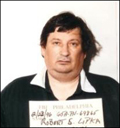 Years
after he left the NSA Lipka was arrested by the FBI based on Mitrohkin’s
report. At his first preliminary hearing Lipka acknowledge having secret NSA
documents and passing copies on to the KGB in exchange for money. One of the
documents, Lipka said, included the name of the real assassin of President
Kennedy.


